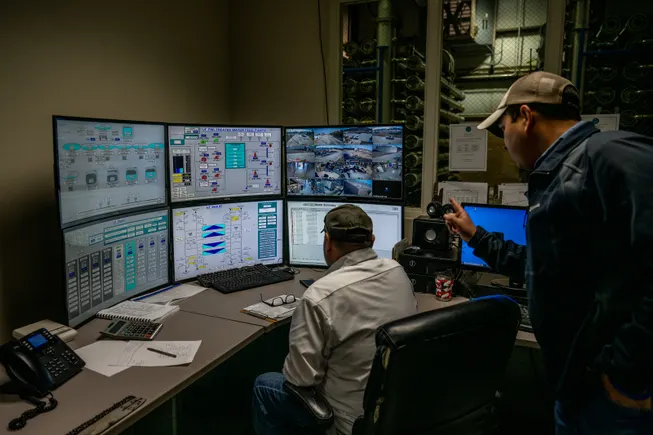
The U.S. government, alongside key Western allies, released guidance on Wednesday aimed at helping critical infrastructure operators integrate artificial intelligence (AI) safely into their operations. This document outlines four core principles—risk awareness, need and risk assessment, AI model governance, and operational fail-safes—intended to steer infrastructure operators as they navigate the complexities of AI adoption.
Produced by the Cybersecurity and Infrastructure Security Agency (CISA), the FBI, and the NSA, in collaboration with cybersecurity agencies from Australia, Canada, Germany, the Netherlands, New Zealand, and the U.K., the guidance emphasizes the unique risks associated with AI technologies. It calls for a comprehensive understanding among companies regarding the implications of these systems, urging them to educate staff, articulate justifications for AI use, and set robust security expectations for vendors. It further stresses the importance of evaluating the integration challenges of AI into existing operational technology.
Companies are advised to develop clear procedures for AI usage and accountability, conduct thorough testing of AI systems prior to implementation, and ensure ongoing compliance with regulatory standards. The document highlights the necessity of human oversight through “human-in-the-loop” protocols, which aim to prevent AI systems from executing potentially hazardous actions without human intervention. Additionally, it advocates for failsafe mechanisms that enable AI systems to fail gracefully, minimizing disruption to critical operations. The guidance also recommends that companies update their cyber incident response plans to reflect their new AI applications.
As critical infrastructure systems are often already vulnerable, the guidance serves as a precautionary measure, reminding operators to assess how AI systems are woven into their existing procedures. The document underscores the need for creating new safe-use protocols specifically tailored for AI integration within operational technology environments.
Since the surge of interest in AI technologies, U.S. officials have consistently sought to temper enthusiasm about these innovations with cautionary reminders regarding their risks. In November 2024, the Department of Homeland Security outlined the roles of various entities in the critical infrastructure ecosystem, from developers to cloud providers. Earlier in July, the White House’s AI Action Plan directed the Department of Homeland Security to enhance the sharing of AI-related security alerts with infrastructure providers, acknowledging that AI’s integration into cybersecurity presents vulnerabilities to adversarial threats.
The concern is exacerbated by the reality that many critical infrastructure providers, particularly in rural areas such as the water sector, often operate with limited security resources and personnel. This scarcity increases the likelihood that organizations will rush to adopt the latest technological innovations without adequate safeguards in place.
Looking ahead, the guidance aims to foster a more secure environment as organizations navigate the complexities of AI integration, ensuring that critical infrastructure remains resilient against potential threats. The document serves not only as a roadmap for safe AI use but also emphasizes the necessity of a cautious approach as the landscape of technology continues to evolve rapidly.
See also Bipartisan House Bill Seeks Stronger AI Chip Export Controls Against China
 AI Revolutionizes UK Engineering: 68% of Leaders Boost Tech Investment for 40% Productivity Gains
 Vultr Launches AI Supercluster with 24,000 AMD GPUs in Ohio, Boosting Global AI Capacity
 Teleport Wins AWS Rising Star Award for Securing Multi-Cloud Infrastructure Growth
 Toradex Launches OSM and Lino COMs for Edge AI with NXP i.MX 91 and 93 Chips