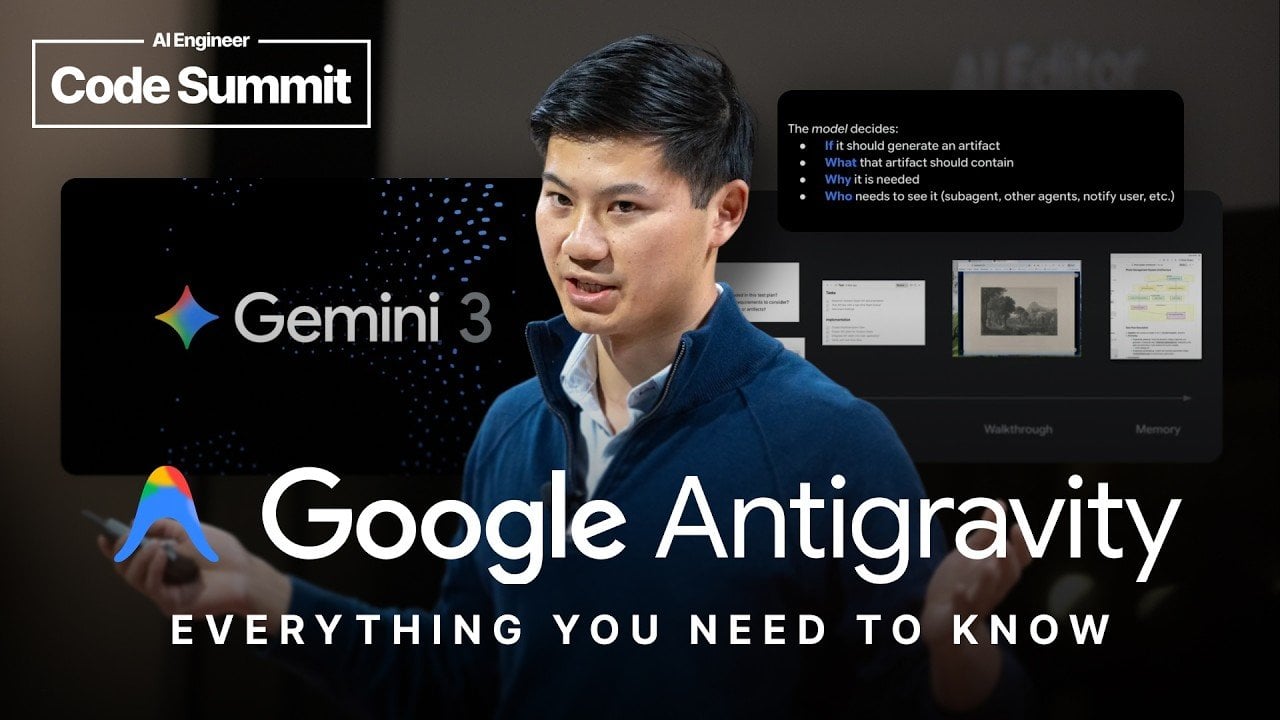
Google DeepMind has unveiled its latest innovation, Anti-gravity, an AI-powered Integrated Development Environment (IDE) designed to revolutionize software development. This platform, driven by the advanced Gemini 3 AI model, introduces an “agent-first” philosophy that transforms the interaction between developers and artificial intelligence, enabling a collaborative workspace where AI agents actively co-create alongside human experts.
Anti-gravity’s core components include an AI Editor, an Agent Manager, and an Agent-Controlled Browser. The AI Editor features rapid autocomplete, contextual agent-sidebars, and seamless integration with the agent manager, enhancing coding efficiency. The Agent Manager acts as a centralized control hub, overseeing multiple agents and providing a comprehensive view of task execution. Meanwhile, the Agent-Controlled Browser allows agents to autonomously interact with web applications, execute JavaScript, and validate outcomes using screen recordings, significantly increasing task precision.
One of the platform’s standout features is its use of dynamic visual feedback, termed “artifacts.” These artifacts include plans, diagrams, and screen recordings that facilitate clearer communication between developers and AI agents. By offering tangible outputs, artifacts help maintain oversight of progress, allowing for efficient task refinement and iteration. This ensures that developers remain informed and in control throughout the software development process.
At the heart of Anti-gravity lies the Gemini 3 AI model, which enhances the platform’s capabilities with several key features. Its instruction-following and reasoning abilities enable agents to manage complex workflows effectively. Additionally, Anti-gravity’s multimodal functionality supports various media types, adapting to diverse project requirements. The integration of browser capabilities allows agents to interact with web-based resources, improving task accuracy by retrieving and verifying contextual information.
Anti-gravity is designed to strike a balance between AI-driven automation and manual control. The AI Editor allows developers to intervene and make adjustments as needed, while the Agent Manager coordinates tasks across multiple projects to ensure seamless operations. This integration fosters a collaborative environment where human expertise and AI capabilities complement each other, ultimately leading to more efficient and precise development outcomes.
The development of Anti-gravity showcases a close collaboration between DeepMind’s research and product teams. Google engineers and researchers use the platform internally, contributing to its continuous refinement and driving innovation. This iterative approach ensures that Anti-gravity remains at the forefront of AI-driven software development, allowing developers to tackle increasingly complex challenges with the support of intelligent and adaptive AI agents.
With Anti-gravity, Google DeepMind aims to redefine the landscape of software development. The platform’s ability to empower AI agents to autonomously handle intricate tasks signifies a significant leap forward in AI tools for the industry. By integrating advanced AI models, multimodal functionality, and dynamic feedback mechanisms, Anti-gravity not only enhances productivity but also allows developers to achieve greater efficiency, precision, and innovation in their projects, paving the way for the future of software development.
See also Travel Agencies Leverage AI Tools to Compete Against Giants Like Expedia and Google
 Drake Australia Advocates Ethical AI in Recruitment to Mitigate Bias and Ensure Fairness
 Cohere CEO Aidan Gomez Claims Company is on ‘Right Side’ of AI Bubble Amid Industry Concerns
 Salesforce’s AI Surge: Revenue Up 114% as Stock Remains Undervalued Amid Market Shift
 Trump Unveils TRUTH AI Platform, Poised to Transform Cryptocurrency Markets and Investment Strategies