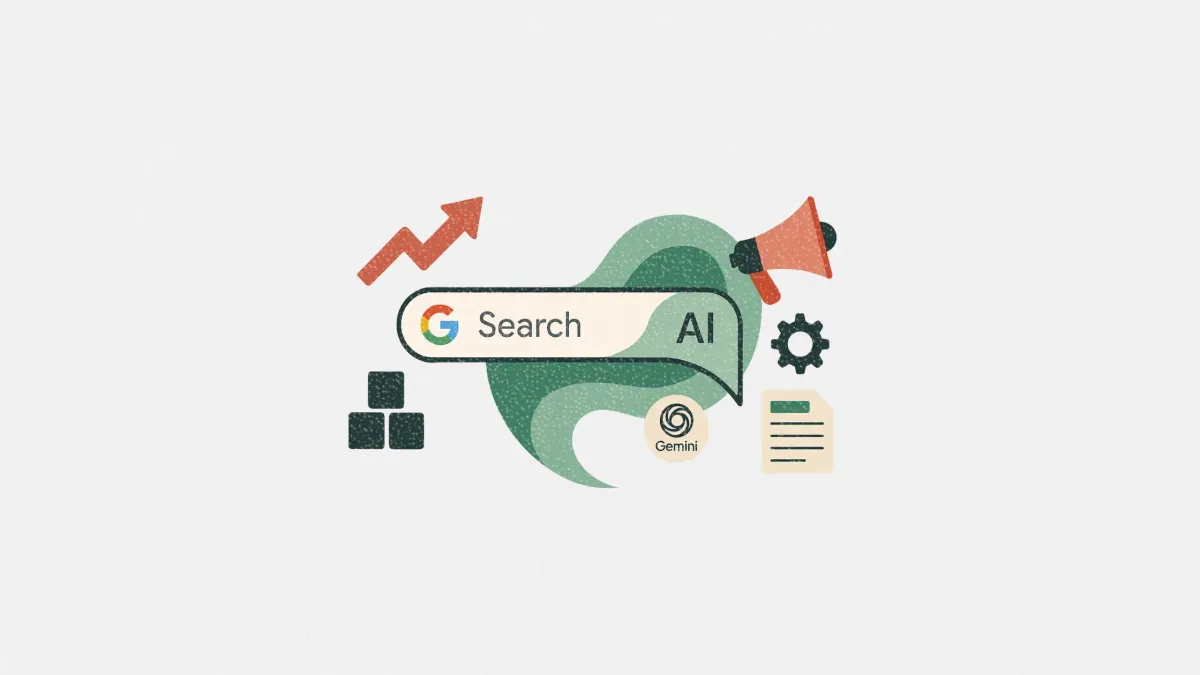
Google has initiated a significant test of a new search feature that merges its AI Overviews with AI Mode, creating a cohesive experience aimed at enhancing user engagement. This development was announced on December 1, 2025, by Robby Stein, Vice President of Product for Google Search, who stated the goal of this evolution is to “eliminate friction” for users, allowing them to ask complex questions without worrying about how to interact with the search interface. This shift signifies a move towards a more conversational search experience, particularly on mobile devices, where users can now transition seamlessly from passive AI Overviews to active, Gemini-powered conversations.
The integration of AI Overviews—summary cards that often appear at the top of search results—marks a pivotal change in how users engage with search queries. Previously, to delve deeper into a topic, users had to switch to a separate AI Mode tab. With the new functionality, users can now pose follow-up questions directly within the same interface, reflecting a broader strategy aligned with Google’s Gemini initiative. This change could have profound implications for digital marketing and search engine optimization (SEO), particularly as it may influence how users access information online.
As OpenAI reportedly enters a “Code Red” mode to adjust its product timelines in light of Google’s advancements, the race for AI adoption among major players in the tech industry intensifies. Google’s AI Overviews are reaching around 2 billion users monthly, while Gemini reportedly has over 650 million users. This overlap underscores a crucial moment in AI’s integration into consumer technology, as Google’s search capabilities begin to evolve into a more dynamic form of information retrieval.
The implications of this development for marketers are substantial. With Google steering users towards longer and more exploratory sessions within its ecosystem, the need for brands to adapt their content strategies becomes increasingly urgent. If users can find comprehensive answers and insights directly through Google, the traditional traffic flow to publisher websites may diminish. This evolving landscape presents a dual challenge: while it enhances user convenience, it raises concerns over content visibility for brands.
Marketers are advised to take proactive measures to adapt to these changes. First, they should conduct audits of their SEO practices to ensure readiness for AI Overviews. Given that these summaries aggregate content from a range of sources, having well-structured, clear, and concise content that answers common queries is essential. Utilizing structured data markup and FAQ formats can significantly improve a site’s chances of being featured in AI Overviews.
Secondly, marketers should shift their focus from targeting isolated keywords to engaging with deeper user intent. As Gemini allows for follow-up queries, there is a growing necessity for content strategies that anticipate related questions, facilitating multi-turn dialogue within the same page or using smart internal linking. This approach not only enhances user engagement but also positions brands to capture interest through evolving search behaviors.
Finally, considering Gemini-friendly content formats is critical as the search experience becomes increasingly conversational. Content types that naturally lend themselves to dialogue, such as how-to guides, explainer articles, and user-centric FAQs, are likely to perform better. Coupling these formats with well-tagged visual content enhances the chances of being cited in AI Overviews, further amplifying visibility.
In conclusion, Google’s testing of an integrated AI search experience signals a transformative shift in how users interact with information. This evolution compels marketers to rethink their strategies, focusing not solely on traditional keyword targeting but on creating content that aligns with users’ expanding search behaviors. As the journey through search becomes more fluid and less linear, adapting to this new paradigm will be essential for maintaining visibility and relevance in a rapidly evolving digital landscape.
See also ANA Highlights ‘Authenticity’ and ‘Agentic AI’ as Key Marketing Trends for 2026
 Malaysia Advances Digital Skills with 61,000 AI Learner Enrollments in 2023, Says Coursera
 Mindbody Partners with Attentive to Enhance AI Marketing for Wellness Businesses
 Observe.AI Named Leader in IDC MarketScape for AI-Enabled Contact Center Management 2025-2026
 AnyMind Group Reveals AI-Driven Strategies Boosting E-Commerce Revenue by 2.3X in 2025