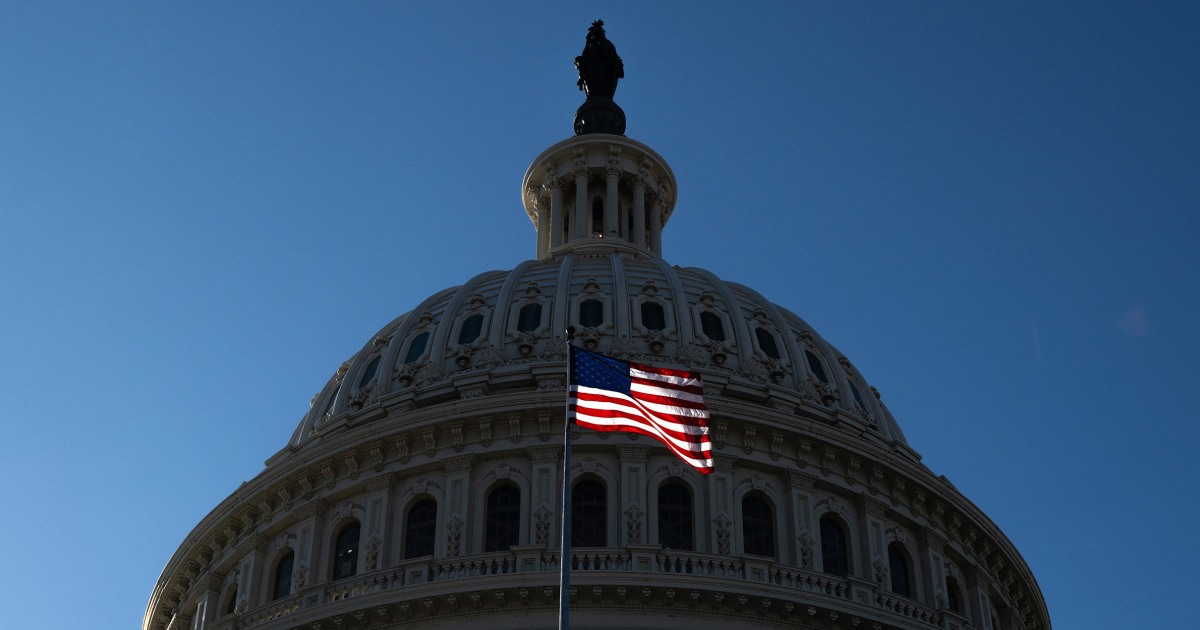
A bipartisan bill introduced Wednesday in Congress aims to enhance the federal government’s ability to recruit and retain top-tier talent in artificial intelligence (AI) and technology. The proposed AI Talent Act, spearheaded by Rep. Sara Jacobs, D-Calif., is designed to bolster the government’s capacity to apply rapidly evolving technologies to contemporary challenges.
“This is about getting AI and technical talent into all of the different aspects of the government that we now need,” Jacobs said in an interview. “We need people who understand how to apply these technologies, who also understand the risks and benefits and are thinking about the right approach to deployment.”
The act would establish specialized teams within federal agencies, as well as at the cross-agency Office of Personnel Management, focusing on recruiting candidates with backgrounds in AI and technical skills. It would create centralized resources and talent pools to facilitate the sharing of information about promising candidates among various agencies. Furthermore, the bill emphasizes the importance of skills-based examinations and certifications to assess candidates’ knowledge and capabilities in AI.
Jacobs noted the unique nature of this legislation, stating, “This is a bicameral, bipartisan bill, and there are so few of those bills these days.” She highlighted that the bill has garnered support from both Republican and Democratic sponsors in both the House and Senate. The excitement surrounding the AI Talent Act reflects its critical goal: to enhance government preparedness for the evolving landscape of AI technology.
The bill has gained sponsorship from a coalition that includes Rep. Jay Obernolte, R-Calif., who co-led the Bipartisan House Task Force on Artificial Intelligence. The task force’s final report recommended legislation to support the development of AI roles within federal agencies. “This bipartisan bill helps ensure the United States continues to lead the world in innovation by bringing the best equipped people into public service at the right time,” Obernolte stated. “The AI Talent Act gives federal agencies the tools they need to recruit experts with real, demonstrated skills so we can responsibly adopt AI and strengthen mission delivery across government.”
Previous presidential administrations have attempted to enhance the pool of technical talent in government through executive orders and pilot programs. If passed, the AI Talent Act would mark the first federal law specifically aimed at creating sustainable AI talent pipelines. President Barack Obama established the United States Digital Service in 2014 to unite top data scientists, engineers, and designers to address significant technical issues.
In 2021, the General Services Administration launched the U.S. Digital Corps, intended to foster immediate innovation and serve as a continuous resource for government digital transformation. This initiative allows technologists to work in various federal agencies, such as the Agriculture Department and the National Institutes of Health, for a two-year fellowship. Unlike the Digital Corps, the proposed AI Talent Act would specifically focus on AI, streamline the hiring process for permanent roles, and encourage better interagency coordination regarding technical hiring protocols.
President Joe Biden initiated a “Federal Government-wide AI talent surge” to enhance the placement of crucial AI talent in high-priority areas as part of his October 2023 Executive Order on the Safe, Secure, and Trustworthy Development and Use of Artificial Intelligence. However, that initiative is no longer active under its AI.gov branding. The AI Talent Act would be insulated from the fluctuations of executive orders, providing a more stable framework for talent recruitment.
One significant challenge in attracting AI professionals has been the competitive salaries offered by the private sector. Many AI researchers and engineers favor industry positions due to attractive compensation packages, including equity and generous benefits. “We’re never going to be able to compete one-to-one on salary or indoor climbing gyms,” Jacobs acknowledged. “But there are a lot of people who are looking for jobs they find fulfilling and are working on issues that they care about.”
By simplifying and customizing the hiring process for AI and tech workers, Jacobs believes the bill could attract individuals who might otherwise choose the private sector. The legislation has also received backing from various nonprofit organizations, including the Bipartisan Policy Center and Encode AI. “Modernizing the way government recruits AI and technology talent is crucial for national competitiveness and public trust,” said Sunny Gandhi, vice president of political affairs at Encode AI. “This bill takes the smartest lessons from industry — skills-based assessments, pooled hiring, and subject-matter expertise — and puts them to work for the public good.”
As AI continues to reshape industries and influence global dynamics, the introduction of the AI Talent Act underscores an urgent need for government adaptation. The outcome of this legislative initiative could set a critical precedent for how federal agencies engage with and deploy AI technologies in the years to come.
See also Learning Tree Launches AI Workforce Solutions with Tiered Maturity Framework for Organizations
 Trump Signs Executive Order to Block State AI Regulations, Citing Industry Risks
 Government Confirms No AI Regulation for Scriptwriting Amid Industry Concerns on Copyright
 Trump Bans State AI Laws, Igniting Legal Challenges and Civil Rights Concerns
 Elon Musk’s xAI Launches Grok in El Salvador for 1M Students Amid Controversy