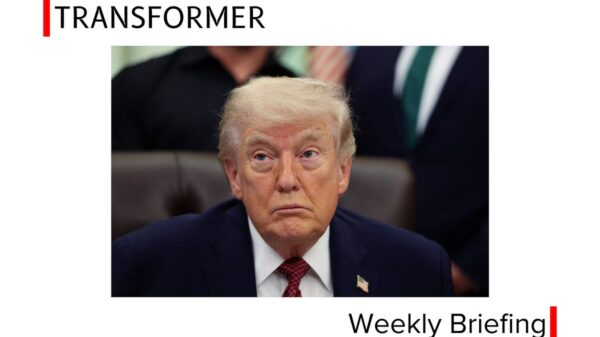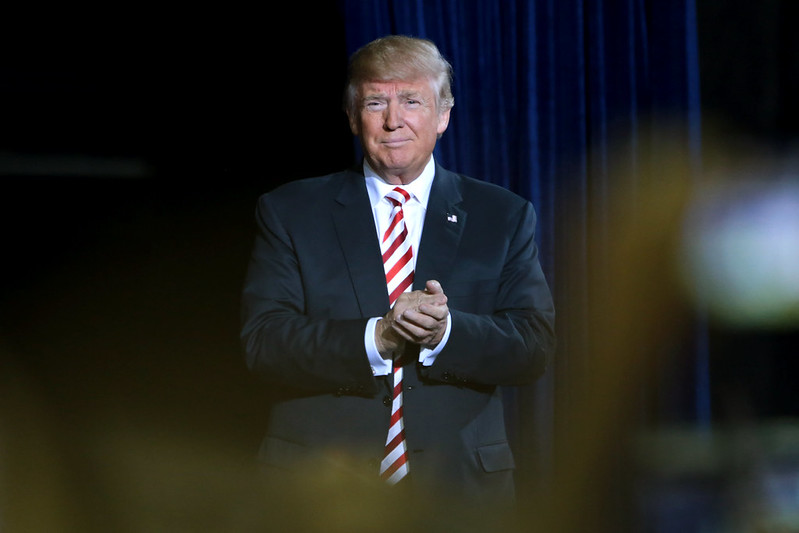
President Donald Trump signed an executive order on Thursday aimed at limiting state regulations on artificial intelligence (AI), asserting that such measures hamper innovation and competitiveness for American companies. The order seeks to consolidate AI oversight under a federal framework, countering what Trump described as a “patchwork of 50 different regulatory regimes” that could hinder the growth of startups.
The White House emphasized the necessity of a unified approach, particularly as the U.S. vies for technological supremacy over China. “To win, United States AI companies must be free to innovate without cumbersome regulation,” the order states, cautioning that excessive state oversight could introduce “ideological bias within models” and lead to what Trump has labeled as “woke AI.”
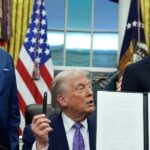
In his remarks during the signing ceremony in the Oval Office, Trump was joined by key figures including AI and crypto czar David Sacks, tech investor Chamath Palihapitiya, Republican Senator Ted Cruz, and Commerce Secretary Howard Lutnick. Cruz highlighted the urgency of the initiative, warning that if China dominates AI development, it could impose values of surveillance and centralized control on the technology worldwide. “We want American values of free speech, individual liberty, and respect for the individual,” he said.
The executive order specifies that a minimally burdensome national standard must supersede conflicting state laws, ensuring protections for children, preventing censorship, safeguarding copyrights, and fostering community welfare. Sacks noted that while child safety regulations will remain in place, the order intends to “push back” against what he termed “the most onerous examples of state regulations.”
This directive represents a significant victory for major AI firms and investors, who have been lobbying for a reduction in regulatory constraints. Marc Andreessen, co-founder of Andreessen Horowitz, has been a vocal critic of what he perceives as AI pessimism, arguing that the U.S. must eliminate regulatory hurdles to maintain its leadership in the global AI arena.
To enforce the new directives, Trump has tasked Attorney General Pam Bondi with establishing an “AI Litigation Task Force” within 30 days. This team will be responsible for challenging any state-level regulations that contradict the administration’s policy framework. States that do not comply could face funding restrictions.
However, the executive order is likely to encounter legal challenges from several states. According to the National Conference of State Legislatures, all 50 states and U.S. territories have introduced AI-related legislation this year, with 38 states enacting nearly 100 new laws. In response to the order, California Governor Gavin Newsom, a proponent of regulatory measures, criticized Trump and Sacks, accusing them of “running a con.” He emphasized California’s commitment to fostering a robust innovation economy while implementing sensible safeguards.
The implications of this order extend beyond immediate regulatory impacts, raising broader questions about the future of AI governance in the United States. As the landscape of AI continues to evolve rapidly, the balance between fostering innovation and ensuring ethical standards will remain a critical issue for policymakers moving forward.
See also Trump Signs Executive Order to Block State AI Regulations, Directs Task Force to Challenge Laws
 Trump Signs Executive Order to Block State AI Regulations, Favoring Tech Giants
 Trump Launches AI Task Force to Challenge State Regulations on Technology Oversight
 Trump Signs Executive Order Halting State AI Regulations, Calls for Federal Oversight