State lawmakers from both parties are poised to continue enacting regulations on artificial intelligence (AI), despite efforts from President Donald Trump to halt such initiatives. On December 11, Trump signed an executive order aimed at overriding state-level AI legislation, asserting the necessity for a cohesive national AI policy while simultaneously cracking down on existing state laws.
In his executive order, Trump specifically criticized Colorado’s AI regulations, alleging they embed “ideological bias within models.” He expressed concern that the state’s ban on “algorithmic discrimination” could compel AI models to yield inaccurate results to avoid differential treatment of protected groups. This executive action follows several attempts by the Trump administration to curtail state legislation on AI and loosen restrictions for technology developers.
Despite these federal efforts, state lawmakers are actively prefiling AI legislation as they prepare for their 2026 sessions. Critics of Trump’s national framework, including legal experts, anticipate that any attempts to restrict state authority will likely face legal challenges. “I agree on not overregulating, but I don’t believe the federal government has the right to take away my right to protect my constituents if there’s an issue with AI,” stated South Carolina Republican State Representative Brandon Guffey, who authored a letter opposing such federal restrictions. The letter garnered support from 280 state lawmakers nationwide, highlighting a bipartisan commitment to maintaining state control over AI regulations.
Earlier this year, South Dakota Republican Governor Larry Rhoden enacted the state’s inaugural AI law, which prohibits the use of deepfakes—digitally altered images or videos intended to deceive—during elections. As states like South Dakota, California, and Colorado explore comprehensive AI regulations, the potential for federal intervention under Trump’s order raises concerns among lawmakers. “To take away all of this work in a heartbeat… is just irresponsible,” argues South Dakota Democratic State Senator Liz Larson, co-author of the aforementioned letter.
Trump’s efforts
The executive order establishes an AI Litigation Task Force, intended to challenge states with their own AI laws, although it does allow exceptions for child-safety issues and data center infrastructure. Furthermore, the Secretary of Commerce has been directed to inform states that they may jeopardize federal funding if their laws conflict with national AI priorities.
Trump has framed this regulatory approach as a necessary measure to ensure U.S. supremacy in the rapidly evolving AI sector, emphasizing that Chinese President Xi Jinping does not face similar regulatory constraints. “This will not be successful unless they have one source of approval or disapproval,” he asserted, arguing for centralized control to foster innovation.
The tech industry has largely endorsed Trump’s executive order. “This executive order is an important step towards ensuring that smart, unified federal policy… secures America’s AI dominance for generations to come,” stated Amy Bos, vice president of government affairs for NetChoice, a technology trade association.
As the administration navigates threats to national defense and cybersecurity, advocates for a unified national AI policy, such as Paul Lekas from the Software & Information Industry Association, argue that varied state laws could stifle innovation. Despite congressional Republicans’ attempts to impose moratoriums on state AI laws, these initiatives have failed to gain traction.
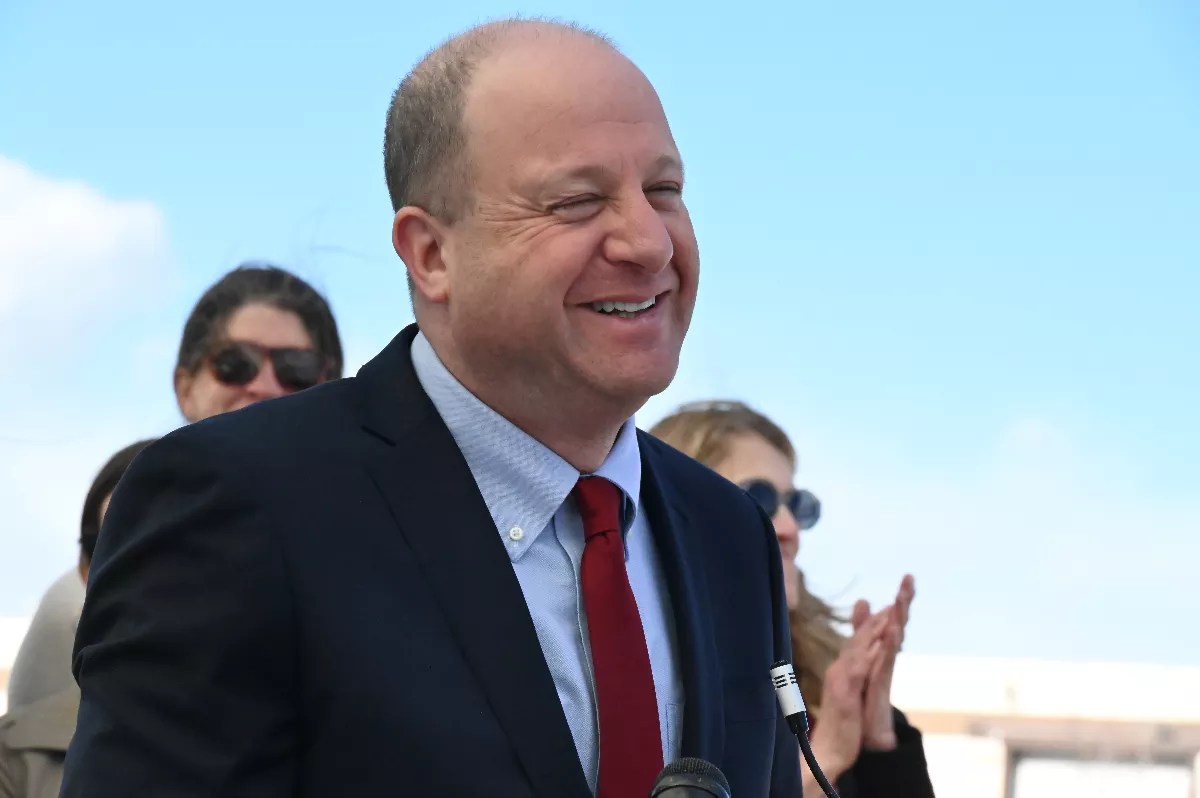
In 2024, Colorado’s Governor Jared Polis signed the country’s first comprehensive AI framework, requiring developers to protect consumers from algorithmic discrimination. However, implementation faced delays due to legislative negotiations aimed at balancing regulation with technological advancements. Polis has also shown support for a GOP proposal that would enforce a moratorium on state AI laws, raising further questions about the future of state regulations.
State representatives, including Colorado’s Brianna Titone and Robert Rodriguez, remain committed to their legislative efforts, asserting that Trump’s order lacks the authority to invalidate state law. “This is just a bunch of hot air,” Titone remarked. “It doesn’t hold any water and it doesn’t have any teeth because the president doesn’t have the authority to supersede state law.”
California and Illinois are also prominent players in AI legislation. In September, California Democratic Governor Gavin Newsom enacted the first law establishing a legal framework for developers of advanced AI models, aimed at mitigating potential catastrophic risks. State officials are considering legal action against Trump’s executive order, with others likely to follow suit.
Even within GOP-led states, AI regulations are gaining momentum. Florida Republican Governor Ron DeSantis has introduced an AI Bill of Rights to enhance consumer protections and address community impacts from data centers. In South Carolina, Rep. Guffey is set to propose legislation governing AI chatbots, emphasizing the necessity of safety measures as the technology evolves. “The problem is that it’s not treated like a product—it’s treated like a service,” he explained. “If it was treated like a product, we have consumer protection laws where things could be recalled and adjusted.”
The ongoing clash between federal and state AI regulations underscores the complexities surrounding the rapid development of this technology. As lawmakers grapple with these challenges, the urgency for effective legislation that balances innovation and consumer protection remains paramount.
See also Nebius Group Faces Stock Decline Amid $17.4B Microsoft Deal and Capital Intensity Concerns
 LG’s webOS Update Mandates Copilot AI on TVs, Sparking User Outcry Over Privacy Risks
 Lunit and Daiichi Sankyo Partner to Accelerate AI-Driven Cancer Biomarker Discovery
 Nvidia Surges 0.70% as Strong H200 Demand from China Boosts AI Outlook
 TIL Limited Unveils Three Indigenous Products at EXCON 2025, Enhancing India’s Infrastructure Solutions