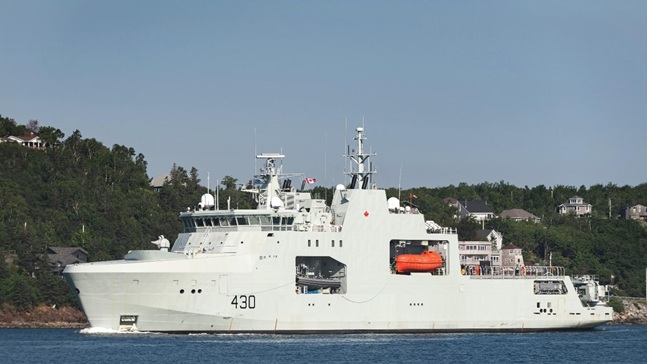
Thales Canada has formed a partnership with the domestic enterprise AI company Cohere to develop advanced artificial intelligence products tailored specifically for the nation’s navy. This collaboration, which was announced recently, is being touted by both companies as a significant step forward in the realms of technology and military planning.
The partnership agreement encompasses the development of navy- and maritime-specific AI products, incorporating agentic elements. Thales aims to integrate its expertise and the capabilities of its corAIx incubator with Cohere’s advanced large language model technologies. According to Thales Canada CEO Ian Krepps, the partnership will enable the rapid deployment of “new, sovereign AI” capabilities for a range of customers, including the Canadian Armed Forces.
Krepps emphasized the arrangement underscores Thales’ commitment to delivering “agile, future-ready” products tailored to meet the evolving needs of its clients. The collaborative effort is positioned as a means to enhance military operations through innovative AI solutions.
Cohere co-founder Ivan Zhang characterized the collaboration as a “strategic leap” in the application of AI for national defense. The companies plan to develop systems capable of analyzing complex naval environments in real time, thereby providing “actionable intelligence” that could significantly enhance military decision-making processes. Zhang noted that this initiative also represents a boost for Canada’s ambitions in the AI sector.
Thales articulated that the decision-making capabilities offered by these agentic AI systems will be instrumental for projects poised to launch imminently. This focus on integrating advanced technologies within military frameworks indicates a broader trend toward the modernization of defense operations through intelligent systems.
The collaboration between Thales and Cohere reflects a growing recognition of the importance of AI within defense and military contexts. As nations seek to bolster their technological capabilities, partnerships such as this one are likely to play a pivotal role in shaping the future of national security strategies.
As both companies move forward with this partnership, the implications for military planning and operations could be profound, potentially setting new standards for how AI is leveraged in defense applications. The integration of advanced AI systems into naval operations may not only enhance efficiency but also redefine tactical approaches, fostering a more proactive stance in national defense.
See also AI-Driven Dental Imaging Market to Surge from $351.1M to $2.3B by 2034, Transforming Diagnostics
 Peloton’s Holiday Sale and AI Strategy: Key Insights on Valuation Risks and Opportunities
 EU Opens Antitrust Investigation into Meta’s WhatsApp AI Restrictions for Businesses
 OpenAI, Apple, Amazon Join $200K US Tech Force to Boost Government AI and Cybersecurity
 Church of Jesus Christ Updates Handbook with Key AI Guidelines for Members