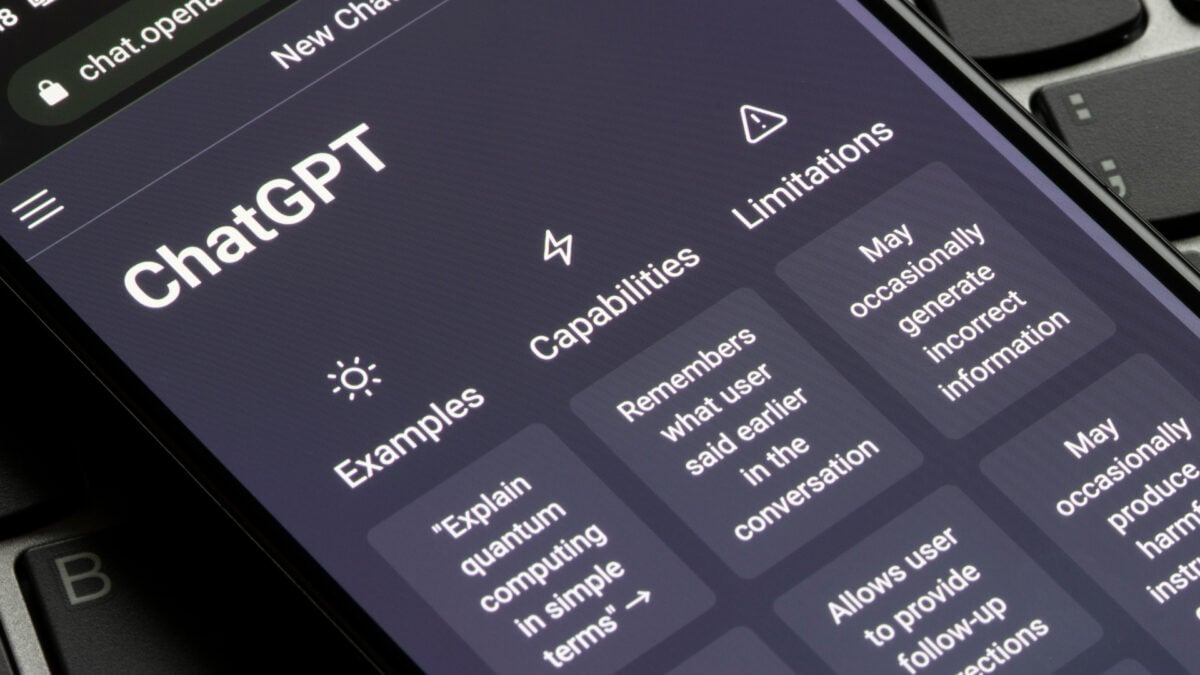
OpenAI recently announced a minor but intriguing development concerning its flagship product, ChatGPT. Despite its ambitious goals of developing a superintelligence or an autonomous AI researcher, the company has shifted focus to a seemingly trivial but welcomed enhancement: enabling users to instruct ChatGPT not to use the em dash in its responses. This was highlighted by CEO Sam Altman in a post on X, where he referred to it as a “small-but-happy win.”
In a demonstration on Threads, OpenAI showcased ChatGPT’s newfound ability by asking it to write a formal apology for “ruining the em dash.” However, in a twist, the chatbot was unable to produce the apology without resorting to the very punctuation it was asked to avoid. This highlights an important distinction; while users can now prevent the use of em dashes in their personalized settings, the underlying issue of inappropriate usage remains unresolved.
This feature follows the release of GPT-5.1, OpenAI’s latest iteration that promises improved adherence to user instructions and enhanced personalization capabilities. The emphasis on allowing users to dictate punctuation preferences illustrates the model’s evolving compliance but does not necessarily address the root cause of its previous over-reliance on specific punctuation marks like the em dash.
Implications of User Personalization
The individual nature of this em dash adjustment points to the opaque operation of most large language models (LLMs). User feedback on Altman’s post suggests that despite the option to disable em dashes, some instances of ChatGPT still misapply them. This raises questions about the scalability of OpenAI’s solutions, especially when they heavily rely on personal settings to effect changes.
OpenAI has seemingly developed a method to prioritize custom user instructions within ChatGPT’s response framework. This allows for a tailored experience where the chatbot can accommodate a user’s preferences, such as avoiding em dashes. However, the fact that users are still encountering issues suggests that finding a comprehensive solution to such problems remains a significant challenge for the company.
This emphasis on personalization and user control is particularly relevant in the broader context of AI development. The AI landscape is evolving rapidly, and as companies like OpenAI continue to release sophisticated models, the importance of refining user interaction with these systems cannot be overstated. The challenges faced in addressing punctuation preferences reflect the complexities involved in creating truly autonomous and adaptable AI systems.
Furthermore, the trend of focusing on user personalization may indicate a strategic pivot for OpenAI, especially as discussions of artificial general intelligence (AGI) seem to have taken a back seat in recent communications. As AI systems become increasingly integrated into daily life, ensuring that they can meet specific user needs while also maintaining robust performance presents an ongoing challenge.
Ultimately, while the em dash development may appear minor, it is emblematic of the broader issues at play in AI evolution. OpenAI’s efforts to enhance user control over ChatGPT’s behavior reveal both progress and limitations. The journey toward creating a truly intuitive and intelligent AI, capable of understanding nuanced user preferences, is still very much underway.
See also China’s Qwen AI Models Surpass US Alternatives with 385M Downloads on Hugging Face
 Google Launches Autonomous Shopping Tools, Expanding Agentic Checkout and Duplex Features
 Michael Burry Bets Against Nvidia and Palantir, Signals Possible AI Boom Correction
 Attendees at AI Conference Identify Perplexity and OpenAI as Startups to Bet Against
 Pathologist Dr. Matose Reveals Ethical Challenges of AI in Healthcare at AMP 2025