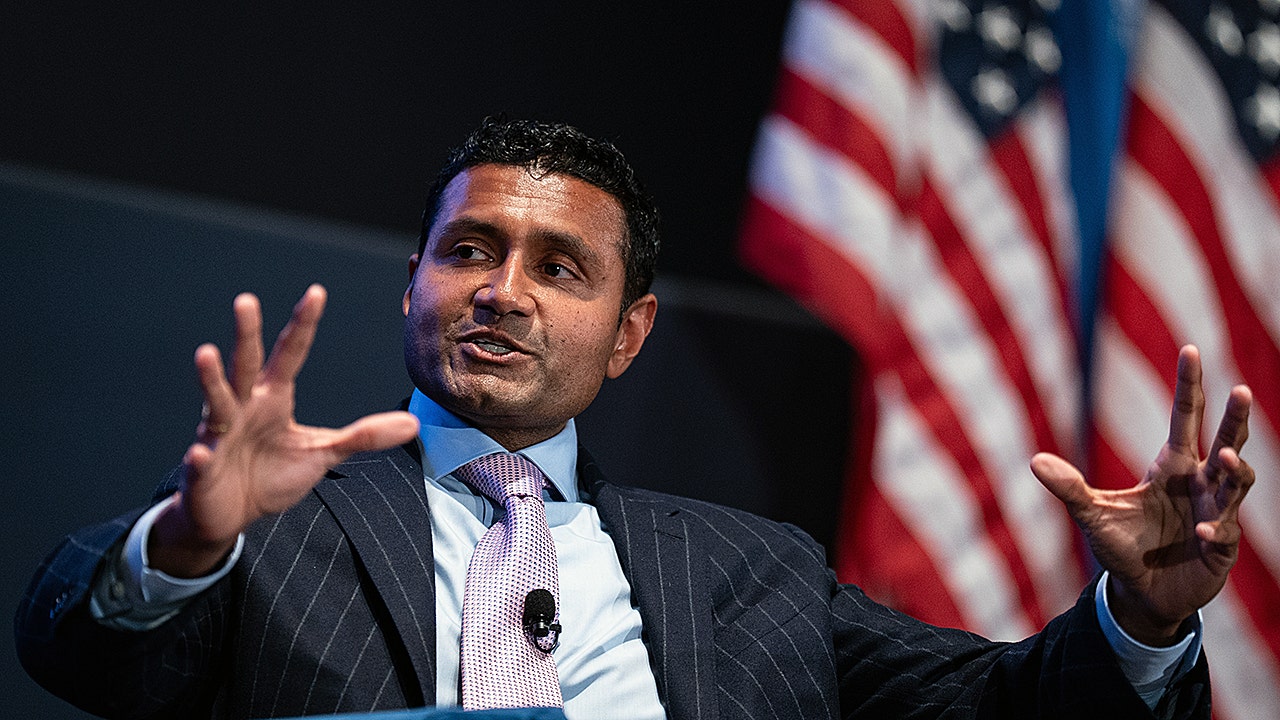
Palantir Chief Technology Officer Shyam Sankar pushed back against fears that artificial intelligence (AI) could lead to widespread unemployment, asserting that the technology is sparking a productivity boom in blue-collar sectors. Speaking on FOX Business’s “The Bottom Line,” Sankar emphasized that AI is not only enhancing hiring but is also accelerating training and driving growth across American industries.
His comments came in response to remarks made by Senator Bernie Sanders, I-Vt., who earlier in the week called for a slowdown in AI development, warning that it could lead to “massive unemployment” by displacing millions of workers. In a video posted on X, Sanders raised concerns about the economic implications of AI and robotics, questioning how individuals would sustain themselves in an environment where job losses are prevalent.
Sankar countered this narrative, highlighting that AI is significantly benefiting workers in various fields, particularly those in frontline roles such as ICU nurses and factory technicians. He noted that the advantages of AI are being felt beyond the tech sector and are evident in essential services and manufacturing. For instance, he cited how AI allows manufacturing foremen to dedicate more time to production tasks rather than labor scheduling and planning.
In his interview, Sankar explained that Palantir has seen tangible results from AI integration. He shared a specific case where a manufacturing client managed to increase their workforce by introducing a third shift, a move made feasible through AI-enhanced production planning. Previously, the high labor utilization rate needed to justify hiring more employees was a barrier, but AI has changed that dynamic.
Sankar also provided an example from Panasonic Energy, a Nevada-based company specializing in electric vehicle batteries. He pointed out that the usual three-year apprenticeship for a skilled battery technician has been shortened to just three months for former casino workers, thanks to AI’s capability to streamline training and onboarding processes.
He stated, “It’s a complete propaganda schtick coming out of Silicon Valley, where they want to talk about how powerful the tech is: ‘It’s so powerful it might lead to mass unemployment. So powerful it may end humanity.’ And that’s just frankly not true. It’s not what you see at the front lines. What you see is an opportunity for American greatness.”
According to Sankar, the proliferation of AI has the potential to spawn a wave of new businesses, enabling individuals to turn ideas into reality with unprecedented efficiency. He also expressed concerns about the current state of higher education, suggesting that colleges will need to adapt to the evolving workforce landscape. Palantir has initiated a meritocracy fellowship aimed at high school seniors, providing students with job training while offering a “well-rounded” education that includes input from academic professionals.
Sankar’s assertion that educational institutions must adapt resonated with a broader critique of the U.S. AI strategy. He argued that while substantial investments have been made in AI infrastructure, such as data centers, a more significant focus should be placed on harnessing AI to generate real economic value for everyday workers. “We need to invest more in the AI demand side,” he remarked, stressing the importance of translating AI capabilities into tangible benefits for the American workforce.
As the conversation around AI continues to evolve, Sankar’s perspective offers a counter-narrative to the prevailing fears of job loss, advocating instead for a framework that emphasizes collaboration between technology and labor. He believes that with the right approach, AI can serve as a catalyst for economic growth and job creation, providing new opportunities for workers across various sectors.
See also Leaders Face Cultural Shifts as AI Adoption Doubles Among Employees, Reveals Gallup
 Lovable Secures $330M in Funding, Valued at $6.6B with Nvidia and Alphabet Backing
 Robinhood’s Vlad Tenev Advocates Retail Access to Private AI Companies Amid Concerns
 WisprFlow Raises $81M in Funding Without Investor Pitches, Focused on Voice OS Development