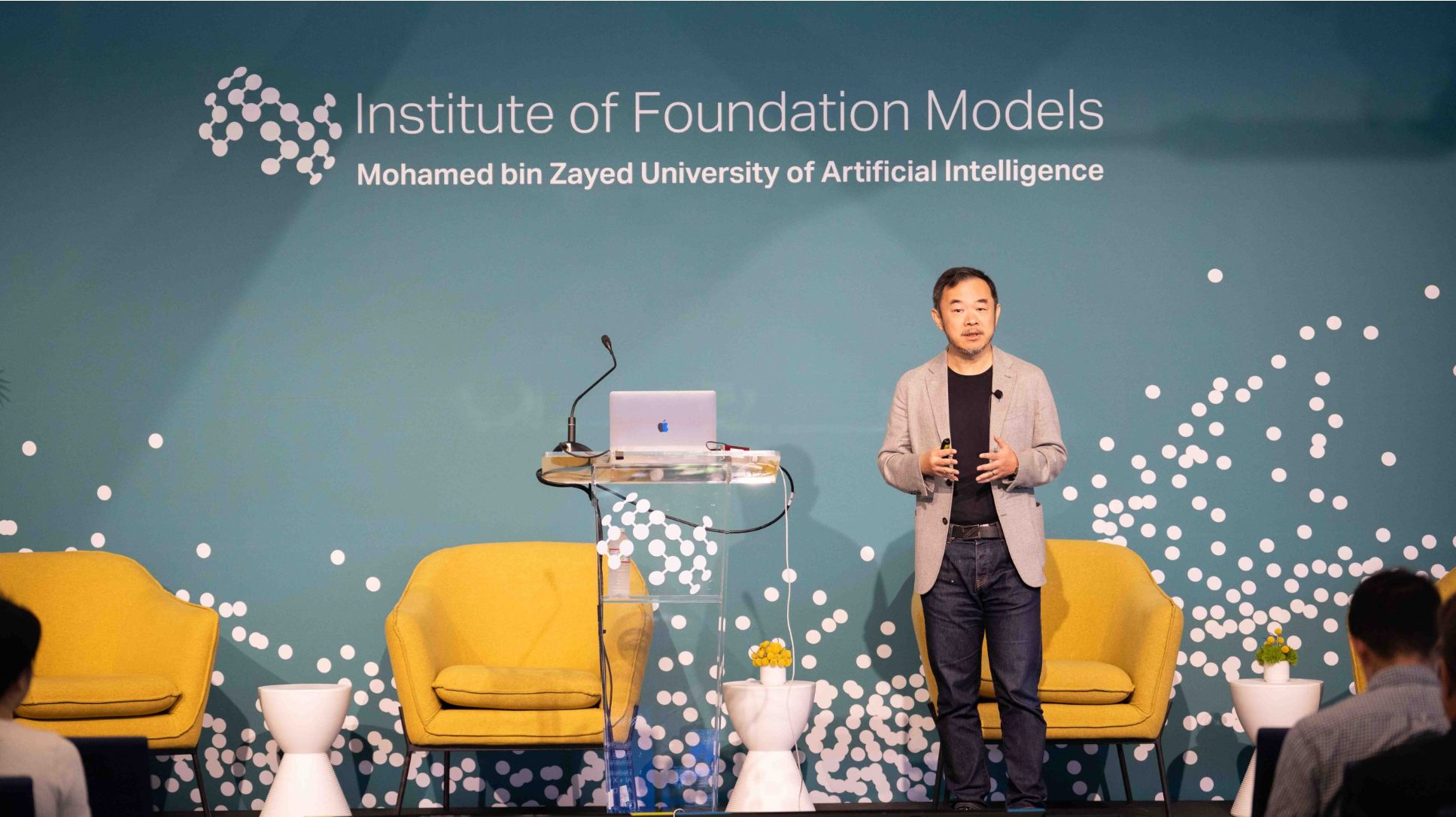
The Institute of Foundation Models (IFM) at the Mohamed bin Zayed University of Artificial Intelligence (MBZUAI) showcased its open-source reasoning model, K2 Think V2, at HackPrinceton, offering student developers access to AI infrastructure tailored for complex, logic-heavy tasks. The hackathon, held at Princeton University, took place over the weekend, providing a platform for participants to experiment with innovative technology in real-time.
During the event, developers had the opportunity to integrate K2 Think V2 into various projects focused on agent development, simulation, and decision-support tooling. On Saturday, IFM hosted a workshop detailing key features of K2 Think V2 and offering integration guidance, helping teams navigate the model’s capabilities effectively.
K2 Think V2 is characterized as a fully open-source reasoning model designed for applications that necessitate clear logic, long-context processing, and low-hallucination outputs. IFM positions the model as particularly suited for tasks where structured reasoning is critical to achieving strong performance outcomes. The initiative underscores a growing trend to harness open-source technologies for educational purposes.
The model is part of a larger suite developed at IFM’s base in Abu Dhabi, which maintains research hubs in Silicon Valley and Paris. The institute’s research scope encompasses language, vision, multimodal, and domain-specific systems, all of which are published openly to foster global collaboration among developers and researchers.
IFM’s involvement in HackPrinceton reflects a broader initiative to integrate open-source foundation models into academic environments and student-driven development. The institute emphasizes its dual mission of advancing technology while ensuring that advancements serve social utility. Professor Eric Xing, President of MBZUAI, articulated this vision, stating, “At IFM, we are committed to advancing Generative AI in ways that truly make a difference. Innovation carries responsibility, and our goal is to drive meaningful progress with social impact.”
This appearance at HackPrinceton marks one of the most significant engagements IFM has had with the student developer community to date. The success of K2 Think V2 in university-led AI projects will likely hinge on the accessibility of the integration experience, particularly for teams that may not possess specialized AI expertise. As the landscape of artificial intelligence continues to evolve, the role of open-source models in fostering innovation and collaboration in educational settings is becoming increasingly vital.
See also Education System Must Adapt to AI: Teachers Urge Shift from Electronics to Critical Thinking
 AI Transforms Education: 3 Strategies to Enhance Student-Centered Learning Experiences
 iSchool Acquires Rubikal to Bolster AI Infrastructure with New Leadership Team
 Colleges Embrace Oral Exams to Combat AI Cheating and Revive Critical Thinking Skills