






















































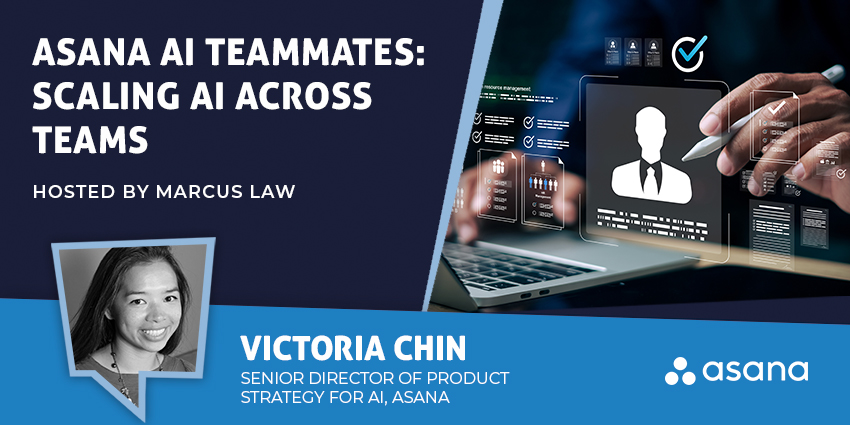
Asana is positioning itself at the forefront of collaborative productivity solutions by launching its AI Teammates, designed specifically for teamwork rather than individual performance. The company’s Senior Director of Product Strategy for AI, Victoria Chin, emphasized that while many AI tools enhance individual efficiency, they often fall short in boosting team or organizational effectiveness. This focus on collective productivity could represent a significant shift in how businesses leverage technology to streamline operations.
According to Asana’s research, over half of the time spent by knowledge workers is devoted to coordination tasks such as status updates and follow-ups—activities that detract from strategic work. Asana AI Teammates aim to alleviate these burdens by enhancing collaboration at scale. The company believes that a more integrated approach to AI could lead to substantial gains in operational efficiency.
What sets Asana’s AI Teammates apart from traditional AI copilots is their inherent context. These AI tools are built within the Asana platform itself, which has been developed over 15 years, creating a robust work data model. This allows AI Teammates to understand goals, timelines, dependencies, and team priorities from the outset. Their design ensures that they carry a shared memory, enabling all team members to benefit from the AI’s learning, not just the individual who initiated the query.
Asana’s beta program has already gathered insights from over 200 customers, revealing promising early results. For instance, investment research firm Morningstar reported saving approximately 15,000 person-hours annually across research and pricing functions, while also reducing its IT ticket intake process by two weeks. Similarly, KW Automotive, a German vehicle suspension manufacturer, has benefited from its AI Teammate, which can analyze data across multiple projects simultaneously, significantly cutting down manual analysis time.
In addressing potential IT governance concerns, Asana incorporates existing role-based access controls that allow administrators to manage who can create, use, and oversee AI agents within the organization. This layered approach ensures that control mechanisms are in place at both the organizational and individual user levels.
The ongoing costs associated with coordination work continue to be a considerable drain on productivity, costing businesses billions. Asana’s initiative underscores a growing belief that the next wave of AI innovation will not just empower individuals, but will also facilitate collaboration across teams, fundamentally changing how companies operate. The insights gained from early adopters of Asana AI Teammates may serve as a harbinger for a broader transformation in workplace productivity strategies.
See also Decision-Aware Machine Learning Achieves 30% Increase in Access to Essential Medicines
 Mistral AI Launches Workflows for Seamless Enterprise AI Automation in Production
 X Launches Overhauled AI-Powered Ad Platform to Boost Declining Revenues
 IBM and Ferrari Launch AI-Powered Scuderia App Features to Enhance Fan Engagement
 Top 7 Productivity Apps for 2026: Boost Efficiency with AI-Driven Tools















