






















































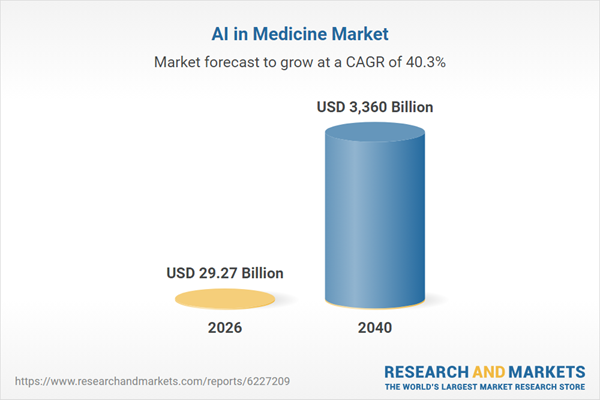
Dublin, April 17, 2026 (GLOBE NEWSWIRE) — The global market for artificial intelligence (AI) in medicine is projected to surge from USD 29.27 billion in 2026 to an astonishing USD 3.36 trillion by 2040, reflecting a compound annual growth rate (CAGR) of 40.34%. This dramatic growth underscores the transformative impact of AI technologies, which are increasingly integrated into healthcare systems to enhance diagnostics, personalize treatment, and improve operational efficiencies.
AI is redefining the medical landscape through the application of advanced algorithms, machine learning, and deep neural networks. These technologies are instrumental in areas such as drug discovery, where predictive analytics expedite the identification of potential treatments, and precision medicine, which analyzes genomic data to offer tailored therapies. In addition, AI-powered medical devices, including wearables and imaging tools, facilitate real-time patient monitoring, significantly reducing diagnostic errors in fields such as radiology, as highlighted in recent studies.
The robust growth of the AI in medicine market is primarily driven by the increasing prevalence of chronic and genetic diseases, such as cancer, diabetes, and cardiovascular disorders. This urgent need for effective personalized therapies is matched by a growing reliance on AI-driven precision diagnostics and therapeutics, capable of analyzing complex biological data with remarkable accuracy. Additionally, intensifying research and development activities, coupled with strategic initiatives from leading companies, are further propelling market expansion.
The marketplace features a competitive landscape that includes established technology giants and emerging AI startups. Companies like Google DeepMind, IBM Watson Health, NVIDIA, Tempus, and PathAI are at the forefront, employing substantial investments in machine learning algorithms tailored for diagnostics, drug discovery, and personalized treatment solutions. These firms utilize proprietary datasets, cloud-based platforms, and strategic partnerships with pharmaceutical giants such as Pfizer and Roche to expedite the deployment of AI-driven medical solutions.
Emerging challengers like Insilico Medicine and BenevolentAI are intensifying competition by focusing on generative AI for innovative drug design. Regulatory advancements from agencies such as the FDA and EMA are also facilitating greater consolidation within the sector through mergers and acquisitions.
Emerging trends in AI within the medical sector include the use of generative AI for automated clinical documentation, AI-powered remote patient monitoring via wearable devices, and natural language processing (NLP) applications for extracting data from electronic health records (EHR). Furthermore, innovations in AI-accelerated drug discovery and predictive analytics for early disease detection are revolutionizing operational efficiency and enhancing personalized care pathways.
Despite the promising outlook, the AI in medicine market grapples with significant challenges that could impede widespread adoption. Data-related issues, including privacy constraints under regulations such as the General Data Protection Regulation (GDPR) and the Health Insurance Portability and Accountability Act (HIPAA), present formidable obstacles. Additionally, inconsistent data quality, limited access to diverse datasets, and inherent algorithmic biases further complicate the landscape. Integration of AI solutions with traditional healthcare systems also poses challenges, as does the necessity to substantiate clinical efficacy through rigorous validation.
North America currently maintains a dominant share of the AI in medicine market, driven by a high burden of chronic diseases and significant R&D investments in AI-driven solutions. The region’s advanced healthcare infrastructure and expedited regulatory approvals are further accelerating the adoption of personalized diagnostics and therapies.
As the AI in medicine market continues to evolve, stakeholders are encouraged to leverage comprehensive market analyses and insights from industry experts to navigate this dynamic landscape. The expected growth trajectory, fueled by advancements in AI technologies, signifies not only a shift in how healthcare is delivered but also a critical pathway toward improved patient outcomes across the globe.
See also Google DeepMind Hires Philosopher Henry Shevlin to Explore Machine Consciousness
 Runway CEO Proposes $100M Budget Shift to Create 50 AI Films for Higher Success Rates
 Gemini App Launches on macOS, Enhancing Workflow with AI Assistance
 Hugging Face Launches HoloTab Browser Agent to Enhance AI-Driven Computer Use
 Cohere Commits to Canadian Headquarters Amid Merger Talks with Germany’s Aleph Alpha















