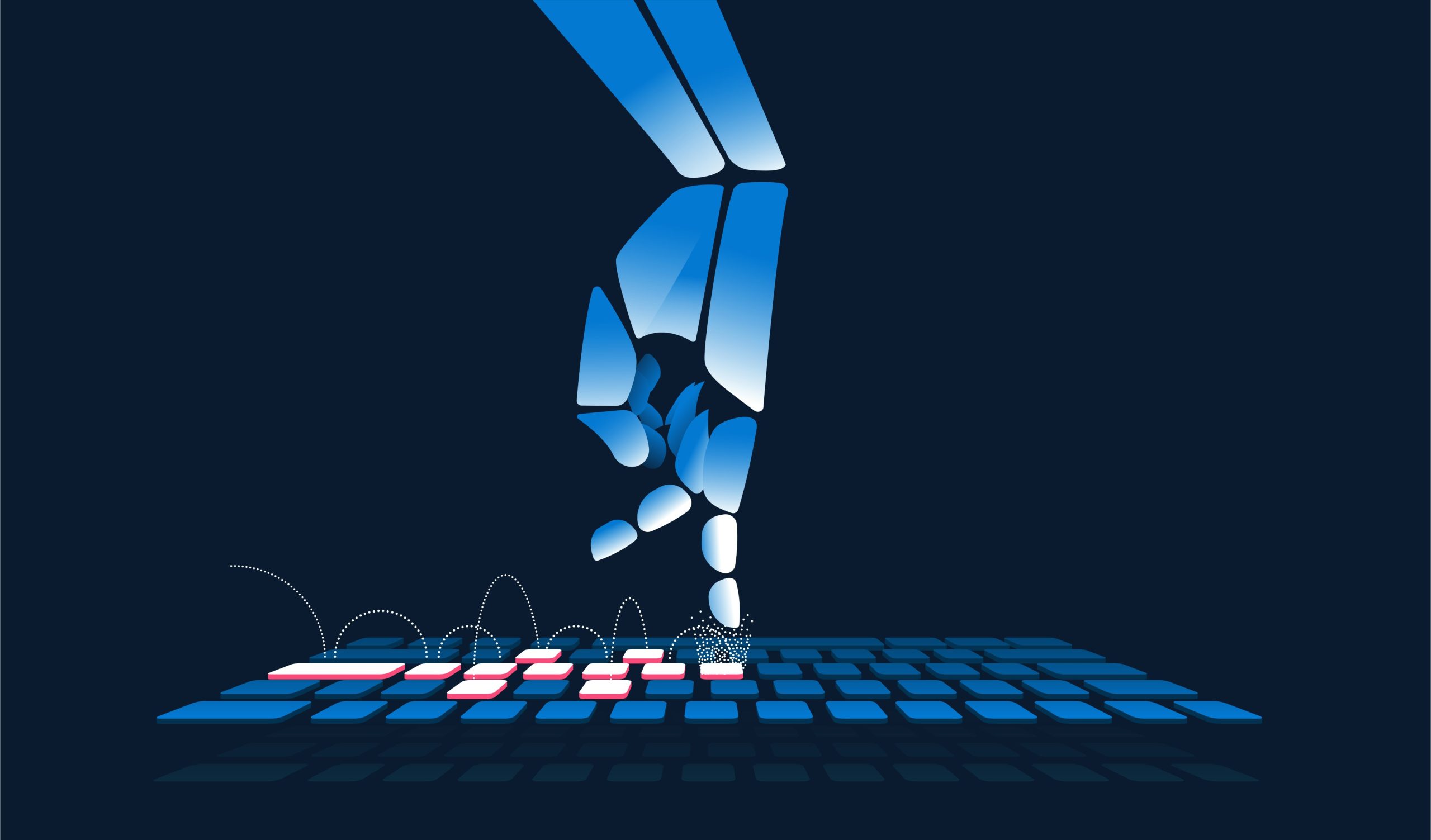
Hugging Face has unveiled HoloTab, a new Chrome extension that allows AI models to interact directly with web applications, mimicking human behavior such as clicking and typing. Announced on Wednesday, HoloTab utilizes the Holo3-35B-A3B model, which Hugging Face claims has made significant strides in what it terms the “computer use frontier,” as demonstrated by its performance on the OSWorld-Verified benchmark for multi-step software interactions.
This innovative approach addresses a common limitation in existing AI systems, which typically rely on structured pathways like APIs and integrations. Many everyday software applications lack clean interfaces for automation, often requiring manual navigation. HoloTab seeks to bridge this gap by enabling AI models to operate software through the graphical user interface, enabling actions like filling out forms, sending messages, and conducting online research without the need for site-specific integrations.
HoloTab represents a growing trend in the AI landscape towards more flexible systems capable of interacting with software in a human-like manner. This shift has seen companies like Anthropic and OpenAI also exploring similar capabilities. Anthropic’s Claude Code system, for example, has recently been enhanced to manage mouse and keyboard inputs across a user’s machine, allowing for remote task execution across multiple applications.
Claude Code’s integration of computer use was first introduced in 2024, but recent updates have made it more user-friendly, enabling developers to interact with applications lacking command-line access. This allows for greater versatility in task management, giving users the ability to check on ongoing tasks remotely.
OpenAI has also made strides in this area, recently updating its Codex coding agent to enable background computer use, allowing it to interact with desktop applications without disrupting the user’s ongoing activities. This aligns with a broader movement among AI companies to develop systems that can handle tasks directly through user interfaces, rather than relying solely on pre-defined connections or integrations.
While Hugging Face focuses on browser-based applications with HoloTab, Anthropic’s solutions extend to desktop environments, and other major players like Google are also investing in their own models that adhere to this trend. The emergence of models capable of operating directly within software interfaces could redefine workflows, particularly in business processes where users often juggle multiple tools that do not communicate effectively with one another.
This approach could pave the way for more significant automation opportunities, as AI systems begin to operate without the constraints of needing explicit integrations. For instance, by allowing an AI agent to directly manipulate existing software, companies can automate complex tasks without the need to overhaul their underlying systems.
Hugging Face’s HoloTab serves not only as a functional tool for web navigation but also as a prototype for advancing the field of computer use in AI, showcasing the capabilities of the Holo3 model. As the technology continues to evolve, the potential applications seem vast, ranging from automated customer service to enhanced productivity tools that can adapt to user needs without requiring extensive training or setup.
Overall, with significant investments in computer use by leading AI firms, the landscape is shifting towards a future where AI can seamlessly operate within existing software ecosystems. This evolution could fundamentally alter how businesses leverage technology, making it easier to automate routine tasks and improve overall efficiency.
See also Cohere Commits to Canadian Headquarters Amid Merger Talks with Germany’s Aleph Alpha
 OpenAI Abandons Ninth Circuit Appeal Over ‘Cameo’ Trademark Block for Sora 2
 Study Reveals Trump’s Tariffs Cause 3.1% Price Surge, Delaying Inflation Drop to Pre-Pandemic Levels
 Character.AI Launches Books Feature for Role-Playing Classic Literature with AI
 Perplexity Launches Personal Computer AI Assistant for Mac Users, Enhancing Workflow Efficiency