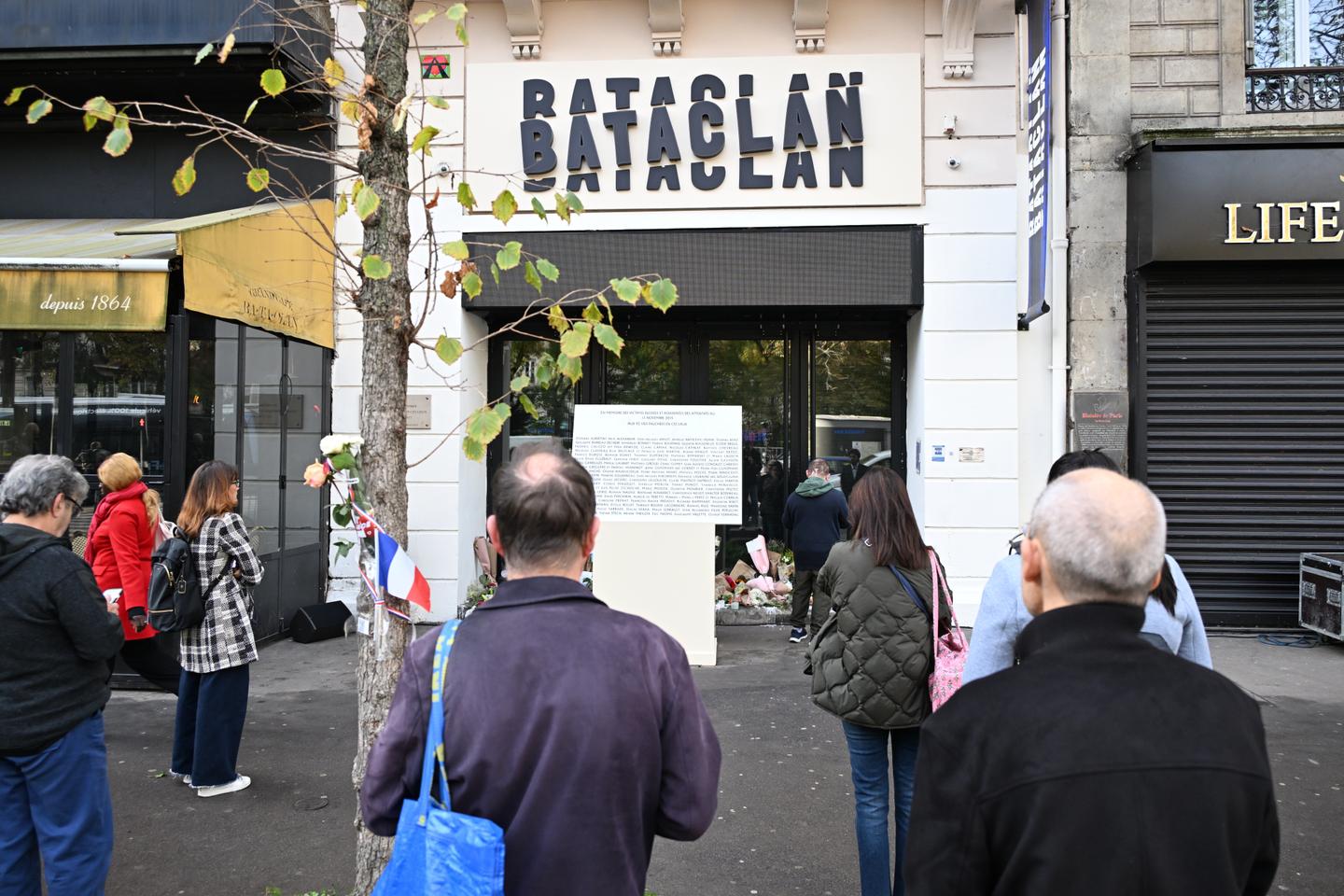
On November 14, 2025, the day following the tenth anniversary of the tragic terrorist attacks at the Bataclan concert hall in Paris, a volatile rumor resurfaced on social media, igniting discussions on misinformation and its societal implications. The claim originated from a user named Melissa, who identified herself as a spokesperson for “Némésis,” a far-right feminist group. In her now-deleted post on the platform X, she made incendiary allegations regarding the nature of the violence inflicted during the attacks, suggesting that victims were not only shot but also subjected to horrific mutilations.
This unsubstantiated assertion echoed a narrative that had first emerged in 2016, propagated by conspiracy and extremist websites. Melissa’s statement claimed, “Many don’t know this, but the Bataclan terrorists didn’t just shoot the victims; they also mutilated them. It was butchery in the literal sense.” She indicated that her information was derived from a personal account, citing her mother’s reading of a purported report at the time of the attacks.
Revisiting Misinformation
Despite the emotional weight of such claims, it’s crucial to ground discussions in reality. The rumors of “knife mutilations,” “castrations,” and “eviscerations” have been categorically refuted by police and judicial officials involved in the investigation of the November 13 attacks. Furthermore, none of the approximately 1,400 survivors or witnesses—who underwent rigorous scrutiny during the trial—ever corroborated these extreme assertions. The narrative appears to have taken root primarily on platforms like Panamza and the ultranationalist blog BreizAtao, which have histories of spreading false information.
The re-emergence of this misinformation raises pressing questions about the influence of social media in perpetuating false narratives, particularly around sensitive topics such as terrorism and violence. As the global community increasingly grapples with the impact of misinformation, the situation highlights the need for vigilance, critical thinking, and fact-checking when consuming content online. This incident serves as a stark reminder of the potency of social media as a tool for spreading both truth and falsehood.
Implications for Society
The viral nature of social media means that misinformation can quickly gain traction, often overshadowing factual accounts. This presents significant challenges, especially in the context of tragic events like the Bataclan attacks, where the emotional hurt and trauma remain fresh for many survivors and families of victims. The ability for misinformation to resurface, particularly in an inflammatory context, can exacerbate societal divisions and undermine trust in legitimate news sources.
As discussions around misinformation evolve, it becomes increasingly important for civil society, technology platforms, and policymakers to collaborate in developing robust strategies to combat the spread of false information. The responsibility lies not only with individuals to scrutinize what they read but also with platforms to enforce standards that limit the dissemination of harmful misinformation.
Ultimately, while the anniversary of such a significant event can serve as a moment for reflection and healing, it is imperative that the narratives surrounding these events remain anchored in verified facts. In an age where misinformation can spread like wildfire, fostering a culture of critical inquiry and responsibility in media consumption is more important than ever.
See also Jeff Bezos Launches AI Startup Project Prometheus with $6.2 Billion in Funding
 Pentagon Reduces Critical Tech Areas from 14 to 6, Prioritizing AI and Quantum Innovations
 Google’s Gemini Update for Home Faces Reliability Issues Despite Enhanced AI Control
 UT Austin Acquires 5,000+ NVIDIA GPUs, Elevating Academic AI Research and Infrastructure
 Google Launches First AI Lab in Mexico’s Puebla, Set to Open January 2026