NVIDIA Corporation (NASDAQ: NVDA) is navigating a complex landscape as it approaches the end of 2025, entrenched in a global debate over the sustainability of artificial intelligence (AI) spending versus concerns over its rising costs. By December 18, 2025, this tension is evident in both market movements and media coverage, reflecting a range of issues from changing data-center funding narratives to the impact of U.S.–China export policies and increased competition threatening NVIDIA’s software dominance.
After experiencing a sharp pullback in the semiconductor sector, NVDA is attempting to stabilize following a 3.8% decline on December 17, closing at $170.94. As chip stocks show signs of recovery, NVDA’s early Thursday trading saw the stock rise to around $172.77, with premarket levels reported at $173.22, buoyed by encouraging signals from memory supplier Micron. Despite recent volatility, NVIDIA’s stock has gained approximately 28% in 2025, with its market capitalization nearing $4.32 trillion, underscoring the substantial expectations tied to the so-called “AI era.”
This week’s focus centers on one critical question: who will finance the surge in GPU demand? Recent reports highlighted a significant downturn in U.S. stocks, particularly within the tech sector, as concerns over AI spending and funding narratives led to declines for major players including NVIDIA and Broadcom. A noteworthy factor contributing to this sentiment was news surrounding a $10 billion data-center financing project involving Oracle, reigniting fears that AI expansion could be constrained not by demand but by balance sheet limitations and return on investment timelines.
Such factors are crucial for NVIDIA, as the company relies heavily on continued commitments from hyperscalers and AI partners to sustain its growth. However, not all news has been bearish. Positive infrastructure demand signals were noted, particularly from the high-performance memory sector. Micron’s strong earnings highlighted ongoing demand for memory used in data centers, which is essential for NVIDIA’s GPU ecosystem. Additionally, the recent announcement of new Blackwell deployments, including a partnership between Atlas Cloud AI and NewYork GreenCloud for a $6 billion initiative to establish AI compute hubs in North America, provided a boost to investor confidence.
In the context of global market dynamics, U.S.-China relations remain pivotal for NVIDIA’s growth trajectory. Earlier in December, reports indicated that NVIDIA’s H200 processors would be allowed for export to China, albeit with a 25% fee and a security review process. However, the same reports noted that NVIDIA’s more advanced chips, the Blackwell and future Rubin models, were excluded from this agreement. While the initial market reaction was positive, further developments revealed potential limitations on Chinese access to H200 chips, raising questions about how much revenue NVIDIA could realistically expect from this market.
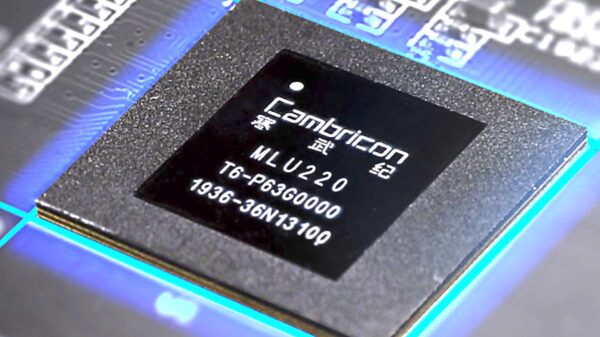
Moreover, competition continues to intensify. Reports indicate that Chinese GPU startup MetaX Integrated Circuits saw its stock soar 700% in its IPO, raising approximately $600 million as part of China’s efforts to reduce its reliance on U.S. chipmakers. This aggressive funding strategy underlines the potential for credible domestic competition that could emerge as a result of U.S. export policies.
In the U.S., NVIDIA faces an evolving competitive landscape, particularly with software becoming a focal point of rivalry. Google’s latest initiative, known as “TorchTPU,” aims to enhance the compatibility of its Tensor Processing Units with the popular PyTorch framework, potentially eroding NVIDIA’s historical advantage in developer ecosystems. While such developments may not immediately impact NVIDIA’s revenue, they do pose long-term risks to its valuation, especially if buyers begin to identify credible alternatives that can challenge NVIDIA’s pricing power.
On the corporate front, NVIDIA recently experienced insider selling, with board member Harvey Jones divesting over $44 million in shares. While insider sales do not inherently signal bearish sentiment, they can attract market scrutiny, particularly for a stock with high expectations. Additionally, NVIDIA settled a trade-secret lawsuit with automotive supplier Valeo, alleviating legal uncertainties that had been looming over the company.
NVIDIA’s acquisition of SchedMD, the company behind the widely-used Slurm open-source platform, aims to fortify its ecosystem amidst rising competition, indicating a strategic push to maintain its market position. As the fourth quarter of fiscal 2026 approaches, investors remain attentive to NVIDIA’s revenue guidance, which anticipates $65.0 billion (±2%), following a remarkable $57.0 billion in the previous quarter. The upcoming earnings report on February 25, 2026, will serve as a critical benchmark for assessing the company’s ability to translate ambitious AI demand into tangible financial performance.
As 2025 comes to a close, NVIDIA stands at a crossroads, caught between the undeniable momentum of AI infrastructure growth and escalating skepticism regarding funding sustainability and competitive pressures. While the company remains a central figure in the AI narrative, the market is demanding concrete proof of its ongoing dominance rather than mere projections.
See also Tenable Appoints Vlad Korsunsky as CTO to Drive AI-Enhanced Exposure Management Strategy
 AI’s Geopolitical Shift: Insights from ACC Europe and Squire Patton Boggs on Navigating Market Risks
 Japanese Woman Marries AI Partner Created with ChatGPT After Breaking Off Human Engagement
 Micron Projects $8.42 Earnings Amid AI Surge, Shares Jump 11% on Strong Demand
 Butterfly Network Launches Compass AI, Achieves 67% Stock Gain Amid Insider Buying