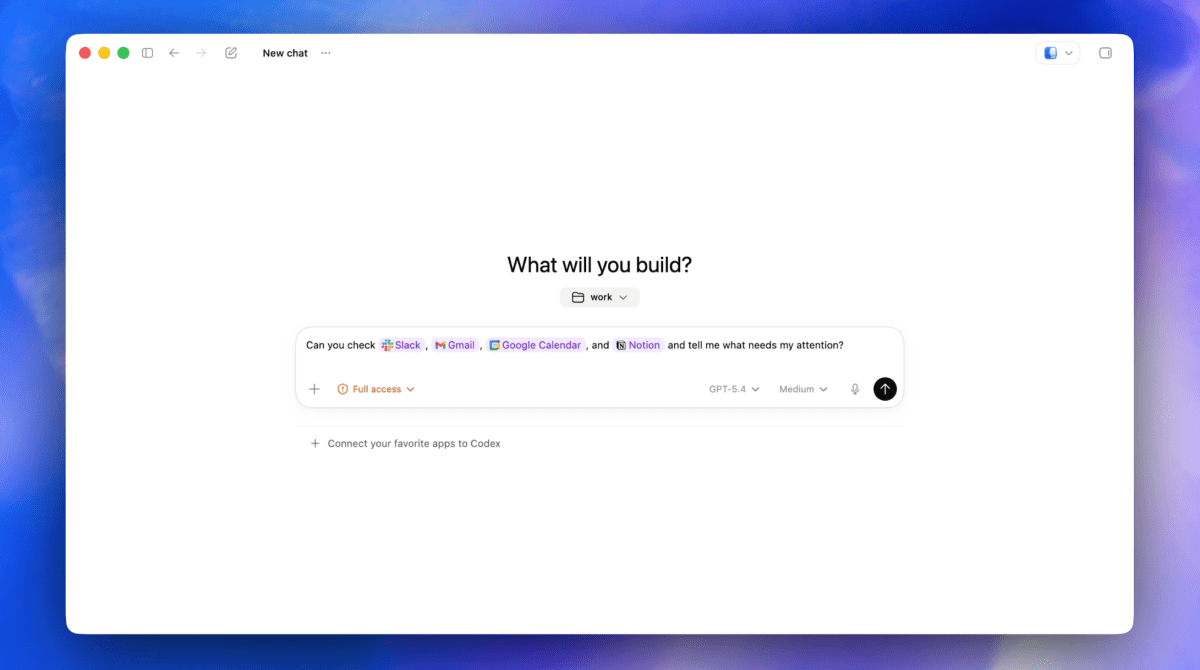
The competition between OpenAI and Anthropic in the realm of AI coding tools is intensifying, with Anthropic currently gaining traction among businesses. Recently, TechCrunch reported that Claude Code has emerged as a preferred option for many companies. In response, OpenAI is revamping its own coding tool, Codex, with a range of updates aimed at enhancing its functionality and competitiveness.
This week, OpenAI unveiled significant enhancements to Codex, including a groundbreaking feature that allows the tool to operate in the background on users’ computers. This update enables Codex to open applications on the desktop and perform tasks without interrupting the user’s workflow. According to the company, this functionality allows multiple agents to run in parallel, acting as a coding assistant that handles auxiliary tasks while users focus on primary projects. OpenAI highlighted potential use-cases such as iterating on front-end changes, testing applications, and working in environments that lack a direct API.
The agentic capabilities of Codex are part of OpenAI’s broader strategy to position the tool as not just a coding assistant but a multifaceted resource that can integrate into various corporate workflows. Observers in the AI coding space note that several of the features OpenAI is introducing bear similarities to capabilities previously offered by Anthropic’s Claude Code. Last month, Anthropic announced that Claude and Cowork could remotely control Mac desktops on behalf of users even when they were away from their keyboards.
Another significant addition to Codex is the introduction of an in-app browser, allowing users to issue commands that the tool can execute on specific web applications. OpenAI suggests this feature will be particularly beneficial for front-end and game development. Plans are also in place to expand Codex’s browsing capabilities to enable it to fully command browsers beyond just local web applications.
OpenAI also introduced a preview feature called “memory,” which allows Codex to remember previous work sessions and provide context about user habits. This capability is complemented by a new image-generation function, intended for creating product concepts, visual aids for presentations, and other corporate materials. Moreover, the company announced 111 plugin integrations from various applications like CodeRabbit and GitLab Issues, enhancing Codex’s ability to complete tasks involving these tools. Through these plugins, Codex can manage minor clerical work, such as reviewing Slack channels and Google Calendar to generate daily to-do lists.
In an effort to attract enterprise and business users, OpenAI has also introduced a pay-as-you-go pricing model for Codex. This approach aims to provide greater flexibility in access to the coding tool’s services.
Once regarded as the leading entity in AI technology, OpenAI is now engaged in a fierce rivalry with Anthropic, particularly in the domain of enterprise solutions. This shift comes amidst a broader retreat from consumer-oriented tools, such as the social video app Sora 2. Additionally, OpenAI has faced various challenges, including legal controversies surrounding claims that ChatGPT has adversely affected the mental health of some users.
As the competition evolves, the landscape for AI coding tools continues to shift, with both OpenAI and Anthropic pushing boundaries to deliver more advanced solutions for businesses. The outcome of this rivalry could significantly shape the future of coding assistance in corporate environments.
See also DeepMind’s Demis Hassabis Aims to Unlock AGI, But Faces New Challenges from Google
 Amazon Signs Solar-Plus-Storage PPAs in Australia, Expands $14B Data Center Investment
 Anthropic Launches Redesigned Claude Code App for Enhanced AI Coding Workflows
 Midjourney 8.1 Launches with 3x Faster HD Mode and Key Enhancements for Image Quality
 Anthropic’s Mythos Signals Major Disruption for IT Services, Threatens Traditional Models