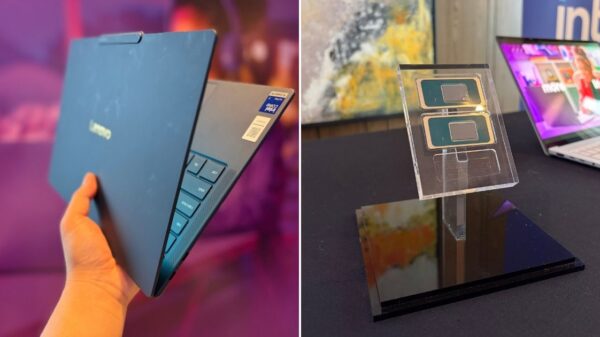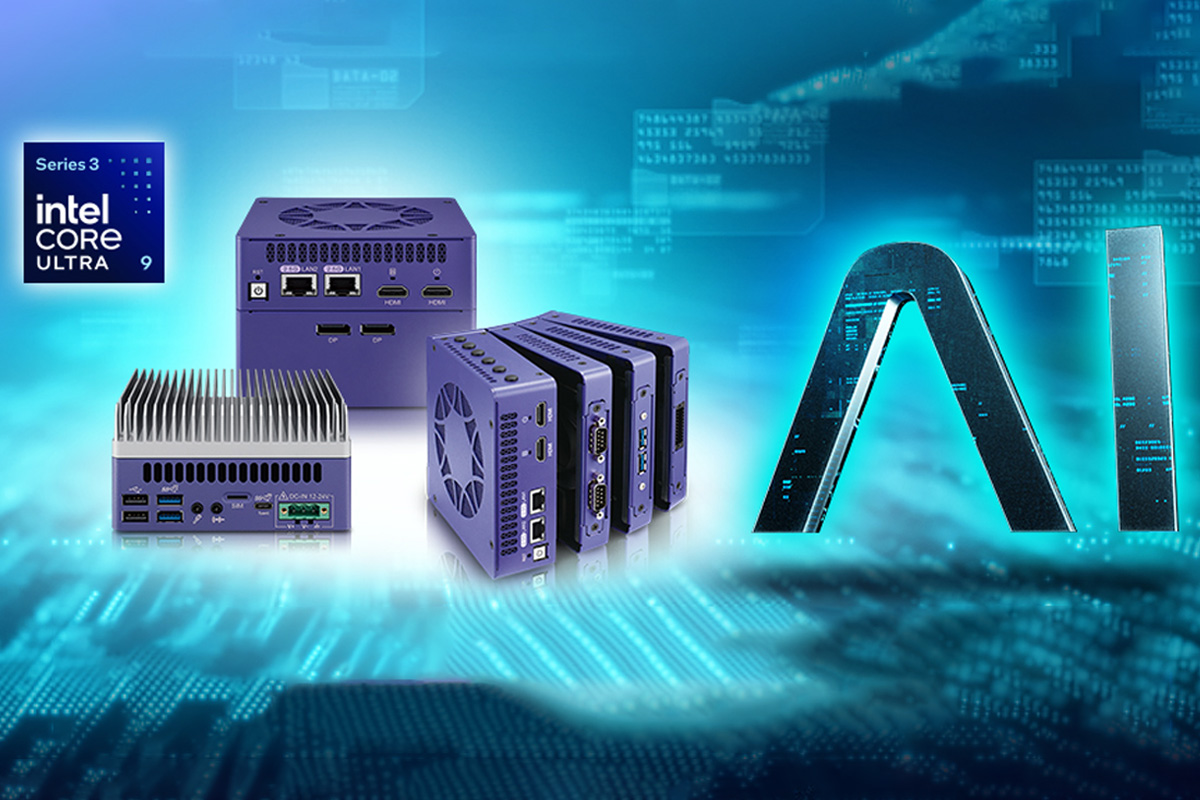
At CES 2026, Intel introduced its Core Ultra Series 3 processors, codenamed Panther Lake-H, which are built on the Intel 18A (1.8-nanometer) process. These processors are designed for both consumer and industrial applications. Vecow showcased one of the first industrial platforms utilizing these processors, the TGS-2000 series. This new family of ultra-compact, stackable Edge AI computers is tailored for high-performance, space-constrained environments and is powered by either the 16-core Intel Core Ultra 9 386H or the 12-core Intel Core Ultra 5 336H system-on-chip (SoC).
The TGS-2000 series marks an upgrade from the previous TGS-1000 series, which debuted in 2024 and featured Intel’s Meteor Lake processors. While the overall design remains largely consistent, the shift to the Core Ultra Series 3 significantly boosts AI capabilities, achieving up to 100 TOPS (trillions of operations per second) in combined performance with select SKUs. Notably, the high-end Panther Lake-H CPU can deliver as much as 180 TOPS. The TGS-2000 series comprises three variants: the fanless TGS-2000, the actively cooled TGS-2000F, and the TGS-2500F, which accommodates an MXM GPU card for more demanding graphical tasks.
Equipped with Intel Core Ultra Series 3 processors, the TGS-2000 series provides robust specifications. The Intel Core Ultra 9 386H features a 16-core CPU, comprising four performance cores with frequencies up to 4.9 GHz, eight efficient cores, and four low-power efficient cores. It also includes an 18 MB Intel Smart Cache and a 4-core Intel Arc Xe3 GPU capable of delivering up to 40 TOPS. The AI functionalities are enhanced by an Intel AI Boost NPU, which can achieve an additional 50 TOPS, yielding a combined performance of 100 TOPS when integrating CPU, GPU, and NPU. The TGS-2000 series supports up to 128 GB of DDR5 memory and features multiple connectivity options, including 2.5GbE networking, USB, and various display outputs.
In terms of thermal performance, the TGS-2000 is rated for operation in temperatures ranging from -25°C to 45°C, while the TGS-2000F and TGS-2500F can withstand up to 55°C. This robustness is crucial for industrial applications where conditions can be challenging. These computers also comply with relevant EMC standards, ensuring reliability in various environments.
Vecow has designed the TGS-2000 series not only for high performance but also for versatility in deployment. The system supports Windows 11, Windows 10 (LTSC), and Linux, along with the Intel OpenVINO toolkit for AI development, making it suitable for a range of edge deployment scenarios. Additional accessories, including certified DDR5 memory options, power adapters, and expansion modules for enhanced connectivity, further facilitate diverse application needs.
While pricing details for the TGS-2000 series have not been disclosed, interested customers are encouraged to reach out to Vecow’s sales team for quotes. For more information on specific models, users can refer to product pages on Vecow’s website, which also may provide additional technical specifications and deployment options.
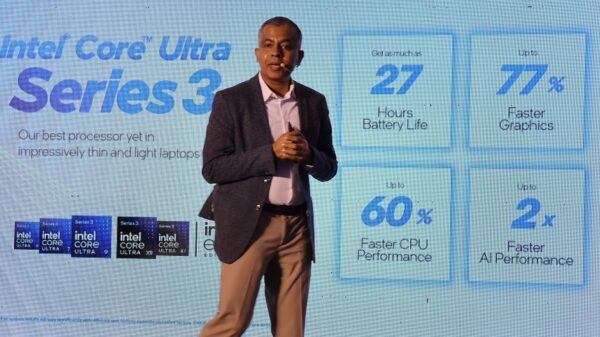
Intel’s unveiling of the Core Ultra Series 3 processors signifies a strategic advancement in its chip technology. The new processors leverage a hybrid architecture combining “Cougar Cove” Performance cores with “Darkmont” Efficient cores, alongside the introduction of the Xe3 “Celestial” graphics architecture and a 5th-generation NPU. This transition to the 18A process node promises improved performance-per-watt, enhancing the viability of these chips for embedded and industrial applications as they compete with previous generations like Meteor Lake and Lunar Lake. Industry observers will be watching closely to see how these developments impact market dynamics and technological innovation in the coming years.
See also China Investigates Meta’s $100M Acquisition of AI Startup Manus Amid Tech Rivalry
 Chiplets and UCIe Standard Enable 10x More Powerful AI Accelerators, Transforming Hardware Design
 Interview Kickstart Launches Advanced ML Program to Help Engineers Transition to Top AI Roles
 US and China Face Energy Bottlenecks in AI Race: Key Insights and Strategies Unveiled
 Acer Launches Gaming Monitor and AI Laptops to Boost Revenue Amid Component Challenges