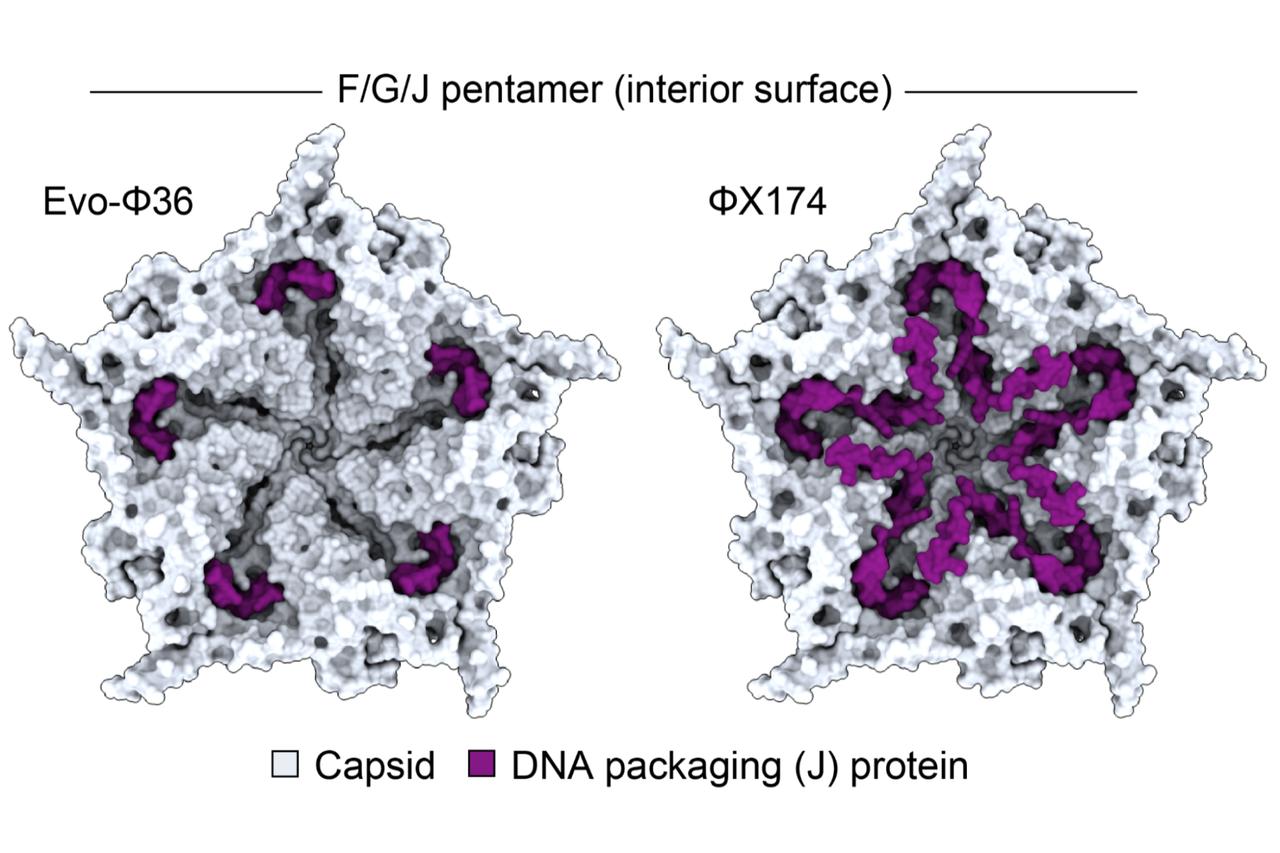
Scientists at Stanford University have designed a virus entirely through artificial intelligence, a groundbreaking achievement in the field of synthetic biology that raises new questions about biosecurity. The newly engineered virus, named Evo-Φ2147, was created to specifically target lethal strains of E. coli.
This innovative project utilized two advanced technologies: an AI model that generates genetic code and cutting-edge methods for assembling long DNA sequences with remarkable precision. Researchers emphasize that this development signifies a shift away from relying solely on natural evolution, enabling scientists to construct a genome from scratch.
The AI system behind this creation, known as Evo2, was trained on an astonishing nine trillion DNA base pairs, effectively learning the structural components of genes rather than textual data like conventional chatbots. In its operation, Evo2 generated 285 new virus genomes, out of which 16 displayed the capability to infect E. coli. Notably, a blend of the most effective viruses managed to disable even the highly resistant bacterial strains, with the AI-designed variants proving to be 25% more effective than their wild counterparts.
To physically construct the virus, the research team employed a novel DNA assembly technique called Sidewinder, which allows for a 100,000-fold increase in the accuracy of constructing long DNA sequences compared to previous methods. This advancement is projected to make genome construction 1,000 times cheaper and faster. The final product, Evo-Φ2147, comprises 5,386 base pairs and a mere 11 genes, in stark contrast to the human genome that consists of approximately 3.2 billion base pairs and around 200,000 genes. Interestingly, because Evo-Φ2147 lacks the ability to reproduce independently, some experts argue that it should not be classified as fully alive.
According to British molecular biologist Adrian Woolfson, this achievement represents a pivotal moment in scientific history. He remarked, “For the last 4 billion years, all life on Earth has evolved by the trial-and-error process of Darwinian evolution by natural selection, which lacks any foresight or intention. Natural evolution now has a co-author.”
Experts believe that the technology could be instrumental in addressing the persistent challenge of antibiotic resistance, a significant health crisis worldwide. The team behind Evo-Φ2147 aims to create phage therapies that can adapt alongside bacterial evolution. Faster DNA assembly techniques could also revolutionize vaccine development; proponents argue that if such methods had been available during the COVID-19 pandemic, the first mRNA vaccine could have been produced in just 62 hours rather than the actual 42 days.
Woolfson indicated that this approach could accelerate the creation of personalized cancer vaccines, which currently take anywhere from eight to twelve weeks to manufacture. However, the advent of AI-driven genome design does not come without ethical and security concerns. Historically, AI tools have demonstrated the capability to produce genetic sequences resembling dangerous toxins. The Existential Risk Observatory has identified AI-generated pandemics as one of the most significant threats to humanity.
To mitigate these risks, the developers of Evo2 stated that they intentionally excluded data on human pathogens from the training set, ensuring that Evo2 cannot generate human viral sequences. “Evo cannot generate human viral sequences due to deliberate training data exclusions, preventing both accidental and intentional misuse for pathogen design,” the researchers noted.
As the conversation surrounding this technology evolves, Woolfson emphasized the necessity for society to determine how such powerful tools should be applied. “We must decide as humanity how this power will be used and by whom. Who sets the rules, and who defines the limits?” he asked.
The implications of this breakthrough extend beyond the laboratory, as the intersection of AI and genetic engineering could redefine the future of medicine, public health, and bioethics. With the potential to create novel therapies and vaccines quickly, the scientific community must also grapple with the ethical frameworks necessary to guide responsible innovation in this rapidly advancing field.
See also Meta Tests Standalone Vibes App for AI-Generated Videos in Brazil and Mexico
 University Welcomes AI Ethics Leader David Danks to Address Ethical Risks in AI Development
 Oracle Sued by Shareholders for Misleading AI Investment Claims Amid Revenue Shortfalls
 AUVSI Warns U.S. Robotics at Inflection Point, Urges National Strategy to Counter China