MindBio Therapeutics Corp. (MBIO:CSE; MBQIF:OTCQB; WF6:Frankfurt) has announced an increase in its private placement offering to CA$1.5 million. Initially set at CA$650,000, as of March 19, 2026, the company will now offer up to 2,500,000 units priced at CA$0.60 each. Each unit consists of one share and a warrant, allowing the holder to purchase an additional share at US$0.80 for three years. This offering may be amended if the closing price on the Canadian Securities Exchange exceeds CA$1.00 for ten consecutive trading days. The company is also providing finders’ fees to certain third parties who attract new investors.
MindBio Therapeutics is a Canadian biotech firm focusing on using AI technology to assess the human voice for signs of impairment due to alcohol or illicit substances. The company is developing personal-use smartphone applications and corporate kiosks aimed at reducing intoxication-related accidents. Its proprietary technology analyzes up to 140 vocal markers, emphasizing metrics such as spectral entropy, jitter, shimmer, and speech rate variability. MindBio envisions a future where voice-based health monitoring is standard, enabling early problem detection and improved outcomes for individuals across various sectors.
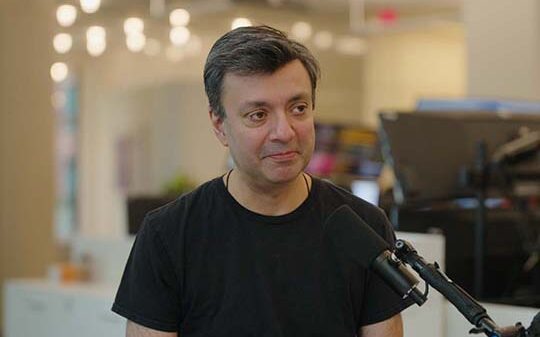
The company’s personal-use app, Booze AI, is already live and marketed as “the world’s first voice-activated AI-powered blood alcohol test.” The app delivers private, instantaneous results by prompting users to perform basic speech and behavioral tasks. MindBio is now shifting focus to commercial applications, developing Edge-AI kiosks designed for non-invasive intoxication screenings at large mining sites. In a recent interview, CEO Justin Hanka highlighted the economic challenges faced by mining operations in managing employee screenings. With approximately 220,000 mining workers transitioning on and off sites daily in Chile alone, even testing just 10% of them could result in significant daily costs.
Current screening techniques in zero-tolerance industries are often invasive and costly, leading to employee discomfort. Hanka emphasized, “The core reason why a company wants to do this is that 25% of incidents are caused by alcohol and drug intoxication, directly or indirectly.” When asked about the technology’s adaptability to various languages and dialects, he noted its “language and accent agnostic” capabilities, allowing it to uniformly assess intoxication across different demographic factors. This non-discriminatory approach provides a scalable solution to workforce screening.
MindBio plans to launch its Edge AI voice detection kiosks in June 2026, with the aim of scaling its testing in zero-tolerance industries. The company is already collaborating with mines in South America and exploring applications in other sectors. While enterprise and telehealth applications are in development, future ambitions include disease prediction and health optimization technologies.
Recent presentations by MindBio underscore the pressing need for effective screening technology. The company argues that mass intoxication detection can significantly mitigate risks, such as impaired driving and heightened suicide rates correlated with heavy intoxication. They estimate that 40-50% of suicides involve alcohol, and the global cost of alcohol-related harm stands at approximately US$1.6 trillion.
Factors influencing addiction and abuse risk are diverse, including parental supervision, peer influence, socioeconomic conditions, and occupational stress, as outlined by the American Addiction Centers. The mining industry, which often involves high stress and physical demand, has been identified as particularly susceptible to substance abuse issues. The global biotechnology market has also witnessed remarkable growth, projected to expand from an estimated US$1.55 trillion in 2023 to US$3.88 trillion by 2030, according to Grandview Research.
Furthermore, the AI detection market is described as rapidly evolving. Current estimates suggest its value could surge from approximately US$0.58 billion in 2025 to US$2.06 billion by 2030. The Canadian Mining Journal recently reported concerning statistics, revealing that alcohol consumption among mining workers in Chile exceeds 75%, with over 40% categorized as problem drinkers. The article posits that MindBio’s kiosks could play a crucial role in accident prevention, highlighting the potential financial repercussions of preventable incidents in the mining sector.
As the company advances its technology, it reports that management and insiders own approximately 5.80% of MindBio Therapeutics shares, with retail investors holding the remaining 94.20%. The firm currently has a market capitalization of CA$4.5 million, with its shares trading between CA$0.50 and CA$8.00 over the past year. Looking ahead, MindBio’s innovations in screening technology could not only reshape industry practices but also contribute significantly to public health and safety.
See also Teen Girls and Boys Equally Use AI Nudification Apps, Study Reveals
 Study Reveals 75% of AI Chatbots Assist Teens in Planning Violent Attacks
 Deep Learning Model Achieves 50% Greater Accuracy in Predicting Nuclear Charge Density
 AI-Powered Surgical Tools Raise Ethical Concerns in Pediatric Care, Johns Hopkins Warns