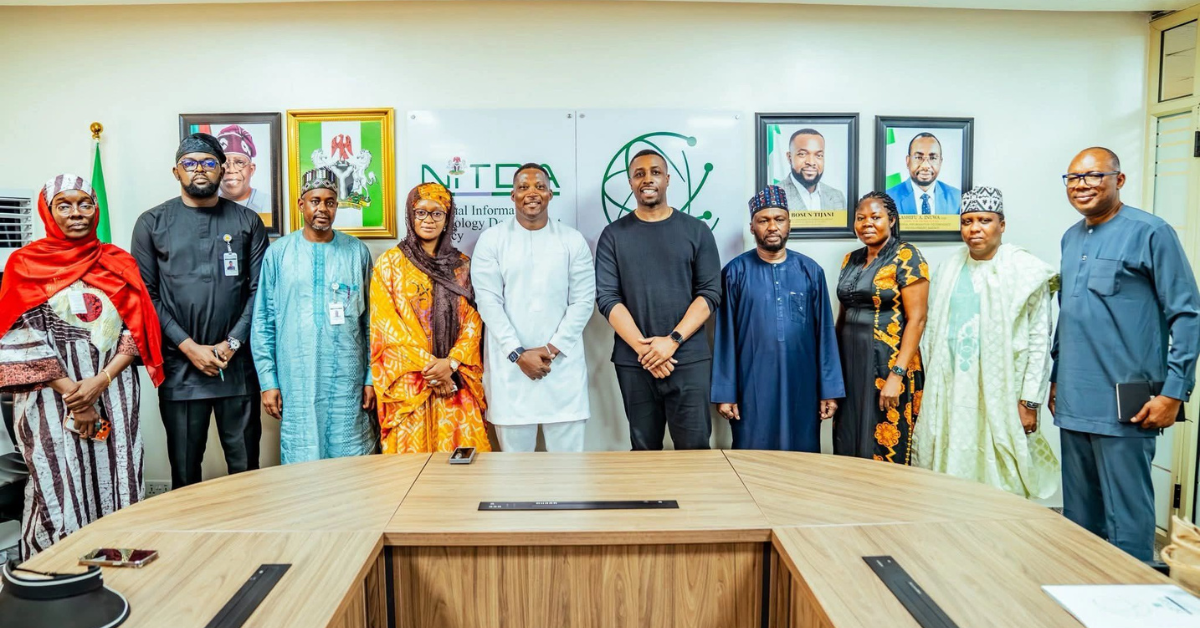
In a significant move towards enhancing digital infrastructure, Nigeria’s National Information Technology Development Agency (NITDA) has partnered with NKENNEAi, an initiative focused on developing language AI capabilities for public services. This collaboration, reported earlier this month by TechCabal, signals a broader transformation in the role of artificial intelligence across Africa, with a particular emphasis on integrating it into essential public services.
Language AI is shifting from being perceived as a niche innovation to a critical component of Africa’s digital economy. However, the real challenge lies in translating partnerships into effective deployment. The pressing question remains: how will these language AI systems be integrated into vital sectors such as public services, healthcare delivery, and financial platforms? Coordination among the various stakeholders responsible for these integrations is key to success.
The NKENNEAi Talks initiative aims to address this challenge. Emerging from the collaboration between NITDA and NKENNEAi, these monthly webinars gather stakeholders from government, technology, and infrastructure sectors to discuss practical implementations of language AI in real-world contexts. Rather than focusing solely on the theoretical potential of AI, the series emphasizes the realities of deployment, including the transition from policy alignment to operational systems.
This initiative underlines the growing understanding that AI development in Africa will rely not only on technological advancements but also on effective collaboration among institutions tasked with deploying and scaling these systems. As governments and organizations increasingly explore AI integration, the critical challenge has shifted from merely establishing functionality to embedding these technologies into existing frameworks in a sustainable manner.
Patrick Okigbo III, the Founding Partner of Nextier Power, will feature in the upcoming NKENNEAi Talks session. His expertise in infrastructure strategy and national development underscores a broader perspective on language AI. If language is viewed as an infrastructure element, its integration must extend beyond technology into sectors like energy, governance, and finance, where effective service delivery is essential.
NKENNEAi is specifically focused on creating AI systems tailored for African languages, which present unique challenges that differ from those associated with more widely spoken global languages. Factors such as tone, dialect, and cultural relevance are crucial for usability, making it imperative that these systems function effectively for diverse user populations. As Michael Odokara-Okigbo, Founder of NKENNEAi, articulated, “Language is the missing layer in Africa’s digital infrastructure. If systems cannot understand people, they cannot serve them.”
NKENNEAi Talks fosters ongoing dialogue between AI developers and those responsible for deploying these systems, aiming to align efforts across different sectors that may not typically coordinate. The goal is to create a cohesive approach to integrating language AI, moving beyond theoretical discussions to actionable strategies.
The next session of NKENNEAi Talks is set for March 31, 2026, at 10:00 AM EST / 3:00 PM WAT, and will be held as a live virtual discussion with audience participation. Details and registration information are available on the initiative’s platform.
This emerging focus on practical integration highlights a pivotal shift in Africa’s AI landscape. Initial phases were characterized by showcasing capabilities and developing toolsets, but the current emphasis is on embedding AI into real-world systems and institutions. Language plays a central role in this evolution, not merely as a technical hurdle but as a fundamental structural consideration. The efficacy of digital infrastructure will ultimately be determined not by what is built, but by how effectively it meets the needs of users, particularly in terms of language comprehension.
See also Trump Announces New PCAST Advisors, Excludes Elon Musk in Tech Advisory Shakeup
 Treasury Announces AI Innovation Series to Discuss Regulation Reductions for Banks
 Data and AI Governance Converge: New Frameworks Needed for Effective Oversight
 Australia’s Attorney-General Advocates Licensing Deals Between AI and Creative Industries