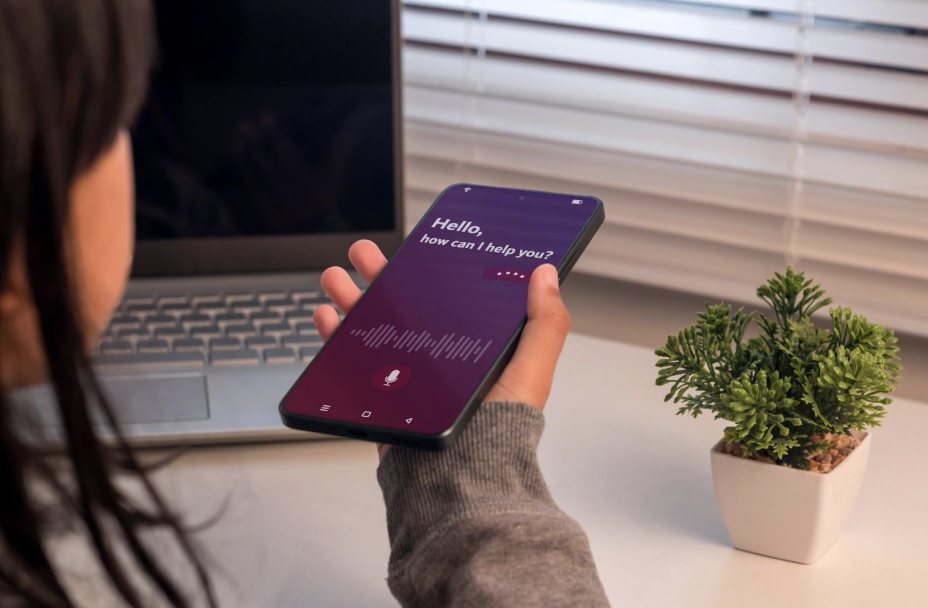
Businesses are rethinking the role of voice technology, shifting from a legacy channel to a pivotal component of customer interaction, driven largely by advancements in artificial intelligence (AI). A new report from RingCentral, based on a survey of 2,000 decision-makers in IT, HR, and customer experience across the U.S. and U.K., indicates that the preference for engaging with AI agents via voice is expected to increase from 14% today to 23% over the next two years. Conversely, reliance on text-based chat is projected to decline from 42% to 25% during the same period. This reflects a broader trend: as virtual agents assume greater responsibilities, organizations increasingly desire natural, conversational methods of interaction.
Modern voice AI systems are equipped to understand natural language, navigate complex requests, and seamlessly transition to human agents when necessary. The success of these platforms hinges on delivering high-quality audio input, essential for accurate voice recognition and low-latency performance in applications like speech-to-text and voice synthesis. With these capabilities, voice AI is reshaping customer engagement and enterprise automation, allowing for genuine conversations that replicate human speech patterns.
Transforming Interaction
Leading voice AI platforms are emerging as essential tools for businesses looking to enhance their customer interactions. RingCentral’s suite, comprising AIR, AVA, and ACE, automates the entire conversation lifecycle. AIR serves as an AI receptionist to manage inbound calls, AVA assists agents in real time, and ACE analyzes post-call data for insights and coaching. Dialpad offers real-time transcription, sentiment analysis, and low-code agent-building tools natively integrated within its communications stack. Meanwhile, Zoom is leveraging its video capabilities to enhance customer experience through its Virtual Agent, which smoothly handles multi-step scenarios and ensures contextual handoffs through its Contact Center.
Five9 specializes in enterprise contact center solutions, offering a voice-focused Intelligent Virtual Agent complemented by deep CRM integrations. Genesys Cloud CX provides a comprehensive CCaaS platform with low-code voicebot creation and predictive routing, while Nextiva’s XBert serves as an AI receptionist specifically designed for small and mid-sized businesses, streamlining communication across multiple channels.
Voice AI technology is revolutionizing the way organizations operate, enabling capabilities such as call automation, providing lifelike interactions, supporting multiple languages, and offering ultra-low latency even at scale. These advancements allow companies to automate high volumes of calls, freeing human agents to focus on more complex tasks while ensuring that customer interactions remain smooth and efficient. Furthermore, voice AI systems can integrate seamlessly with existing business workflows, thereby enhancing productivity.
As the demand for effective voice AI solutions grows, organizations must scrutinize the platforms available in the market. Key considerations include the core features of a platform, such as automation and integration capabilities, as well as the system’s ability to manage contextual handoffs to human agents when needed. Companies should also evaluate ease of deployment and scalability, which are critical for adapting to changing business needs.
RingCentral stands out for its affordability and flexibility, with pricing starting at $59 per month for AIR. The platform has demonstrated real-world success, such as a reported 14% increase in monthly appointments for a healthcare provider leveraging its capabilities. Dialpad’s recent launch of its Agentic AI Platform offers developers an easy interface for creating autonomous agents, although full access requires adopting the entire communications stack.
Zoom’s investment in voice AI is evident through its integrated Virtual Agent, which enhances user experience without the need for additional vendors. Five9 caters specifically to enterprise contact centers, providing robust support for regulated industries, while Genesys Cloud CX excels in analytics and workforce optimization. Nextiva targets smaller businesses with a straightforward platform, making voice AI accessible without the complexity often associated with larger systems.
The shift toward voice AI is not merely a temporary trend; it signals a fundamental transformation in how companies engage with their customers. As AI technology matures, platforms that effectively incorporate voice as a central component of their offerings are likely to lead the market. The evolution of these systems will drive innovation, improve operational efficiencies, and elevate customer satisfaction across various sectors, ultimately setting a new standard in enterprise communication.
See also MIT Researchers Develop ‘Humble’ AI Framework to Enhance Medical Decision-Making
 Google Funds $50K for UH Mānoa’s AI and Robotics Research in Agriculture and Health
 Arc Raiders Leverages Machine Learning for Advanced Enemy AI Dynamics
 Security Analytics Market to Reach $78.92 Billion by 2035 Amid Rising Cyber Threats
 Meta Assembles Elite AI Team to Enhance Facebook and Instagram Algorithms