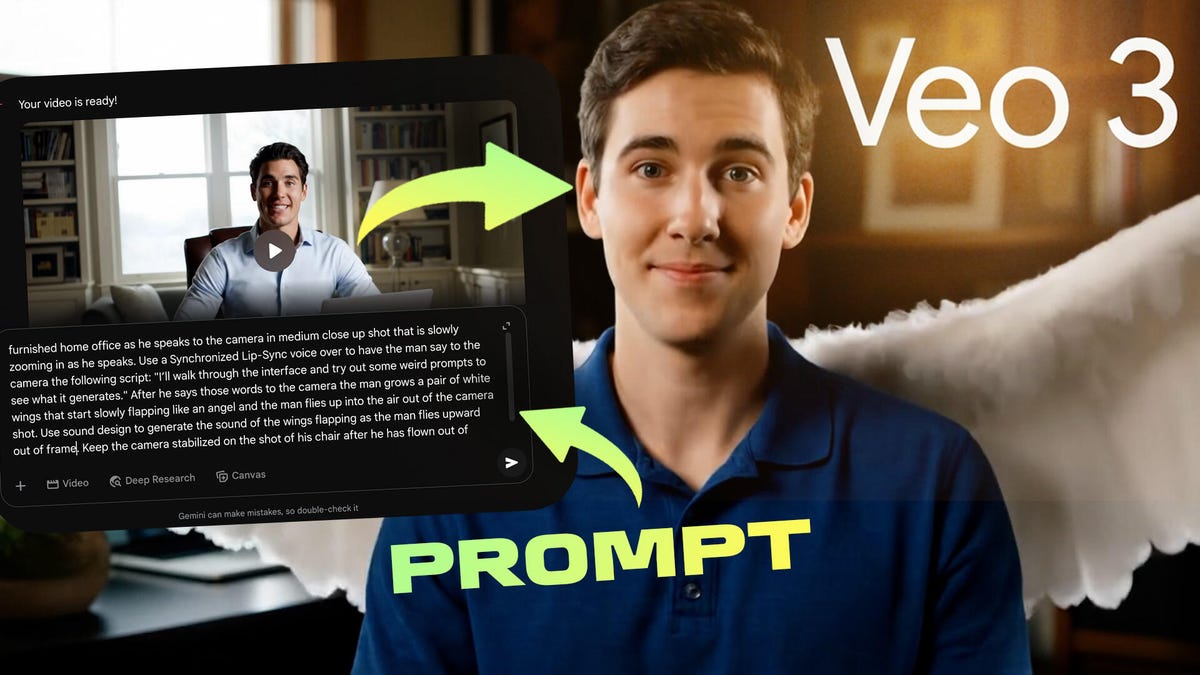
Google announced the launch of its cost-effective version of the Veo 3 AI video generator, named Veo 3.1 Lite, on Tuesday. This move underscores the company’s renewed focus on generative AI, a sector where competition is intensifying.
The new model is designed to enhance flexibility for developers, offering it at a price point that is 50% lower than the existing Veo 3.1 Fast model, while maintaining similar processing speeds. Like its predecessors, Veo 3.1 Lite will support audio in videos, broadening its appeal for various applications.
Veo 3.1 Lite comes packaged with a range of features, including text-to-video and image-to-video capabilities, and provides options for both 16:9 and 9:16 aspect ratios. It supports video resolutions of up to 1080p, but notably lacks the 4K capability available in other models, which may disappoint some professional creators. Developers can also customize the video duration to 4, 6, or 8 seconds, with adjusted costs corresponding to the selected duration.
The rollout of Veo 3.1 Lite commenced on Tuesday and is accessible to developers via the paid tier of the Gemini API and Google AI Studio, including Google’s filmmaking platform, Flow. This release comes at a strategic time, following OpenAI’s announcement last week that it would be shutting down its video generation app, Sora, a tool that uniquely combined social media features with AI video creation.
Google’s introduction of Veo 3.1 Lite serves as a clear indication that the tech giant remains committed to advancing its generative media offerings while simultaneously working to make AI-generated content more affordable. OpenAI stated it is sunsetting Sora to refocus on its core goals, yet the costly nature of AI video processing has been a persistent barrier for companies in this domain.
In tandem with Veo 3.1 Lite, Google is also set to update the pricing structure for the Veo 3.1 Fast model, with new prices expected to be available “soon,” according to the developer documentation. This adjustment reflects broader trends in the industry, where reducing the costs associated with running AI technologies is crucial not only for individual developers but also for the sector as a whole.
The pricing for both models reflects Google’s strategy to make AI more accessible. The costs per second for Veo 3.1 Lite are set at $0.05 for 720p and $0.08 for 1080p, while the Veo 3.1 Fast will see adjusted prices of $0.10 for 720p and $0.12 for 1080p, down from previous rates of $0.15. For 4K resolution, the price will decrease from $0.35 to $0.30 per second.
This competitive pricing strategy may attract more developers and content creators looking for cost-effective solutions in the burgeoning field of AI-generated video content. As the demand for generative AI applications continues to grow, Google’s latest offerings emphasize its commitment to innovation while navigating the challenges of operational costs in a highly competitive landscape. By enhancing affordability and functionality, Google aims to solidify its position as a leader in the AI video generation market.
See also Zhipu AI Launches GLM-5V-Turbo, Their First Native Multimodal Coding Model
 UAE Launches Falcon Perception, a Compact 600M-Parameter Multimodal AI Model
 Identify AI-Generated Videos: 6 Key Signs Everyone Should Know Now
 Alphabet Launches Veo 3.1 Lite, Cuts Prices to Capture AI Video Market Post-OpenAI