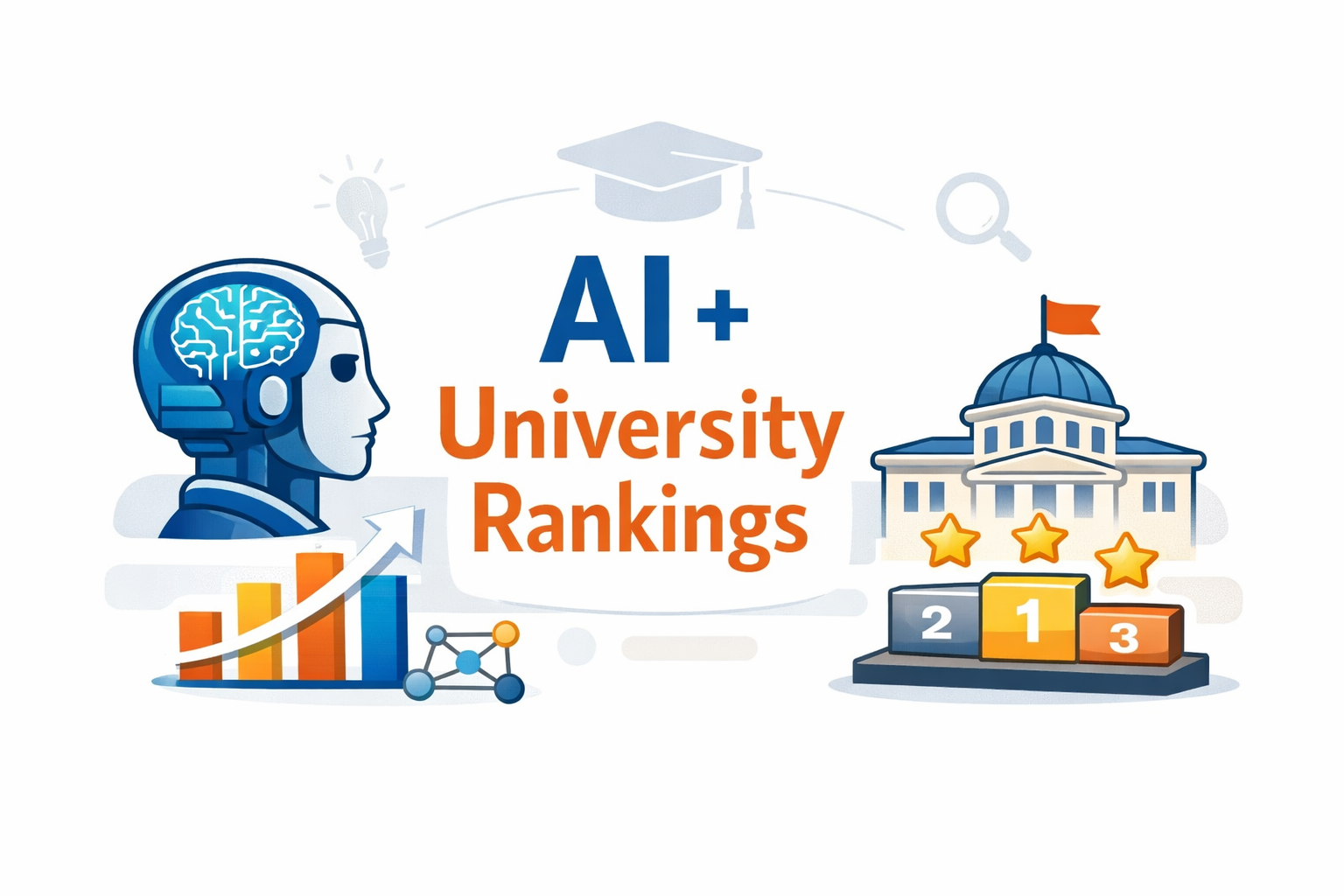
As demand for artificial intelligence (AI) education skyrockets in 2026, institutions worldwide are emerging as leaders in equipping students with essential skills in machine learning, robotics, ethics, and large language models. A surge in interest is seen across various sectors, including healthcare and autonomous vehicles, highlighting the urgency for a workforce adept in these technologies. Global rankings from renowned sources like QS and Times Higher Education underscore the institutions that excel in AI-related fields.
The QS World University Rankings by Subject 2026 for Data Science and Artificial Intelligence places the Massachusetts Institute of Technology (MIT) at the forefront, achieving a near-perfect score. Following closely are Stanford University and the National University of Singapore (NUS). Carnegie Mellon University, known for its pioneering work in robotics and AI, consistently ranks among the elite in these assessments. In the Times Higher Education (THE) 2026 Computer Science rankings, the University of Oxford tops the list, supported by strong performances from Cambridge, ETH Zurich, and several leading U.S. institutions.
A composite ranking of the top 50 universities for AI studies in 2026 aggregates data from these sources along with U.S. News graduate AI programs and research output metrics. These institutions provide various pathways for students, including undergraduate, master’s, and doctoral programs, with a focus on hands-on research, industry partnerships, and the ethical development of AI technologies. Many offer specialized degrees, such as a Master of Science in Artificial Intelligence or dedicated tracks within computer science disciplines.
The rankings reveal MIT’s stronghold in AI education, attributable to its renowned Computer Science and Artificial Intelligence Laboratory (CSAIL). Stanford’s strategic location in Silicon Valley enhances its accessibility to tech giants, fostering programs that emphasize real-world applications. Carnegie Mellon continues its legacy as a leader in AI, particularly through its School of Computer Science and Robotics Institute, which specializes in autonomous systems and machine learning theory.
Oxford’s leadership in AI research is complemented by its interdisciplinary approach, blending technical depth with philosophical considerations. NUS stands out as Asia’s premier AI hub, bolstered by significant government and industry funding, while Nanyang Technological University (NTU) excels in practical AI applications and global collaborations. Other notable institutions include University College London (UCL) and Imperial College London, both recognized for their contributions to AI in healthcare and engineering.
The list also highlights strong performances from universities in China, such as Tsinghua University, which has established vital industry links, and Peking University, which is rapidly advancing in AI research. In North America, University of California, Berkeley is home to the Berkeley AI Research Lab (BAIR), while University of Toronto hosts the Vector Institute, a leading AI research center. European institutions like ETH Zurich and the University of Edinburgh are equally prominent, showcasing exceptional AI research capabilities.
These rankings, derived from a combination of academic reputation, research citations, and employer feedback, provide a comprehensive view of the AI education landscape. The U.S. continues to dominate, thanks in part to substantial funding, but Asian and European universities are narrowing the gap with targeted investments and talent acquisition strategies.
Prospective students are advised to evaluate more than just rankings; they should consider faculty expertise, research opportunities, industry connections, and scholarship availability. Many leading programs provide financial assistance, especially for international applicants in AI disciplines. With the global economy projected to benefit significantly from AI advancements, graduates from these respected institutions are expected to command high starting salaries and promising career trajectories.
For undergraduate applicants, having a strong foundation in mathematics, programming, and statistics is essential. Master’s and PhD candidates typically require relevant bachelor’s degrees and may need to submit GRE scores. Universities are increasingly emphasizing the importance of lifelong learning, ethical considerations, and interdisciplinary skills in their curricula, with programs incorporating themes such as responsible AI and societal impacts.
As the AI landscape evolves, international students should ensure compliance with English proficiency requirements and explore funding options early in the application process. Deadlines for the fall 2027 intake generally fall between December 2026 and March 2027 for competitive programs. Engaging with university websites, attending virtual open houses, and connecting with current students can provide valuable insights into program offerings.
The 2026 rankings illustrate a healthy global distribution of top AI education institutions, fostering diverse perspectives that will shape the future of AI. As industries continue to integrate AI technologies, the graduates from these universities are positioned to play pivotal roles in driving innovation and ethical practices in the field.
See also AFGI Research Launches AI Lab for Enterprise Finance in US, India, and Singapore
 South Carolina Launches AI-Driven Initiative to Boost Biomedical Device Research and Funding
 Researchers in Brazil Launch AI-Enhanced Blood Test for Early Leprosy Detection
 UCLA Study Reveals AI’s ‘Body Gap’ Could Compromise Safety and Trustworthiness
 Robotics-as-a-Service Market to Reach $27.58B by 2035, Driven by AI and Automation