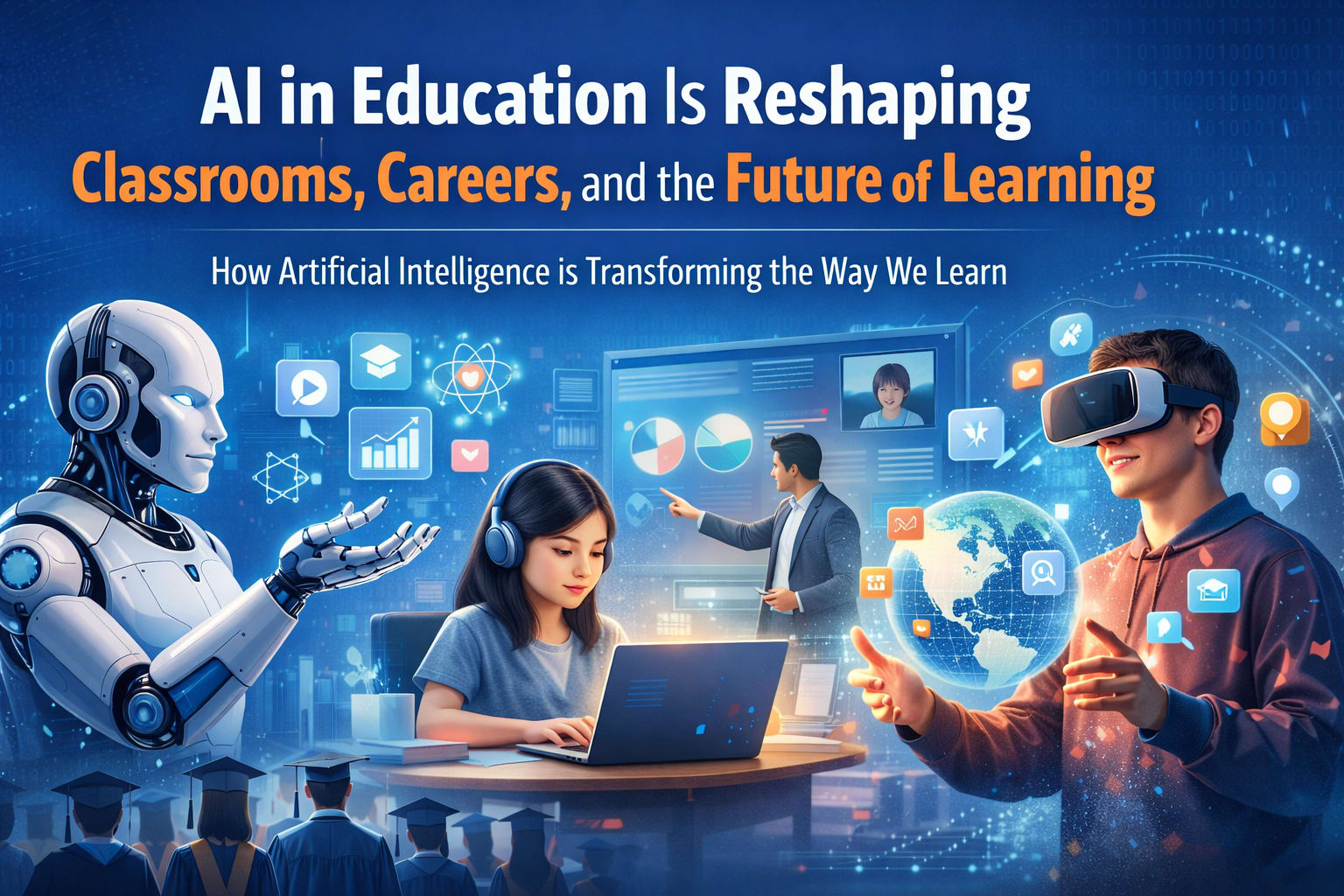
Artificial intelligence is reshaping the educational landscape, moving beyond traditional teaching methods to create a more personalized and effective learning environment. According to Renub Research, the AI in Education Market is projected to grow from US$ 5.21 billion in 2025 to US$ 61.34 billion by 2034, expanding at a compound annual growth rate (CAGR) of 31.52% from 2026 to 2034. This rapid growth signifies a significant shift in demand and technology, as institutions increasingly seek innovative solutions to longstanding educational challenges.
Education has historically struggled with issues such as inconsistent student performance and overloaded teachers. Traditional classroom structures prioritize efficiency over personalization, forcing students to adapt to a fixed system. In contrast, AI-powered learning systems can analyze individual student behavior and performance metrics to create tailored learning pathways. This shift from passive to responsive learning enables educators to provide targeted support, enhancing not only academic outcomes but also student confidence and motivation.
The emergence of personalized and adaptive learning is a key factor driving the demand for AI in education. Learners today expect engaging, relevant experiences rather than generic lessons. AI technologies can detect when a student is struggling and respond with additional explanations or exercises, fostering greater engagement and allowing educators to identify those who need support much earlier than conventional grading systems permit.
Contrary to fears that AI may replace teachers, the technology is enabling them to focus on their core responsibilities. By automating administrative tasks like grading and tracking attendance, AI tools free educators to concentrate on lesson quality and mentorship. With less time spent on repetitive tasks, teachers can enhance the human aspect of learning, which is critical for building meaningful relationships with students.
The surge in online learning and EdTech platforms has also accelerated AI adoption across the education sector. As more students engage with mobile apps and virtual classrooms, educational institutions are generating vast amounts of data that AI can leverage to optimize learning experiences. AI can provide 24/7 tutoring support, recommend next lessons, and personalize revision content, thus making education more scalable and accessible, particularly in regions where educational resources are limited.
AI’s role in enhancing accessibility and inclusion is one of its most significant contributions. Technologies like speech-to-text, text-to-speech, and real-time translation help break down barriers for students with disabilities or language challenges. This makes educational participation more feasible and shifts the focus toward practical implementation of inclusion, moving beyond mere policy statements.
The evolving perspective on education also emphasizes workforce readiness. Today, educational effectiveness is increasingly gauged by its ability to prepare individuals for real-world challenges. AI-powered systems can analyze labor market trends and skill gaps, aligning academic pathways with actual job opportunities. This adaptability is crucial for institutions aiming to prepare students for rapidly changing job landscapes shaped by automation and digital transformation.
However, this growth story is not without its challenges. Concerns about data privacy and ethical responsibility are paramount, as AI systems rely heavily on sensitive student data, raising issues of consent and security. The potential for bias in AI algorithms further complicates the landscape, threatening to reinforce existing inequalities rather than diminish them.
Moreover, the implementation of AI in education faces hurdles related to cost and complexity. Many institutions, particularly in developing regions, may lack the necessary infrastructure or training to adopt advanced AI solutions effectively. As such, successful integration of technology requires more than just tools; it necessitates a strategic approach that includes support and training for educators.
Global Market Dynamics
The global AI in education market is expanding, albeit unevenly across different regions. The United States is leading in AI adoption, bolstered by robust digital infrastructure and a mature EdTech ecosystem. In Europe, regulatory frameworks such as the EU AI Act are shaping the market, emphasizing transparency and responsible growth. Meanwhile, India is emerging as a promising growth market with rising digital adoption and increasing government involvement in education technology. The UAE, on the other hand, is taking a proactive approach by integrating AI into educational curricula from an early age, positioning itself as a regional leader in AI-enabled education.
Recent developments highlight the accelerating pace of change in this sector. Initiatives such as the UAE Ministry of Education’s mandate for AI education in public schools and collaborations between tech companies like Microsoft and Pearson signify a shift from experimental applications to practical implementations. As these advancements unfold, the potential for AI to redefine educational experiences appears increasingly tangible.
In conclusion, AI in education is not merely a trend but a profound rethinking of how learning occurs. This technology has the potential to facilitate personalized education, expand accessibility, and align academic programs with workforce needs. As institutions navigate the complexities and challenges associated with AI integration, the broader implications for both learners and educators are significant, marking a pivotal moment in the evolution of education.
See also Adobe Launches Acrobat Spaces: Free AI Study Tool for Students Transforms PDFs into Study Materials
 Iowa State Launches Micro-Credential Course for K-12 Educators to Build AI Literacy Skills
 Ellucian Appoints Josh Rice as Chief Commercial Officer to Drive SaaS and AI Adoption