Researchers at the Urban Transport Systems Laboratory (LUTS) at EPFL have unveiled a new deep learning framework that enhances the accuracy of vehicle re-identification (ReID) in large-scale drone-based traffic monitoring. This innovative method incorporates both visual and temporal information, enabling the robust tracking of individual vehicles even in crowded urban environments where many vehicles appear nearly indistinguishable from a bird’s-eye view.
The study, titled “Deep Learning for Vehicle Re-ID in Urban Traffic Monitoring With Visual and Temporal Information,” was published in Communications in Transportation Research. The researchers utilized data from one of the largest drone traffic monitoring experiments, which involved ten UAVs observing twenty intersections over a week in the city of Songdo, South Korea. This study addresses a significant challenge in drone-based monitoring: the drastic loss of distinctive vehicle features when viewed from above.
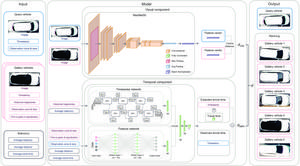
Conventional vision-only ReID models often falter as numerous vehicles look visually similar in top-down videos, particularly under conditions such as occlusions or low resolution. To overcome these limitations, the LUTS team melded traditional visual deep-learning features with a temporal model designed to estimate vehicle travel times between drone viewpoints. This temporal component leverages traffic-flow principles rooted in shockwave theory to predict when a specific vehicle is likely to appear at another camera, thus filtering out implausible candidates and enhancing overall matching confidence.
“We found that travel-time modeling adds a crucial layer of discriminative information that pure vision methods simply don’t have access to in UAV footage,” said Yura Tak, lead author of the study. “When two vehicles look nearly identical from the air, the temporal dynamics make all the difference.” The newly developed approach yielded a 36.8 percent improvement in ReID accuracy compared to visual-only deep learning baselines. This advancement facilitates reliable continuous trajectory reconstruction across extensive road networks monitored by multiple drones.
“Drone monitoring is scaling up fast, but without dependable vehicle re-identification, we lose the ability to trace individual travel paths,” explained co-author Dr. Robert Fonod. “Our framework shows how integrating traffic-flow theory with deep learning can unlock far more robust performance.” Prof. Nikolas Geroliminis, the corresponding author, emphasized the broader implications of this work: “This is the first study to embed principles from shockwave theory directly into a deep learning ReID system. It bridges transportation science and computer vision in a way that significantly enhances the viability of multi-UAV monitoring for real-world applications.”
The findings illustrate how the combination of domain knowledge from transportation engineering and modern neural architectures can surmount fundamental limitations in visual data. This progress paves the way for scalable, city-level UAV traffic monitoring, with potential applications extending beyond urban settings to include emergency response and logistics.
About Communications in Transportation Research
Launched in 2021, Communications in Transportation Research is backed by academic support from Tsinghua University and the China Intelligent Transportation Systems Association. The journal publishes high-quality, original research and review articles that are significant to emerging transportation systems, serving as a global platform for innovative achievements in the field. It has gained recognition from various indexing services and has been ranked as a leading journal in its category according to the Chinese Academy of Sciences (CAS) ranking list.
As the field of drone traffic monitoring continues to evolve, this research marks a crucial step in enhancing the technology’s applicability in real-world scenarios.
See also Bessent Declares Anthropic’s Mythos a Game-Changer in US-China AI Competition
 AMD Surpasses $400B Market Cap, Dominates AI Infrastructure with Record $34.6B Revenue
 Argonne National Laboratory Joins DOE’s Genesis Mission Consortium to Accelerate AI Research
 AI Achieves 95% Agreement with Clinician Assessments in Medical Interviewing Study
 Mark Zuckerberg Joins Meta’s AI Lab, Actively Coding with Engineers to Boost Innovation