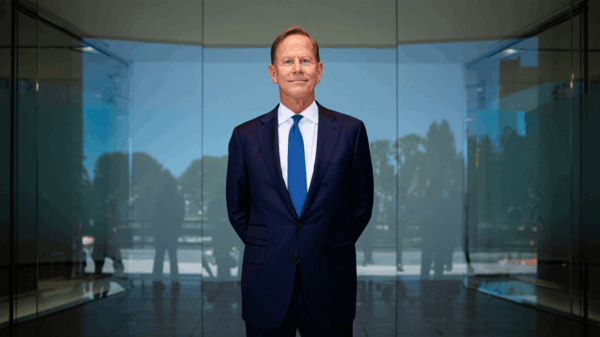
Clark Dean, a Republican candidate for Governor of Georgia, unveiled an innovative AI-driven platform called “Dean Machine” on April 16, 2026, aimed at enhancing voter engagement. The platform, named after Dean’s high school nickname, allows Georgia residents to engage in a two-way conversation with the candidate, asking questions and receiving responses grounded in Dean’s actual words and policy positions. Accessible at clarkdeanforga.com/deanmachine, the Dean Machine signifies one of the first instances of a gubernatorial candidate leveraging artificial intelligence to create a direct and interactive communication channel with voters.
“In high school, they called me Dean Machine because I never stopped working,” Dean remarked, emphasizing the platform’s intent to provide Georgia families with straightforward answers about his policies. “They deserve straight answers about where I stand — not talking points, not spin — and they deserve to be heard. The Dean Machine does both.” This initiative comes at a time when nearly half of U.S. internet users utilize AI tools, according to S&P Global, indicating a growing acceptance of AI in everyday life.
The Dean Machine is designed not just as a question-and-answer tool, but also as a listening mechanism for the campaign. Dean’s team will analyze the queries and concerns raised by voters to better align the campaign with the real experiences and needs of Georgia families. “I don’t want to govern based on assumptions,” Dean stated. “I want to hear directly from Georgians — what’s keeping them up at night, what they’re hoping for, what they need their next governor to actually fix.”
This AI platform is trained specifically on Dean’s policy framework known as the ASAP agenda: Affordability, Strength, Accessibility, and Prosperity. It addresses a wide range of issues relevant to Georgians, including cost of living, education, public safety, healthcare access, and economic development. The AI tool is intended to generate detailed, substantive responses to voter inquiries, ensuring that the dialogue remains focused on Dean’s actual beliefs and proposals.
Transparency is a core value of the Dean Machine, which is clearly identified as an AI tool rather than a direct communication line to Dean himself. This approach aims to build trust with voters by ensuring users understand they are interacting with a digital representation rather than the candidate directly. “We’re not trying to trick anyone,” Dean explained. “This is an AI Persona trained on my real positions, offered as a resource for anyone who wants straight answers.”
The platform also accommodates multilingual interactions, allowing Georgians to engage in the language they feel most comfortable using. It operates 24/7, requires no login or personal information, and seeks to foster a feedback loop that enhances the campaign’s responsiveness to voter concerns.
Clark Dean, who has a diverse background as a businessman and community leader, is running in the Republican primary for Governor of Georgia. His experience includes significant civic leadership roles, such as serving as the youngest president of the Rotary Club of Atlanta and chairing various philanthropic boards. His campaign prioritizes lowering costs for families, enhancing public safety and infrastructure, expanding access to education and healthcare, and broadening opportunities across the state.
As the political landscape in Georgia evolves, the Dean Machine represents a notable intersection of technology and politics, aiming to reshape how candidates engage with voters. With its focus on transparency and direct communication, Dean’s initiative could signal a new trend in campaigns, leveraging technology to create more meaningful interactions between candidates and constituents. For more information, visit www.clarkdeanforga.com.
See also Nvidia Reports 73% Revenue Surge, Forecasts $78B in Q1 Amid AI Boom
 Canva Launches AI 2.0 with Workflow Automation, Connectors, and Scheduling Features
 HubSpot Launches AI Answer Engine Optimisation Tool Amid 27% Search Traffic Decline
 Zenskar Secures $15M to Enhance AI Billing Automation for Complex B2B Pricing