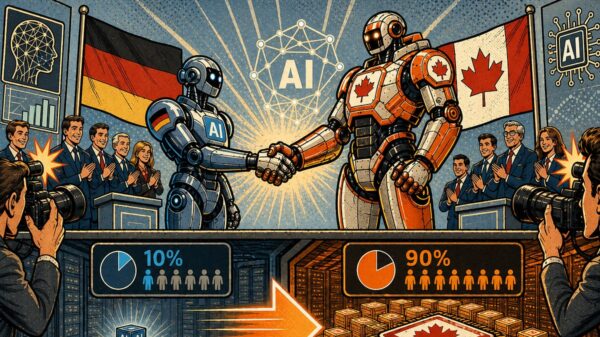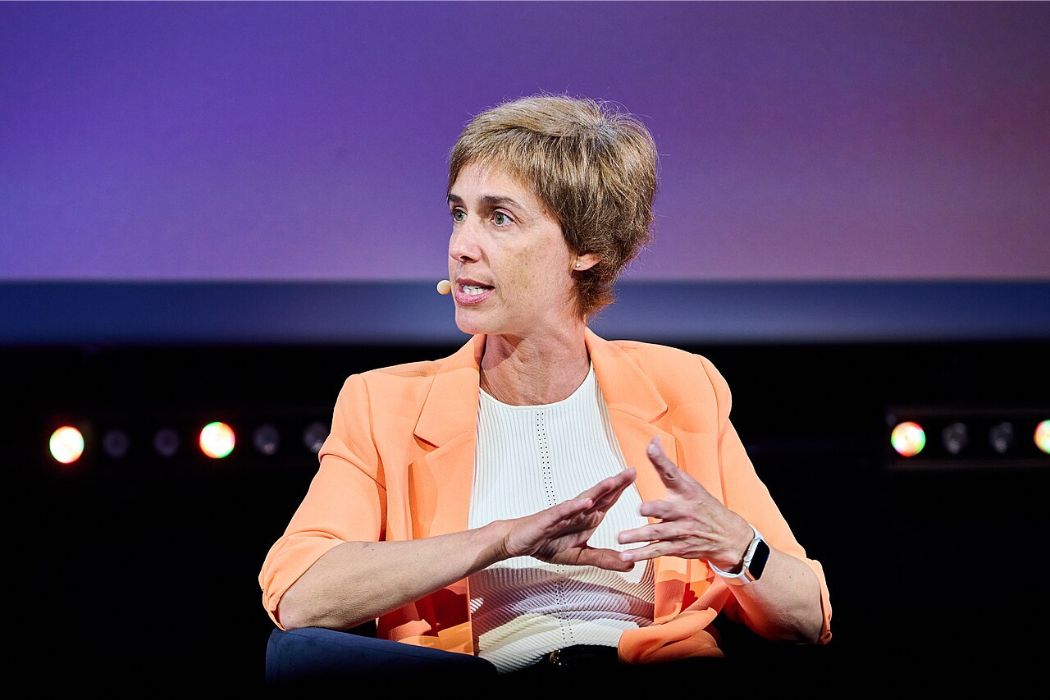
Toronto-based AI company Cohere is reportedly in discussions to merge with German enterprise AI firm Aleph Alpha, raising questions about its commitment to remaining headquartered in Canada. Cohere’s chief AI officer, Joelle Pineau, took to social media on Tuesday to reaffirm her dedication to Canadian operations, stating, “I want to be unambiguously clear: Canada is our home and we will always remain headquartered here.”
Pineau, who has been with Cohere since last summer, expressed her commitment to advancing Canadian AI leadership in a post to X. Her remarks come amid speculation about a potential merger that could intertwine the two companies’ operations across international borders. While Handelsblatt and The Globe and Mail reported on the talks, Cohere has opted not to comment on the situation, citing its policy against discussing market rumors.
The potential merger is politically sensitive due to the strategic importance of both firms in their respective countries’ AI sectors. Sources indicate that any new entity formed from the merger would maintain operations in both Canada and Germany, with the German government expected to be an anchor customer. However, due to Cohere’s larger size, its intellectual property and core operations are expected to remain in Canada.
During a recent testimony before the House of Commons’ Standing Committee on Industry and Technology, Pineau faced questions from Conservative MP and Shadow Minister for Industry Raquel Dancho regarding the company’s future ownership and location. Pineau’s response was more ambiguous than her recent post, as she declined to commit to remaining Canadian-owned, stating, “It’s not my role to comment on this.” This vagueness was highlighted by Dancho in an X post, which drew mixed reactions from the public.
Cohere is considered a key player in the foundation model race, specializing in the development of large language models (LLMs) tailored for business applications. Unlike some competitors focusing on expansive, general-purpose models, Cohere has opted for a more specialized approach. Co-founder and CEO Aidan Gomez emphasized in June that the company is “not for sale,” asserting that any exit from Canada would signify failure. “Acquisition is failure; it’s ending this process of building,” he stated.
As the Canadian government prepares its AI strategy, some industry leaders advocate for support of domestic companies like Cohere. The federal commitment to make Cohere a “Canadian champion” has been described as “enormously motivating” by co-founder Nick Frosst. Pineau reiterated this commitment in her recent post, emphasizing a vision for long-term growth that protects Canadian data and intellectual property while promoting Canadian values globally.
Germany’s Minister for Digital Transformation, Karsten Wildberger, highlighted the potential political significance of a merger between the two firms, stating that such a collaboration would signal a commitment to sovereignty in AI for both Germany and Europe. “AI is not only about powerful models and global scaling but also about key questions of sovereignty,” he noted.
In the context of these discussions, Canadian Minister of AI and Digital Innovation Evan Solomon affirmed the government’s role as a supportive partner, emphasizing that corporate decisions are ultimately up to the companies and their shareholders. Solomon’s office stated that Canada is dedicated to deepening cooperation with trusted partners such as Germany, aiming to enhance the competitiveness of Canadian AI companies on a global scale.
As discussions progress, Cohere co-founder Ivan Zhang added a lighter note to the conversation, humorously inquiring about the German equivalents of local tech community builders. The unfolding situation reflects a complex landscape for AI development, where international collaboration could play a pivotal role in shaping the future of innovation.
See also OpenAI Abandons Ninth Circuit Appeal Over ‘Cameo’ Trademark Block for Sora 2
 Study Reveals Trump’s Tariffs Cause 3.1% Price Surge, Delaying Inflation Drop to Pre-Pandemic Levels
 Character.AI Launches Books Feature for Role-Playing Classic Literature with AI
 Perplexity Launches Personal Computer AI Assistant for Mac Users, Enhancing Workflow Efficiency
 Meta Considers 8,000 Job Cuts to Fund AI Investments Amid Stock Recovery