
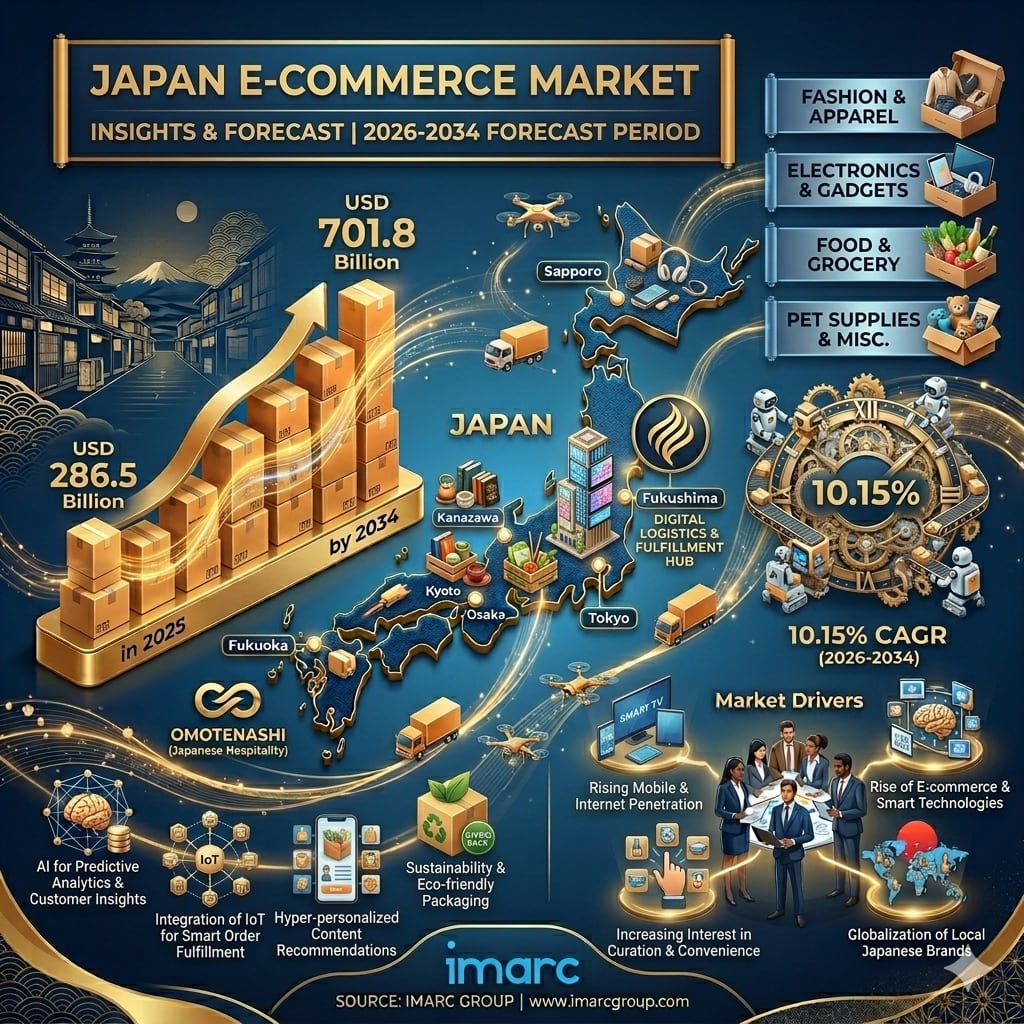
The e-commerce market in Japan is poised for substantial growth, with projections indicating it will reach approximately USD 701.8 billion by 2034, up from USD 286.5 billion in 2025. This growth represents a compound annual growth rate (CAGR) of 10.15% from 2026 to 2034, driven by several factors that reflect the country’s advanced digital retail ecosystem. High internet penetration, strong logistics infrastructure, and a tech-savvy consumer base are making online shopping a core component of modern retail in Japan.
According to a recent analysis by IMARC Group, the surge in e-commerce is largely facilitated by the increasing use of smartphones and the expansion of digital payment systems. As consumer behavior shifts towards convenience and digital-first experiences, online shopping is becoming a dominant force in the retail landscape. The ability to shop across various categories—including fashion, electronics, groceries, and lifestyle products—further underscores the significance of e-commerce in Japan.
Several key drivers are fueling this rapid market expansion. First, Japan has achieved high internet and smartphone penetration, enabling a significant portion of consumers to shop online via mobile devices. This has made mobile commerce a major revenue contributor. Additionally, the growth of digital payments and a cashless economy are simplifying the online purchasing process. The increasing use of digital wallets and contactless transactions is enhancing the customer experience, encouraging more frequent online shopping.
Modern Japanese consumers prioritize convenience, speed, and product variety. E-commerce platforms provide easy price comparisons, home delivery options, and access to an extensive selection of products, making them highly attractive to shoppers. The integration of artificial intelligence and machine learning is also transforming the online shopping experience, offering personalized product recommendations that improve customer engagement and conversion rates.
Mobile commerce is reshaping the market as well, with many consumers preferring to shop through dedicated applications due to their user-friendly interfaces and one-click checkout features. Furthermore, Japan’s efficient logistics network supports fast and reliable delivery services, including same-day and next-day delivery, significantly enhancing customer satisfaction.
The evolving e-commerce landscape is characterized by emerging trends such as social commerce, cross-border e-commerce, and rapid delivery services, collectively expanding the market’s scope. Fashion and apparel continue to dominate as the largest product category, particularly among younger, brand-conscious consumers who frequently browse and purchase online. Business-to-consumer (B2C) transactions remain the predominant segment, supported by well-established platforms that facilitate seamless shopping experiences.
The competitive landscape of Japan’s e-commerce market is robust, featuring both major domestic players like Rakuten and global giants like Amazon Japan. Competition is primarily driven by pricing strategies, delivery speed, user experience, and product variety. In a bid to strengthen their market positions, companies are increasingly investing in AI technologies, logistics improvements, and customer engagement tools.
Looking ahead, the Japan e-commerce market is expected to sustain its growth through 2034, bolstered by ongoing digital transformation and shifting consumer preferences. Key growth areas will include mobile commerce, AI-powered personalization, and cross-border trade. Innovations such as immersive shopping experiences and social commerce will further redefine the market landscape.
As consumer expectations evolve towards greater convenience, speed, and personalization, e-commerce is set to transform the retail sector in Japan into a more digital, data-driven, and customer-centric industry.
See also GoDaddy Enhances AI-Driven Discovery Tools to Boost Visibility for 80M+ Domains
 Algorithmic Personalisation Threatens Premium Brand Exclusivity, Warns Experts
 Pathfinder Marketing Launches Comprehensive AI SEO Services to Drive Business Growth Online
 Digital.Marketing Reveals Report on Digital Commerce’s Shift to Marketing as Revenue Engine
 MailerLite vs. Mailchimp: Key Features, Pricing, and User Experience Compared