Xiaomi has unveiled significant advancements to its MiMo large model series just one month after its last update, notably achieving a 42% reduction in token usage compared to its competitor, Kimi K2.6. The announcement was reported by Zhidx on April 23, highlighting the introduction of four new models: the flagship inference model MiMo-V2.5, the full-modal Agent model V2.5-Pro, which is currently in public testing and will soon be open-sourced, as well as the upcoming V2.5-TTS Series and V2.5-ASR.
Leading the MiMo project is Luo Fuli, a prominent industry figure previously associated with DeepSeek. Since the last major update of the MiMo-V2 series, Luo has indicated the intention to open-source the model once it demonstrates sufficient stability. The entire MiMo-V2.5 series is tailored for intelligent agent applications. The MiMo-V2.5-Pro model focuses on complex Agent tasks, while the standard MiMo-V2.5 addresses general agent scenarios.
Xiaomi has also provided a comprehensive usage guide, noting that MiMo-V2.5 features native full-modal capabilities, enabling it to process images, audio, and video. Compared to the Pro version, it offers faster inference speeds, making it more suitable for latency-sensitive tasks. The enhanced model not only boasts performance upgrades but also significantly improved token efficiency. In achieving comparable results on the ClawEval benchmark for intelligent agents, MiMo-V2.5-Pro outperformed Kimi K2.6 by saving 42% on tokens, while MiMo-V2.5 achieved a 50% reduction compared to Meta’s Muse Spark, a closed-source model released earlier this month.
Furthermore, Xiaomi has revamped its Token Plan, eliminating the previous 4x Credits billing method and removing the differentiation between 256k and 1M context for billing purposes. The new plan includes exclusive discounted rates for nighttime usage and an auto-renewal option, addressing prior user complaints regarding high costs and insufficient token allocations.
In a practical demonstration, Zhidx tasked MiMo-V2.5-Pro with creating a 3D side-scrolling fighting game. The model successfully generated 1,123 lines of code in a matter of minutes, resulting in a playable “Dragon and Tiger Fighting Game.” Although the interface included essential features like health bars and countdown timers, it was noted that character models were simplistic.
Earlier in March, Xiaomi’s MiMo-V2-Pro appeared on the OpenRouter platform under the moniker Hunter Alpha, leading to speculation about its relation to DeepSeek’s anticipated V4 model. This latest release aligns with expectations that DeepSeek V4 will also be announced this week.
Performance and Technical Capabilities
Xiaomi claims that MiMo-V2.5-Pro represents the pinnacle of its MiMo lineup, particularly in handling complex intelligent agent tasks. Internal tests indicate that it can execute extensive tasks, involving nearly a thousand tool calls, while demonstrating improved instruction-following capabilities. The model’s performance has drawn comparisons with leading global agents, scoring 73.7 on the MiMo Coding Bench, closely trailing Claude Opus 4.6, which scored 77.1.
In one notable test, a Twitter user queried MiMo-V2.5-Pro about whether to walk or drive to a car wash located 50 meters away, to which the model provided the accurate response. Xiaomi has also showcased several use cases for MiMo-V2.5-Pro, including the construction of a complete compiler in Rust, a task typically requiring weeks for undergraduate students, which MiMo-V2.5-Pro completed in just 4.3 hours. In another case, it developed a multi-functional video editing application in 11.5 hours, generating over 8,000 lines of code.
In the field of analog circuit design, the model successfully optimized a voltage regulator design, a task conventionally taking days, achieving results in under an hour through iterative simulations. These accomplishments underscore Xiaomi’s ambition to enhance the capabilities and applications of its AI models.
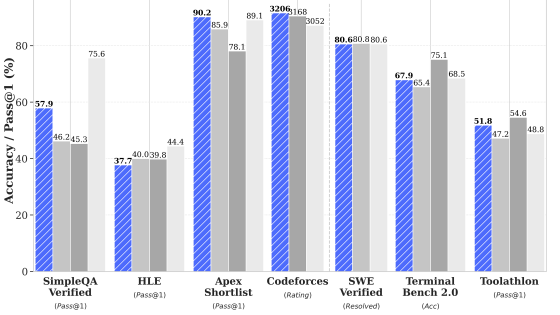
MiMo-V2.5 is distinguished as a native full-modal model, designed to facilitate simultaneous processing of visual, auditory, and textual information. This model surpassed its predecessor, MiMo-V2-Pro, in agent capabilities and demonstrated substantial improvements in multi-modal perception, achieving lower API costs. Benchmark tests revealed that MiMo-V2.5 competes closely with other leading models, including Claude Opus 4.6 and GPT-5.4, particularly in programming tasks.
As part of the broader evolution of its AI offerings, Xiaomi’s Token Plan presents an updated billing structure that eliminates previous complexities, further enhancing user accessibility. The new plan reflects the company’s commitment to balancing cost efficiency with advanced technological capabilities, making the MiMo series more appealing to developers and businesses alike.
With these advancements, Xiaomi positions itself as a significant player in the rapidly evolving field of AI, indicating a future where intelligent agents become integral to various applications across industries. The release of MiMo-V2.5 not only marks a technological leap for Xiaomi but also raises the competitive stakes among AI model providers.
See also Tesla Faces Capital Expenditure Strain Amid Declining EV Sales and Investor Concerns
 Runway Launches $100K Big Pitch Contest for Original Show Ideas, Submissions Open Now
 Tencent and Alibaba Eye $40B AI Startup DeepSeek, Seek Major Stake in Funding Round
 OpenAI Prepares for IPO with $852B Valuation; 2 Ways to Invest Now
 Cohere AI Reaches $240M Revenue, Expands to Over 17,000 Enterprises by Mid-2026