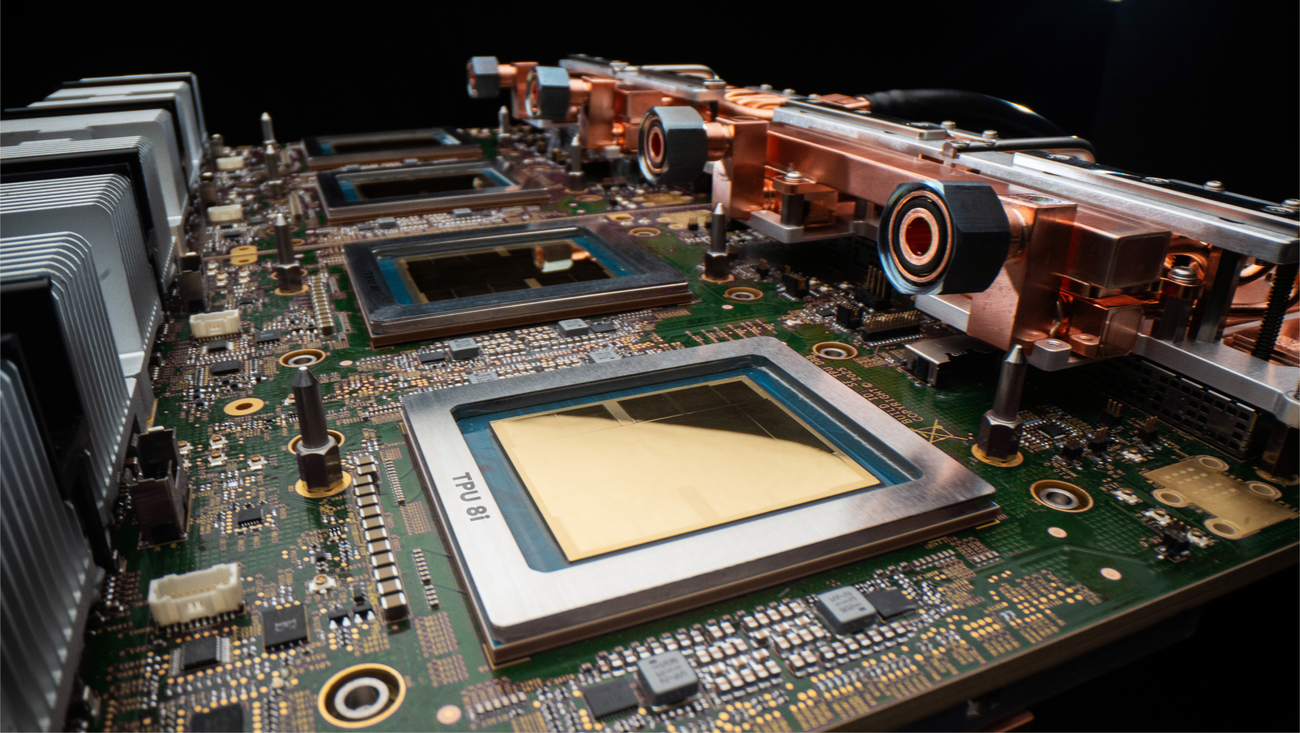
Google has unveiled its latest advancements in artificial intelligence hardware with the introduction of the **TPU 8t** and **TPU 8i**, marking a significant leap in performance and efficiency tailored for complex AI models. These chips, co-designed for the **Gemini** architecture, are now available to developers, reflecting Google’s commitment to open access in AI technology. By focusing on solving the critical challenges of AI, the eighth generation of Tensor Processing Units (TPUs) represents a blend of innovative design and practical application.
Each component of the TPU 8t and TPU 8i has been meticulously engineered to enhance the processing capabilities necessary for modern AI reasoning models. The **Boardfly topology** has been crafted to meet the specific communication requirements of these advanced models, while the **SRAM capacity** in the TPU 8i has been optimized to accommodate the key-value cache footprint necessary for large-scale operations. Furthermore, the **Virgo Network fabric** has been designed with bandwidth targets aligned with the extensive parallelism required for training models containing trillions of parameters.
For the first time, these chips will utilize Google’s own **Axion ARM-based CPU host**, allowing for an optimized performance across the entire system rather than just the chip itself. This integration is set to enhance performance and efficiency in AI applications. Notably, both platforms support popular development frameworks such as **JAX**, **MaxText**, **PyTorch**, **SGLang**, and **vLLM**, and offer bare metal access. This means customers can engage directly with the hardware without the complications introduced by virtualization. Additionally, open-source contributions, including **MaxText reference implementations** and **Tunix** for reinforcement learning, are intended to facilitate a smoother transition from capability to deployment.
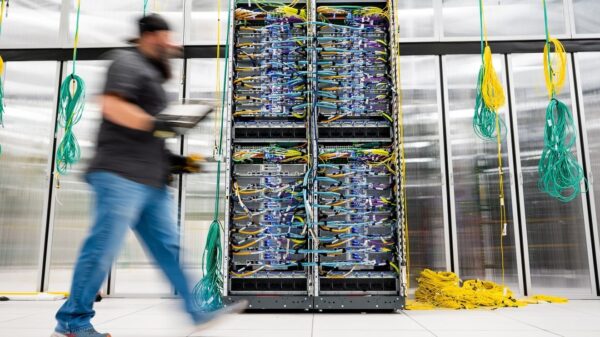
As data centers increasingly face constraints not only in chip availability but also in power consumption, Google has recognized the importance of energy efficiency. The TPU 8t and TPU 8i are designed with integrated power management systems that dynamically adjust power draw according to real-time demand. This innovation allows the latest TPU models to achieve up to **two times better performance-per-watt** compared to their predecessor, the **Ironwood** generation. This performance optimization extends beyond chip design to encompass a broader system-level commitment that includes the data center environment.
Google’s approach involves integrating network connectivity with computing capabilities on the same chip, significantly reducing the energy costs associated with data movement within a TPU pod. The company claims that its data centers are now co-designed with these TPUs, allowing them to deliver **six times more computing power per unit of electricity** compared to five years ago. This holistic strategy suggests that Google’s commitment to energy efficiency is deeply embedded in its hardware and software innovations.
Supporting this focus on sustainability, both TPU 8t and TPU 8i leverage fourth-generation liquid cooling technology, which sustains performance densities that traditional air cooling methods cannot achieve. By controlling the entire stack—from the Axion host to the accelerators—Google aims to optimize energy efficiency in ways that would be unfeasible if the host and chip were developed independently.
The introduction of these advanced TPUs underscores a pivotal moment in the ongoing evolution of AI infrastructure. As demand for AI capabilities continues to rise across various sectors, the ability to efficiently scale performance while minimizing power consumption will be crucial for organizations seeking to harness the full potential of artificial intelligence. Google’s latest innovations not only enhance its competitive edge in the tech landscape but also reflect a broader industry shift towards sustainable and efficient computing solutions.
See also US White House Warns of China’s AI Distillation Campaigns, Calls for Industry Coordination
 POET Technologies Stock Soars 31% Amid AI Optics Demand and $430M Funding Boost
 Hippocratic AI Partners with Cincinnati Children’s and UNC Health to Enhance Patient Care Access
 Ghana’s President Mahama Announces $250M Investment in National AI Computing Centre
 NEC Partners with Anthropic to Create AI-Native Engineering for 30,000 Employees in Japan