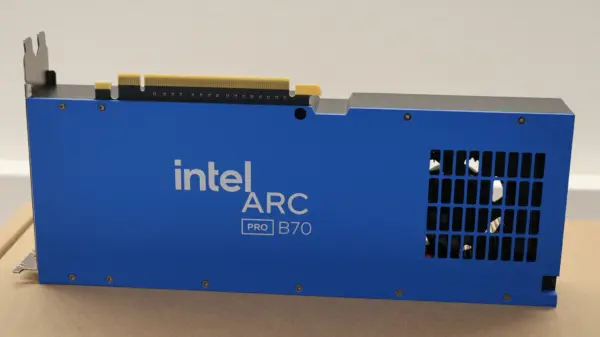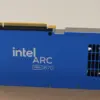

Arizona State University (ASU) has secured a multimillion-dollar technology donation from Intel aimed at significantly enhancing the university’s AI processing capabilities by up to ten times. This donation marks a pivotal shift in how researchers and students at ASU will utilize computing power, providing access that previously relied on costly, congested national supercomputing systems.
The new hardware will not remain confined to a lab for limited use; it forms the backbone of the ASU AI Research Acceleration Platform (AIR Platform). This initiative is spearheaded by ASU Knowledge Enterprise and integrates Intel’s AI accelerator chips with ASU’s Sol supercomputer. The platform ensures that faculty, researchers, and students can engage with advanced AI tools through CreateAI, ASU’s primary AI toolkit. This toolkit features open-source large language models, including Google’s Gemma and Meta’s Llama Scout, allowing users to build tailored AI experiences using their own datasets.
Already, more than 8,000 custom AI applications have been developed through CreateAI Builder, spanning academics, research, and university operations. ASU President Michael Crow emphasized the importance of making such transformative technology accessible, stating, “Lowering the barriers to entry and encouraging researchers and students to use AI will further the pursuit of innovative solutions to our greatest challenges in society. This collaboration with Intel reflects our shared commitment to the principled application of AI to further research and advance education.”
The capacity enhancement comes at a crucial time; prior to this donation, ASU’s AI operations utilized hundreds of NVIDIA GPUs powering the Sol supercomputer. The introduction of Intel’s chips does not replace these existing resources but rather complements and diversifies them. This expansion allows for thousands of additional users to work on generative AI projects without hindering resources required for other computationally intensive tasks.
Sean Dudley, Associate Vice President at Knowledge Enterprise and head of the Research Technology Office, noted the significance of this upgrade: “The technology introduces a new type of high-performance computing capacity. This technology enables us to support thousands of additional users that are developing or engaging generative AI models while shifting these workloads off our existing resources to free them up for other computationally intensive projects.”
Importantly, ASU is managing the AIR Platform as a regional cloud offering, which ensures that sensitive data remains under university control. This aspect is particularly attractive for researchers who might otherwise face privacy concerns when utilizing external computing services. Sally C. Morton, Executive Vice President of ASU Knowledge Enterprise, remarked, “The AIR Platform isn’t just infrastructure — it’s a coordinated, programmatic capability that lowers the barrier to advanced AI methods across disciplines. By making these tools accessible and integrated into research workflows, we enable faculty and students to move faster from idea to insight. That’s core to Knowledge Enterprise: accelerating discovery and translating it into tangible impact at scale.”
The immediate impact of the donation is already evident in various applications. Jianming Liang, a Professor in the College of Health Solutions, has developed an AI tool named Ark+ that aids physicians in accurately interpreting chest X-rays. Initially trained on over six public datasets of medical images, Liang plans to leverage the new computing power to train a more extensive model across more than 1,000 datasets, enhancing its ability to identify and precisely locate diseases beyond those visible in chest imaging.
The donation is also reshaping the educational landscape at ASU. Suren Jayasuriya, an Associate Professor in The GAME School and the School of Electrical, Computer and Energy Engineering, has incorporated the AI accelerators into his deep learning course. Students are tasked with benchmarking machine learning workloads on the new chips, providing hands-on experience that many undergraduates would not encounter elsewhere.
This latest collaboration builds on a longstanding partnership between Intel and ASU, which has focused on addressing the U.S. semiconductor workforce shortage through initiatives in graduate and undergraduate research, educator training, curriculum development, and experiential learning. The computing donation aligns closely with the broader goal of creating an integrated talent pipeline that spans from K-12 education to higher education, further enhancing the university’s commitment to preparing students for the evolving technology landscape.
See also Ed Tech Surge: Superintendents Report 90+ Emails from 79 Companies in One Day
 Los Angeles School Board Limits Tech Use in Classrooms Following Parent Backlash
 AI Leaders Emphasize Need for AI Literacy in Education at EduVision Summit 2025
 Hive Colab Launches Mastercard Foundation EdTech Fellowship for 36 African Ventures
 Parents and Educators Push for AI Moratorium at NYC School Board Meeting