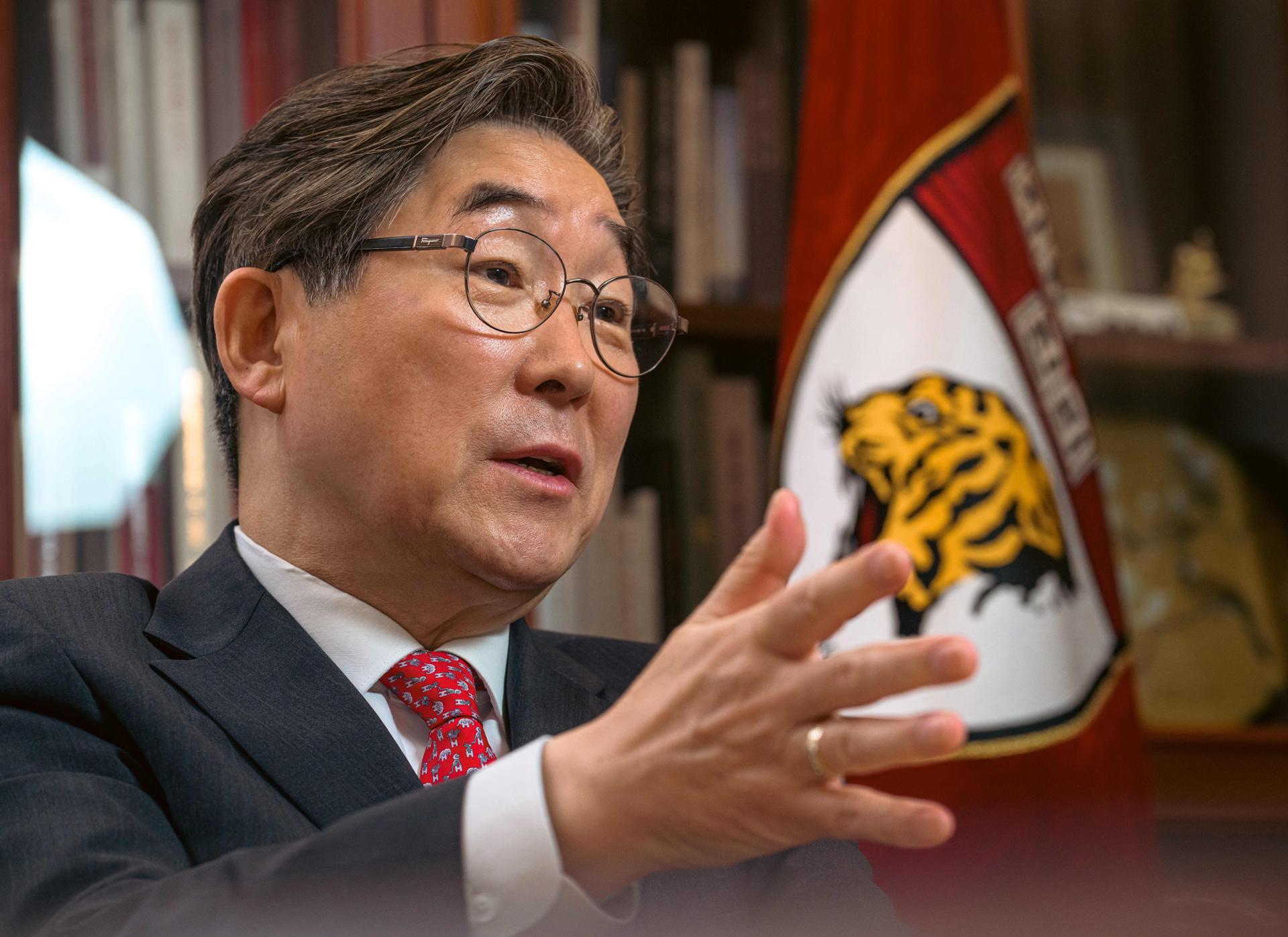
Korea University is redefining its educational mission in the wake of rapid advancements in artificial intelligence (AI). In an interview with The Korea Times, President Kim Dong-one emphasized that universities should not merely adopt technology but instead cultivate individuals who can leverage AI while upholding human dignity and intellectual autonomy. This shift comes as the institution marks its 120th anniversary, unveiling its “Next Intelligence” vision, which envisions a collaborative relationship between humans and AI, enhancing each other’s capabilities.
“The core mission of university education is no longer simply to deliver knowledge,” Kim stated. He highlighted the need for higher education to critically evaluate its foundational purpose, acknowledging that the traditional role of simply imparting knowledge is no longer sufficient in an era when AI can replicate many human cognitive functions.
Kim pointed out the rapid pace of AI development presents universities with both opportunities and challenges, necessitating a thoughtful approach to education and research. He outlined two critical roles for educational institutions in this evolving landscape. Firstly, while universities must advance cutting-edge AI research, Kim stressed that strengthening education in the humanities and social sciences is equally vital. This dual focus aims to prepare students not only to excel in technical fields, but also to grapple with the ethical implications of technology.
Under its Next Intelligence University vision, Korea University is integrating AI across all facets of education, research, and administration. Kim articulated that the goal is to cultivate talent that can effectively utilize AI, emphasizing that foundational knowledge remains essential. He noted, “Such fundamentals enable students to use AI more productively and ultimately produce higher-quality outcomes.”
The university is prioritizing core knowledge in its early curriculum, which is designed to evolve into a model that emphasizes applying this knowledge in conjunction with AI during advanced learning stages. Concurrently, Korea University is making substantial investments in the humanities and social sciences, hiring approximately 100 new faculty members in these disciplines over the past three years. This initiative is complemented by the construction of a new humanities building, the first major project of its kind since 2012.
“This reflects our commitment to placing the study of humanity — what AI cannot replace — at the center of the university’s priorities,” Kim noted. He underscored the responsibility of universities to not just adapt to technological changes but to shape the frameworks of values that govern its development.
In alignment with this vision, the university is also emphasizing interdisciplinary and problem-solving approaches in education, introducing a Problem-Based Seminar for freshmen aimed at empowering students to explore and define complex global challenges.
Korea University has also established platforms like the Next Intelligence Forum and Next Intelligence Seminar, which connect students with leading scholars and thinkers, enhancing their intellectual engagement. In light of the growing ethical discourse surrounding AI, the university is systematizing education on AI ethics and literacy. It was the first institution in South Korea to establish AI usage guidelines, offering courses that address the societal impacts and regulatory trends of AI.
For graduate students, the focus shifts to advanced training in research ethics and responsible technology use. The university’s commitment extends to collaborative platforms such as the “AI Convergence Colloquium,” which fosters discussions on the ethical risks and implications of AI across various disciplines.
“I believe the role of universities is not to remain at the level of prohibition or regulation, but to present new standards and models based on responsible autonomy,” Kim remarked. He noted that alongside pressing issues like climate change and pandemics, AI poses global challenges that necessitate collective responses.
“Technology itself is neutral, but how humans direct its development can lead to vastly different outcomes,” he said. Kim believes it is crucial for universities to take a leading role in shaping the future of humanity in the age of AI, emphasizing the importance of reaching a broader social and international consensus on how technology should evolve.
See also upGrad Invests Rs 125 Crore in AI Courses as Demand Surges, PhysicsWallah Takes Affordable Route
 Docebo Unveils AI-Enhanced Learning Platform Amid Rising Demand for Corporate Training
 Mississippi College Law Mandates AI Course for All First-Year Students
 K2 Think V2 Open-Source AI Model Launched at HackPrinceton for Student Developers