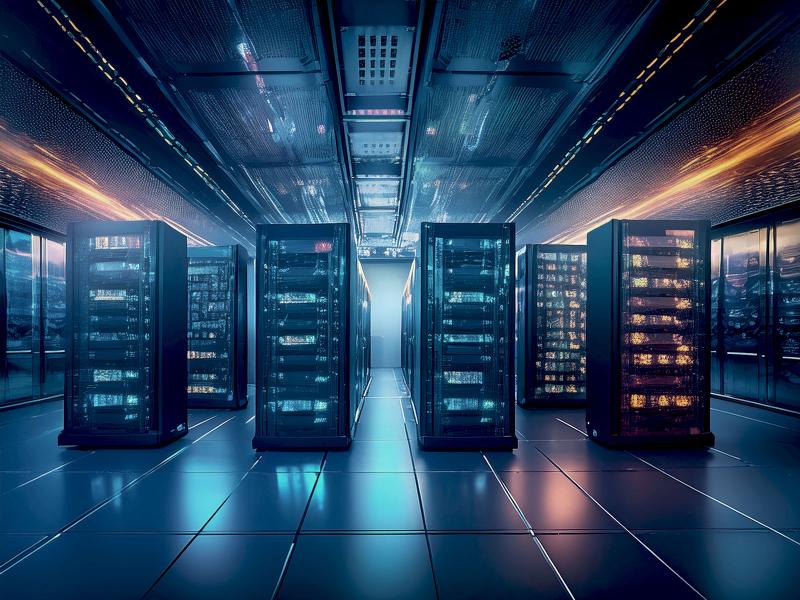
Global Reports Store released a comprehensive study on April 19, 2026, detailing the burgeoning **AI Data Center Infrastructure for High-Performance Computing Market**. This market is forecasted to grow from an estimated **US$ 36.82 billion in 2025** to **US$ 96.44 billion by 2032**, marking a compound annual growth rate (CAGR) of **14.72%** from 2026 to 2032. The report identifies **Power Systems** as the largest segment, while **Cooling Systems** is set to be the fastest-growing segment. **North America** retains its status as the largest regional market, with **Asia-Pacific** emerging as the focal point for strategic growth.
The report indicates that the AI data center market is evolving beyond traditional enterprise data center expansion, increasingly characterized by what analysts term **AI factory economics**. This shift is propelled by the demands of accelerated computing, generative AI model training, and advanced simulation workloads, necessitating a rethinking of power delivery, cooling architecture, networking, and deployment speed. The **International Energy Agency** emphasizes that there is no AI without energy, particularly electricity to power data centers, underscoring the critical role of infrastructure in the AI landscape.
The United States is singled out as the most significant opportunity within this market, with a projected value of **US$ 13.11 billion in 2025**. This growth is driven by the expansion of hyperscale campuses, increased enterprise AI adoption, and federal research computing initiatives. Key players in the U.S. market include **NVIDIA**, **Dell**, **Hewlett Packard Enterprise (HPE)**, **Vertiv**, **Schneider Electric**, and **Supermicro**. A notable recent development is the partnership between the **U.S. Department of Energy**, **NVIDIA**, and **Oracle** to create what is touted as the largest DOE AI supercomputer, highlighting the strategic importance of AI infrastructure as a national capability.
The U.S. market presents a compelling opportunity, combining substantial current deployment with significant influence over global infrastructure standards. Innovations in rack density, integrated AI factory design, and direct liquid cooling are taking shape there first, establishing the U.S. as a benchmark for AI-ready and HPC-grade infrastructure. Meanwhile, **Japan** is emerging as a strategically vital market, with an estimated market size of **US$ 2.18 billion in 2025**. Factors contributing to this outlook include Japan’s advanced manufacturing sector, robust telecommunications and digital infrastructure, and policies aimed at enhancing data center efficiency amid growing AI workloads.
Japan’s **AI Basic Plan** underlines the necessity of establishing data centers and securing compute resources for AI research and development, along with the promotion of efficient power and communications infrastructure. Furthermore, the **Agency for Natural Resources and Energy** has set guidelines that emphasize the importance of data centers in supporting Japan’s AI and digital technologies, with measures to promote efficiency-enhancing technologies. This coordinated approach indicates that Japan is becoming a premium market for vendors capable of delivering high-density and policy-aligned infrastructure solutions.
Power Systems, dominating the infrastructure landscape, are projected to be valued at **US$ 10.31 billion in 2025**, accounting for **28.0%** of the total market value. The significance of this segment is attributed to its foundational role in ensuring electrical feasibility and resilience in AI and HPC deployments. Cooling Systems, generating **US$ 8.10 billion** in 2025, represent **22.0%** of total revenue and are expected to grow the fastest through 2032, driven by innovations like direct liquid cooling and hybrid designs. Other segments include Networking Infrastructure at **US$ 5.52 billion**, Racks and Enclosures at **US$ 4.42 billion**, and more.
Investment patterns reveal a strong focus on hyperscale deployments, which lead the market with estimated spending of **US$ 13.99 billion in 2025**. This trend is reflective of the rapid pace at which cloud and platform operators are establishing AI-capable campuses. Following hyperscale are colocation and government and research sectors, contributing **US$ 8.84 billion** and **US$ 6.26 billion**, respectively. AI Training Clusters are identified as the largest compute environment segment at **US$ 14.73 billion**, while Hybrid AI-HPC Environments are the fastest-growing category.
The competitive landscape illustrates that the market is transitioning beyond traditional infrastructure, with companies like **Schneider Electric**, **Vertiv**, **Supermicro**, **Dell Technologies**, and **Hewlett Packard Enterprise** shaping its evolution. Schneider Electric is recognized for its integrated approach, connecting electrical distribution and management software. Vertiv’s expertise lies in mission-critical power and thermal infrastructure, while HPE is increasingly focusing on AI factories and supercomputing solutions. Recent advancements include HPE’s next-generation AI factory enhancements with NVIDIA and Schneider Electric’s introduction of modular data center solutions for high-density applications.
As the market adapts to integrated, production-ready infrastructure platforms, it becomes clear that the next competitive phase will hinge on addressing power and cooling challenges, deployment speed, and operational efficiency. This signifies a shift in how infrastructure is perceived within the AI economy, establishing it as a central value layer rather than merely a support function. The United States continues to lead this charge, backed by its robust research infrastructure and AI factory adoption, while Japan is carving out a niche as a high-value market focused on efficiency and strategic infrastructure alignment.
See also Cerebras Systems Files for IPO, Aiming to Capture $10B Contract from OpenAI
 MediaTek Expands AI Chip Portfolio to Drive Growth in U.S. and Global Markets
 China Doubles AI Accelerator Chips to 60,000, Boosting Scientific Computing Power
 BMW Group and University of Zagreb Optimize Battery Cell Production with AI, Reducing Costs by 50%
 AI Will Redefine Legal Education, Says University of Sydney’s Law School Leadership