The University of Southern California (USC) is shifting the narrative around artificial intelligence (AI) in the arts with the launch of its “Institute for Actor-Driven Innovation.” Announced by the School of Dramatic Arts, this initiative aims to empower actors to leverage AI technologies, countering the perception of AI as a threat to their craft and careers.
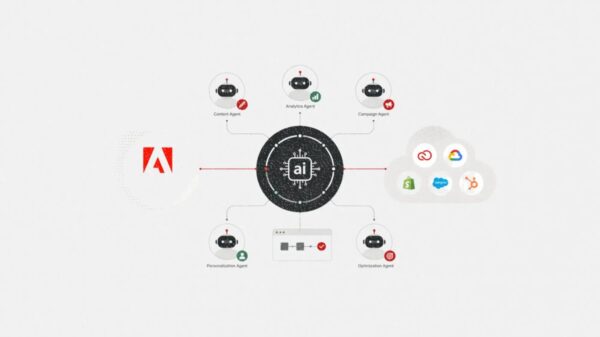
Emily Roxworthy, dean of the USC School of Dramatic Arts, emphasized the need for such an institute, stating, “Up until now actors have really been on the wrong end of these changes. We want to do something about that.” Initially, the institute will focus on educating students about the fundamentals of AI, collaborating with Adobe to host events and develop lab spaces for hands-on learning and innovation.
The partnership with Adobe, a sponsor of the institute, will kick off with educational events later this month. Roxworthy envisions a wide range of applications for AI in acting, such as enabling students to practice scenes with virtual recreations of legendary actors or providing feedback from established industry professionals. The potential for AI to function as a representation tool for unsigned actors is also on the table, allowing them to search for opportunities that might otherwise elude them.
“They can have somebody — or something, I suppose — that is combing breakdowns for them and really looking out for them in a way that representatives would,” Roxworthy explained. The institute will also offer courses in collaboration with the law school to educate actors on how to manage their likeness rights in an era of digital content creation. “Admittedly a really ambitious undertaking,” Roxworthy said, the initiative aims to transform how actors perceive and interact with emerging technologies.
Day-to-day operations of the institute will fall under the leadership of Tomm Polos, a current chair at USC specializing in creator arts. He underscores the importance of actor skills in an AI-driven landscape, asserting that the competencies actors have honed over the years are crucial for navigating future uncertainties. “Actors have always been master navigators of uncertainty, ambiguity, and the full range of human experience,” Polos stated. “In a world increasingly shaped by AI, those capacities are not relics of the past; they are the most vital competencies of the future.”
Roxworthy’s experience in integrating technology into the arts is notable. She previously developed a diversity-training arts program and an educational video game prototype that immerses players in historical contexts. The launch of the AI-focused institute reflects a broader trend within the arts community, where skepticism about AI’s impact is often juxtaposed with institutional support for the technology. Major entertainment companies like Netflix and Amazon are already equipping filmmakers with advanced tools, signaling a shift in the industry’s approach to AI.
In a similar vein, NYU’s Tisch School of the Arts recently partnered with Runway AI to provide students with access to video-generation tools, illustrating that academic institutions are increasingly becoming advocates for technological integration in the arts. USC’s initiative places it among those leading the charge on the West Coast, poised to shape a new generation of actors who can thoughtfully engage with AI.
The long-term implications of the USC initiative are still uncertain. It could herald new avenues for creativity and a generation of actors equipped with unprecedented skills, or it might dilute traditional training methods before students can fully practice their craft. Roxworthy remains optimistic, asserting that the institute will create a thoughtful creative space where artists can engage with AI on their own terms. “We can make a creative space that allows the acting students and other artists to engage with AI and other new technologies,” she said. “Right now we have a lot of fear-based responses to AI, and for good reason. We’re not here to proselytize and say it’s something students should adopt. But they should understand it.”
See also Claude Opus 4.7 Launches with 20% Improvement in Complex Task Execution and Enhanced Vision
 Pixazo Launches Developer API for AI Image, Video, and Music Generation Integration
 Congressional AI Roundtable Reveals Lawmakers’ Fears Over Technology’s Rapid Growth
 Top 10 LLM Development Companies Driving AI Innovation and Customization Today
 ALGD Framework Enhances Safety in Reinforcement Learning with Stable Diffusion Models