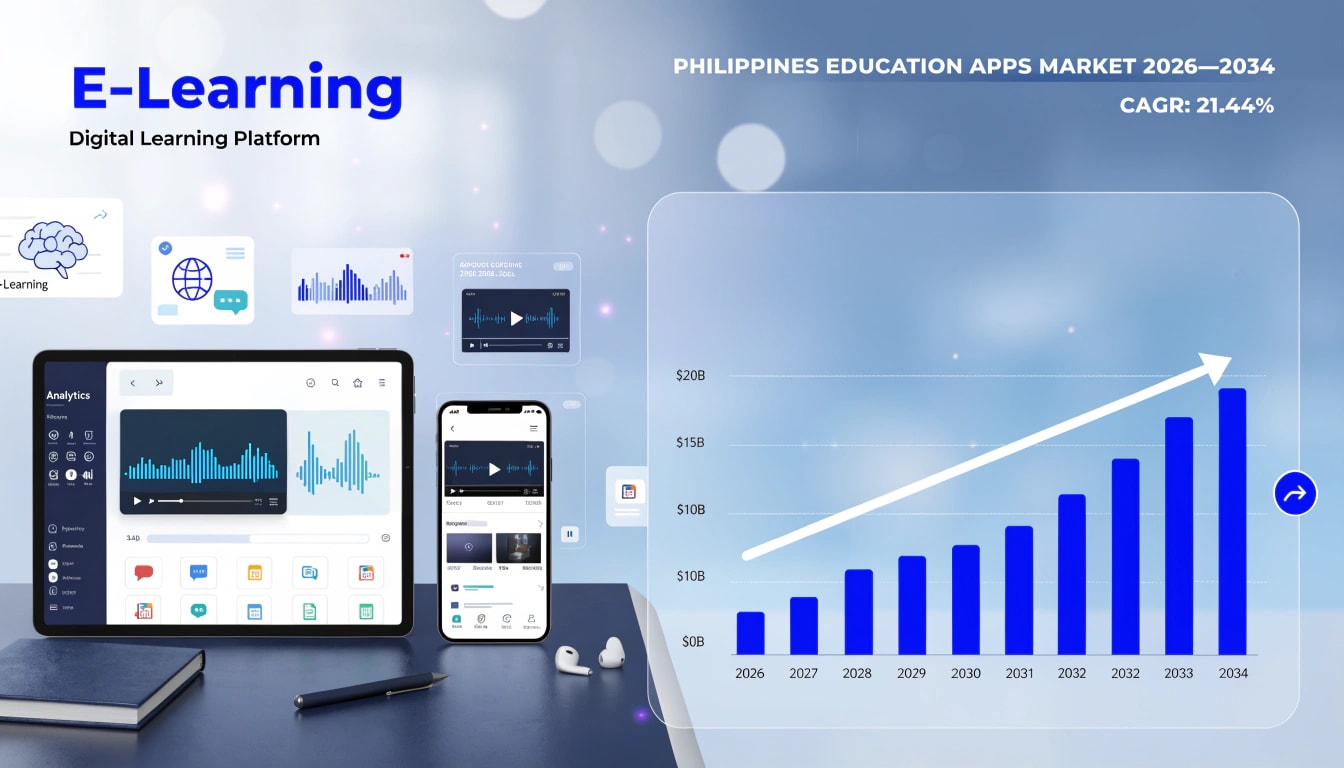
The Philippines education apps market is on a significant growth trajectory, projected to expand from USD 124.00 Million in 2025 to USD 712.32 Million by 2034. This represents a compound annual growth rate (CAGR) of 21.44% during the period from 2026 to 2034, according to a recent report by IMARC Group. The surge is attributed to rising smartphone usage, increased internet penetration, and a strong demand for remote and flexible learning solutions across the archipelago.
As the country embraces digital education, various applications are emerging, including mobile and web platforms that facilitate virtual classrooms, e-learning modules, test preparation, and skill development programs. These educational tools are meeting the needs of students, educators, and professionals alike, providing greater accessibility and personalized learning experiences.
The widespread adoption of smartphones and enhanced internet connectivity are crucial factors driving this growth. In underserved regions, mobile-first learning platforms are making education more attainable. The shift towards hybrid and online learning models has also significantly fueled the usage of these apps, with students and professionals increasingly depending on digital solutions for continuous education and skill enhancement.
The expanding Philippine EdTech ecosystem, supported by startups, educational institutions, and government initiatives, is further accelerating this market growth. The integration of artificial intelligence (AI) into learning applications is another transformative element, offering personalized learning paths, real-time feedback, and adaptive content, all of which enhance student engagement and improve outcomes.
Key opportunities are emerging within this burgeoning market as digital transformation continues to reshape the education landscape. AI-driven platforms are facilitating customized learning experiences tailored to individual performance, significantly improving engagement and retention rates. Furthermore, gamified learning applications that incorporate quizzes and interactive challenges are particularly resonating with younger audiences, especially K-12 students.
Corporate training and upskilling initiatives are also increasingly utilizing education apps, particularly in technology-driven sectors. There is a growing demand for localized and curriculum-based applications that align with local educational standards, creating fertile ground for domestic developers and EdTech startups.
Recent developments reflect this rapid evolution. In February 2025, the Philippine Department of Education launched the Education Center for AI Research (E-CAIR), making the Philippines the first country in Southeast Asia to establish a dedicated AI education research hub aimed at enhancing teaching and administration through AI. Also in February, EDGE Tutor secured USD 1 million in Pre-Series A funding to expand its AI-driven online tutoring services across the Americas and EMEA regions, showcasing the global reach of Filipino educators through digital platforms.
The Philippine government has advanced its digital education policy framework with the launch of the 2023 Global Education Monitoring (GEM) Report, which aims to integrate digital tools into the curriculum and boost digital literacy. By June 2025, EdTech companies had significantly increased investments in AI-powered learning technologies, enhancing personalized educational experiences nationwide.
August 2025 marked another milestone as Globe announced a partnership with Khan Academy Philippines to introduce AI-powered educational services within the GlobeOne app. This initiative introduced Khanmigo, an AI assistant to support students and teachers in STEM, digital literacy, and life skills, while also reducing administrative workloads for educators.
In addition to local advancements, global players are taking notice of the Philippine market. Global EdTech provider Instructure launched its Asia hub in the Philippines, signifying increasing international investment in the region’s EdTech landscape. The Philippine Government and Sutherland also announced the establishment of an AI Academy focused on workforce training in AI and digital skills, broadening the reach of EdTech beyond traditional educational frameworks.
The Philippines education apps market is poised to become a critical driver of digital transformation in education, fostering accessibility, flexibility, and personalization in learning. With projected growth from USD 124.00 Million in 2025 to USD 712.32 Million by 2034, the market is set for long-term expansion, driven by mobile learning adoption and the integration of AI technologies. As educational systems continue to evolve towards hybrid and technology-enabled models, the Philippines education apps industry is expected to remain a high-growth segment within the broader EdTech landscape.
See also Mediazoo Launches Finer Vision AI Skills Division to Address 96% UK AI Skills Gap
 OpenAI Appoints Nikita Le Messurier to Drive GenAI Adoption in APAC Region
 McMahon Champions AI Integration in Classrooms at Inaugural Fostering the Future Summit
 Coursera Integrates AI Learning Agent into Microsoft Copilot for On-the-Job Training
 17 Education & Technology Reports Q4 Loss of $0.50 EPS Despite 6.4% Revenue Growth