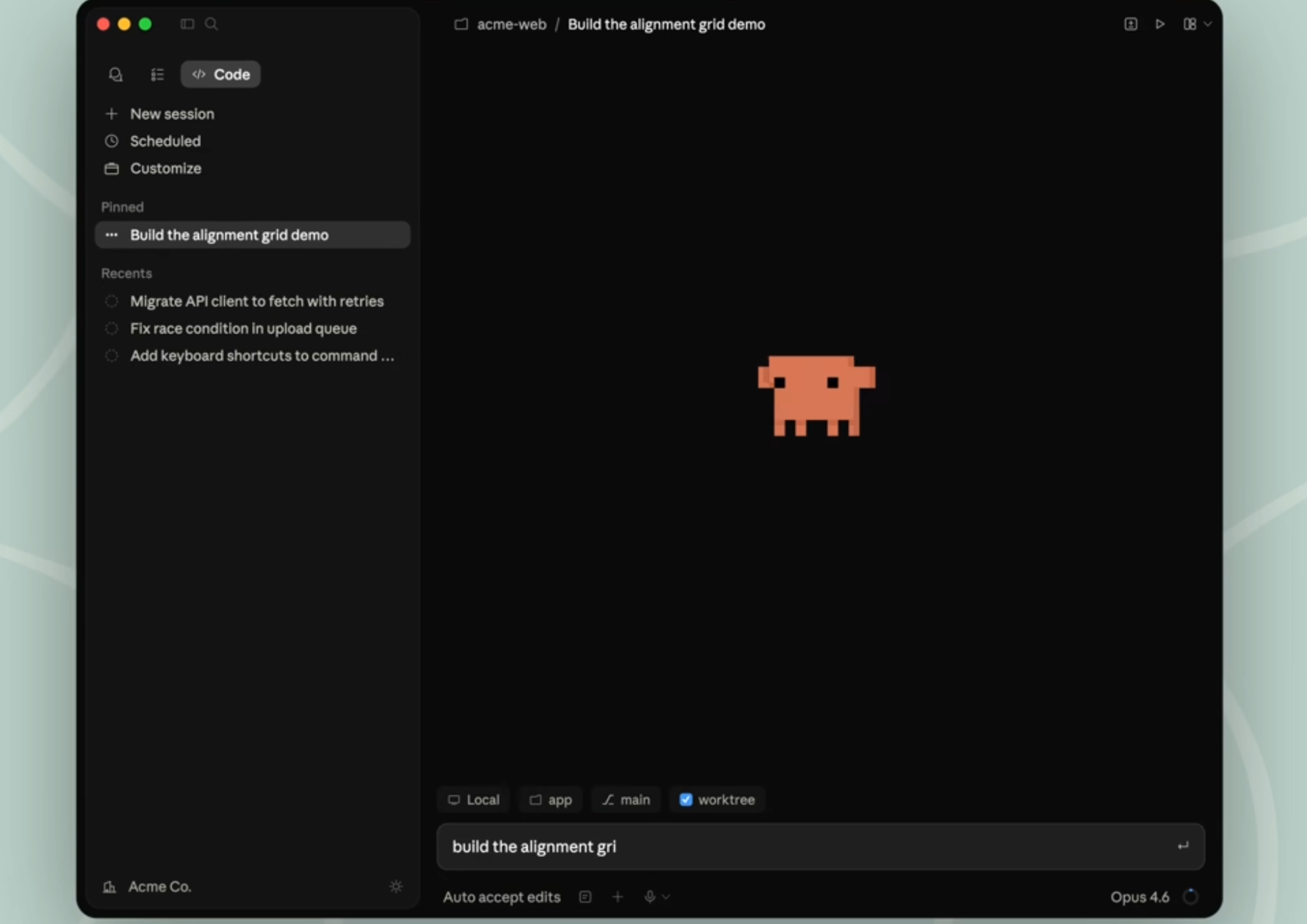
Anthropic has unveiled a redesigned version of Claude Code in its desktop application, enhancing its functionality amid a competitive landscape of AI coding tools aimed at developers, engineering teams, and technical workflows. This update introduces a suite of features including an integrated terminal, in-app file editing, a rebuilt diff viewer, side chats, and SSH connections. The enhancements mark a shift for Claude Code, evolving from a chat-based assistant into a more comprehensive development environment, aimed at encouraging developers to engage more deeply with the tool.
Felix Rieseberg, a member of the Claude Code team at Anthropic, announced the launch in a LinkedIn post, stating, “Today is a big day! We’re launching a ~ new ~ version of Claude Code in the desktop app. It’s been redesigned from the ground up for parallel work and is a lot faster.” He emphasized that the updated interface and new features had significantly improved his experience, stating it had become his primary method of using the tool in recent weeks.
Among the major additions highlighted by Rieseberg are the integrated terminal, in-app file editing, and a rebuilt diff viewer. These changes aim to streamline the coding process by reducing the necessity for developers to switch between different tools. Anthropic’s goal is to centralize coding, reviewing, file changes, and session management within a single workflow, thereby enhancing productivity.
With this update, Claude Code positions itself as an “agentic coding tool,” capable of reading codebases, editing files, executing commands, and integrating seamlessly with various development tools. The application is now accessible across multiple platforms, including terminal, desktop, browser, Visual Studio Code, and JetBrains. This expanded availability allows Anthropic to cover a wider range of environments that developers routinely utilize.
The desktop application is designed to complement existing access points while bridging the gap between lightweight AI assistance and a more sustained coding experience. Anthropic’s documentation indicates that the updated version supports multiple sessions, recurring tasks, cloud sessions, and visual diff reviews, moving the product towards a more integral role in daily engineering practices rather than serving as an occasional coding aid.
This launch occurs within a broader market context where AI coding products are increasingly competing on usability, workflow integration, and speed, rather than merely on model access. Anthropic is not positioning Claude Code solely as a coding assistant; rather, it is being engineered to manage file alterations, command execution, reviews, and coordination across different sessions and tools.
As these developments unfold, they prompt familiar concerns regarding oversight, code quality, and the level of responsibility assigned to AI in production workflows. The introduction of a more comprehensive coding tool raises critical questions about how AI will coexist with human oversight in software development environments.
Claude Code is now available through native desktop applications for both macOS and Windows, alongside its previously existing access through terminals and integrated development environments (IDEs). With its updated experience now live, Anthropic aims to enhance the capabilities of technical teams and redefine workflows in programming.
See also Midjourney 8.1 Launches with 3x Faster HD Mode and Key Enhancements for Image Quality
 Anthropic’s Mythos Signals Major Disruption for IT Services, Threatens Traditional Models
 Cerebras Secures $20B Deal with OpenAI for AI Computing Infrastructure Expansion
 Swiss Minister Files Complaint Against Grok AI for Digital Abuse Amid Free Speech Debate
 AI in Medicine Market Projected to Reach $3.36 Trillion by 2040 with 40.3% CAGR