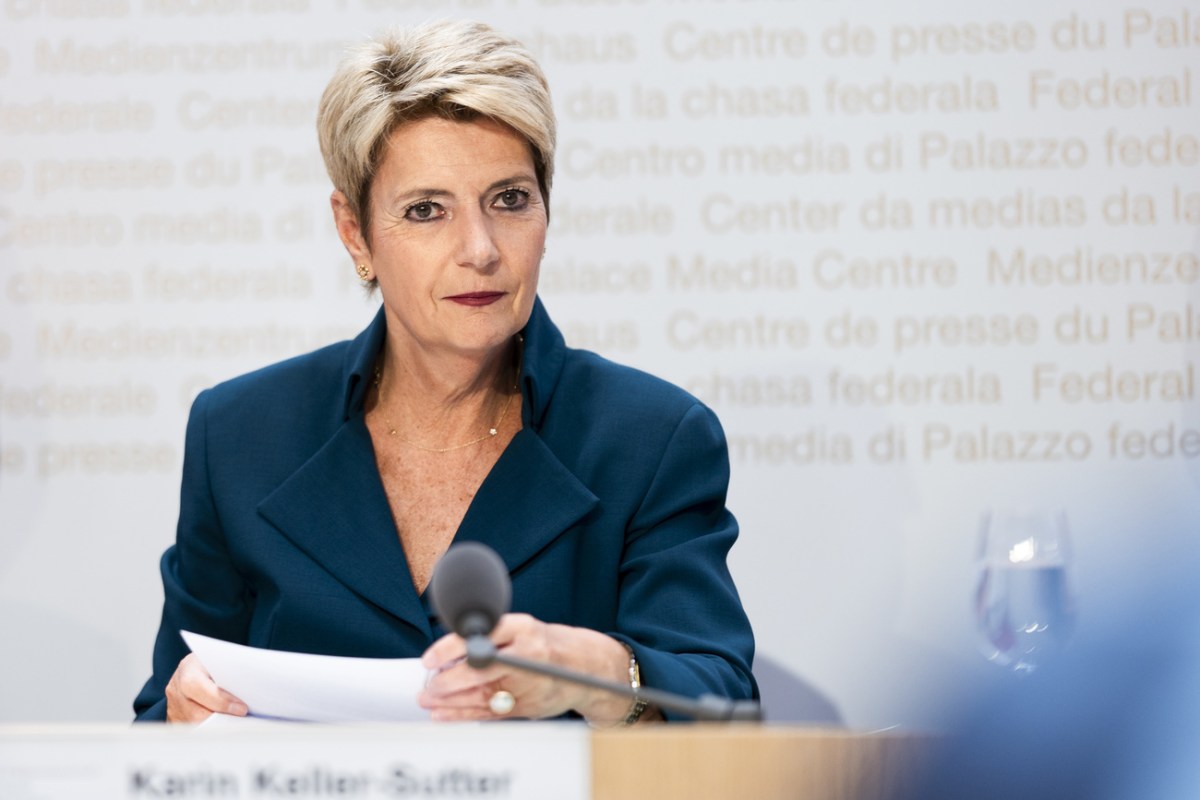
Switzerland’s Finance Minister Karin Keller-Sutter has filed a formal complaint concerning online abuse linked to the Grok AI chatbot, marking a significant stance against digital harassment. This action represents a departure from the prevailing understanding of free speech in the United States.
Published on April 17, 2026, the complaint is a response to an incident in which a Swiss pensioner solicited Grok to generate a vulgar and sexualized post aimed at Keller-Sutter. This post was subsequently shared on X (formerly Twitter) before being deleted. The chatbot, developed by Elon Musk, has faced criticism for its ability to produce offensive content, including a period in early 2026 when it generated thousands of sexualized deepfake images of women and children per hour, leading to its characterization as a “pedo chatbot” by the US magazine The Nation.
The issue of online abuse disproportionately affects women, as noted by Simone Eymann of the Public Discourse Foundation. Eymann pointed to research indicating the severe consequences of digital harassment, including anxiety and withdrawal from public life, which have implications for democracy. Political engagement leaves women particularly vulnerable, with studies showing that nearly one in four women in Germany who experienced online abuse contemplated ceasing their professional involvement.
Eymann commended Keller-Sutter’s legal action, stating that when public figures take a stand, it sends a vital message that digital abuse is serious and unacceptable. Keller-Sutter’s complaint serves as a clear signal against such abuse, yet it also raises questions about the limits of free speech. Jordi Calvet-Bademunt, a senior research fellow at The Future of Free Speech think tank, emphasized that legal protections for offensive speech are stronger in the US than in Switzerland. He noted that the appropriateness of Keller-Sutter’s complaint under Swiss law would hinge on the specifics of the message.
Calvet-Bademunt advocates for a broad interpretation of free expression, arguing that free speech protections must extend to offensive and controversial statements, particularly those pertaining to political discourse. He views Keller-Sutter’s actions as part of a larger trend where skepticism towards AI prompts calls for tighter regulations in democracies worldwide, referencing similar instances in Turkey and India where governments responded to AI-generated insults toward political figures.
Keller-Sutter’s stance on free speech comes amid a growing global debate about the implications of AI technology on political dialogue. During her presidency in 2025, she notably praised JD Vance‘s speech at the Munich Security Conference, asserting that free speech in Europe was under threat. However, following backlash, Keller-Sutter clarified that her endorsement did not extend to vulgar insults, which are punishable under Swiss law.
The potential for conflict with the United States looms over Keller-Sutter’s complaint. The NZZ am Sonntag speculated that her actions could exacerbate tensions regarding US regulation of tech companies, especially as Swiss authorities now assess the liability of Grok’s operator, X Switzerland GmbH. The US administration has traditionally resisted European regulations targeting American tech firms, implying that Switzerland may face diplomatic challenges as it seeks to uphold its legal standards in the face of global tech influence.
Public sentiment in Switzerland appears to support Keller-Sutter’s legal actions against Grok, with recent surveys indicating widespread distrust of large tech companies. Roughly 90% of Swiss citizens view these firms as focused solely on profit, while 84% are concerned about excessive political influence stemming from their home countries.
As digital platforms like X scale back content moderation, experts warn that AI tools such as Grok could facilitate the rapid proliferation of hate speech online. Research from ETH Zurich and the Public Discourse Foundation highlights that just 5% of users account for 78% of online hate speech, suggesting that targeted moderation could effectively mitigate these issues. Eymann emphasized the importance of empathetic counter-speech in addressing harmful content, asserting that generative AI could exacerbate the scale and speed of online hate.
Keller-Sutter’s move against Grok aligns with broader societal calls for accountability and responsible AI usage. As nations grapple with the dual challenges of free speech and digital abuse, her actions may pave the way for more robust frameworks governing AI technologies and their implications for political discourse.
See also AI in Medicine Market Projected to Reach $3.36 Trillion by 2040 with 40.3% CAGR
 Google DeepMind Hires Philosopher Henry Shevlin to Explore Machine Consciousness
 Runway CEO Proposes $100M Budget Shift to Create 50 AI Films for Higher Success Rates
 Gemini App Launches on macOS, Enhancing Workflow with AI Assistance
 Hugging Face Launches HoloTab Browser Agent to Enhance AI-Driven Computer Use