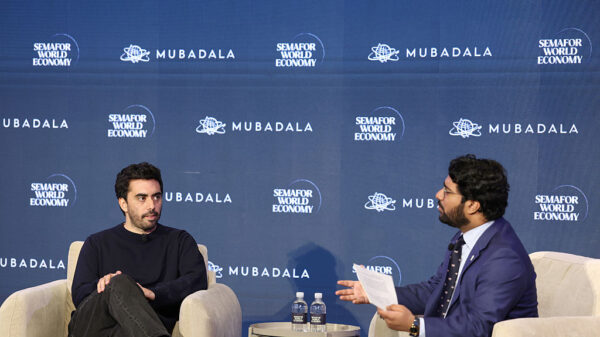
At a global summit, Cristobal Valenzuela, co-founder and CEO of Runway, proposed a contentious strategy aimed at revolutionizing film production by utilizing artificial intelligence (AI). Speaking at the Semafor World Economic Summit, Valenzuela suggested that studios should consider reallocating the typical $100 million budget for one blockbuster film towards creating 50 smaller films. This ambitious plan raises critical questions about the balance between quality and quantity in the creative industries.
Valenzuela, whose company is valued at over $5 billion and specializes in AI-driven video generation, contends that such a shift could enhance the chances of success in an increasingly competitive market. “If you’re spending one hundred million dollars to make a single film, about 90 minutes long, imagine that money being spent on 50 films – say. The same quality. The same level of output – visually. But you’re creating substantially more content. So the chances of success are much higher. It’s a matter of quantity,” he stated.
The implications of Valenzuela’s proposal extend beyond mere financial strategy. He highlighted the pervasive use of AI across all phases of filmmaking, from pre-production and screenwriting to production and visual effects. “This is happening everywhere: it is appearing in development, in screenwriting, in planning, in execution, and in visual effects – all of this is already being scaled,” he emphasized.
Valenzuela acknowledged the existing “creativity crisis” within the industry, attributing it to the current incentives tied to content creation. He believes that democratizing the storytelling process can lead to richer, more diverse narratives. “Sure, I don’t read 25 million books… but the world is now in a much better state because more people can tell a story or say something to the world,” he remarked, suggesting that AI could open the floodgates for new voices and narratives in film.
Among the projects Valenzuela mentioned is the upcoming film “Bitcoin: Killing Satoshi,” budgeted at approximately $70 million, which aims to be the first studio-quality AI film available. This project exemplifies how the integration of AI can significantly reduce production costs, allowing for a more substantial output of films without sacrificing quality. Major players in the industry, including Amazon and studios in India, are looking into similar technologies to cut costs and streamline production processes. Notably, filmmaker James Cameron has expressed support for these advancements as a means to uphold blockbuster production without leading to widespread job losses.
Despite the enthusiasm from some quarters, there remains skepticism among critics regarding whether an increase in content will correlate with artistic value. Detractors argue that mass production could dilute the essence of storytelling, while proponents like Runway suggest that with careful implementation, AI could unlock unprecedented opportunities for creativity and innovation in cinema.
As the industry grapples with the potential of AI, the pivotal question remains: can artificial intelligence drive more substantial content and reduced costs without compromising quality? The challenge lies in maintaining artistic integrity while embracing the efficiencies that technology can provide. The film industry’s future may depend on achieving a delicate balance between quantity and quality—ensuring that the essence of storytelling is not lost amidst the technological advancements.
Ultimately, the conversation surrounding AI’s role in filmmaking underscores a broader cultural moment in which creators and executives must navigate the intersection of innovation and artistic responsibility. The outcomes of these discussions may well shape the trajectory of cinema, as the industry seeks pathways to enhance production while honoring the creative spirit that lies at its core.
See also Gemini App Launches on macOS, Enhancing Workflow with AI Assistance
 Hugging Face Launches HoloTab Browser Agent to Enhance AI-Driven Computer Use
 Cohere Commits to Canadian Headquarters Amid Merger Talks with Germany’s Aleph Alpha
 OpenAI Abandons Ninth Circuit Appeal Over ‘Cameo’ Trademark Block for Sora 2
 Study Reveals Trump’s Tariffs Cause 3.1% Price Surge, Delaying Inflation Drop to Pre-Pandemic Levels