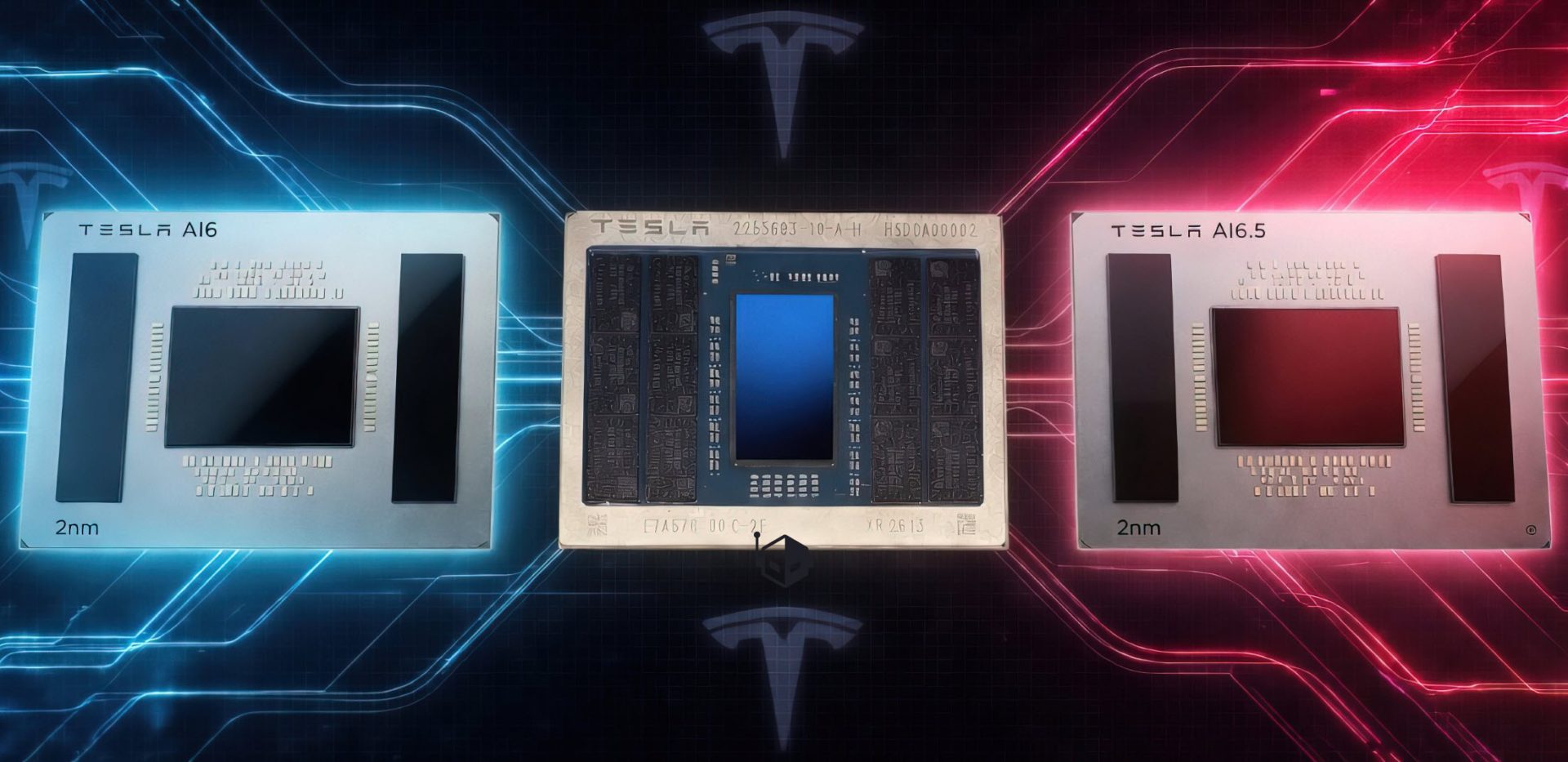
Elon Musk has unveiled plans for Tesla’s future artificial intelligence ecosystem, focusing on the development of advanced AI chips, AI6 and AI6.5, utilizing 2nm technology from both Samsung and TSMC. This announcement follows the successful tape-out of Tesla’s AI5 chip, manufactured by Samsung, as the company continues to push the boundaries of custom silicon designed to meet its growing AI needs.
Musk detailed the upcoming chips during a recent communication, emphasizing that while Tesla aims to transition the production of its custom AI chips to Terafab upon completion of the facility, it will still rely on industry leaders like TSMC and Samsung for immediate production demands. The company has successfully completed the AI5 design, achieving a tape-out 45 days ahead of schedule, albeit with some design concessions made to expedite the process.
In his remarks shared on the platform X, Musk expressed satisfaction with the progress made on AI5, while also acknowledging that some of the original design goals were not fully realized. He assured stakeholders that the forthcoming AI6 chip, set to be fabricated using Samsung’s 2nm process, will address these issues and deliver double the performance of its predecessor. Unlike AI5, which utilizes LPDDR5X memory, AI6 will incorporate the newer LPDDR6 standard to enhance functionality.
Following AI6, an upgraded model named AI6.5 will be produced by TSMC in Arizona, promising further improvements in performance. A standout feature of both AI6 and AI6.5 is the reduction of TRIP AI computation accelerators dedicated to SRAM, effectively increasing memory bandwidth to an “order of magnitude” greater than DRAM bandwidth for computations within SRAM caches. This optimization is part of Tesla’s strategy to enhance efficiency across its AI hardware and software initiatives, which also extend to its other ventures, including SpaceX and xAI.
While AI5 production is set to ramp up between 2026 and 2027, the anticipated timelines for AI6 and AI6.5 target a rollout between 2027 and 2029. As Tesla positions itself at the forefront of AI technology development, the implications of these advanced chips could resonate across various sectors, including automotive, aerospace, and technology. The company’s commitment to in-house chip development highlights a broader trend within the tech industry, reflecting an increased focus on custom solutions to meet specific operational challenges.
See also AI Adoption Accelerates: 54% of SMEs Report Productivity Gains, Outpacing Competitors
 AI Data Center Infrastructure Market to Reach $96.44B by 2032, Driven by U.S. Dominance and Innovative Cooling Solutions
 Cerebras Systems Files for IPO, Aiming to Capture $10B Contract from OpenAI
 MediaTek Expands AI Chip Portfolio to Drive Growth in U.S. and Global Markets
 China Doubles AI Accelerator Chips to 60,000, Boosting Scientific Computing Power