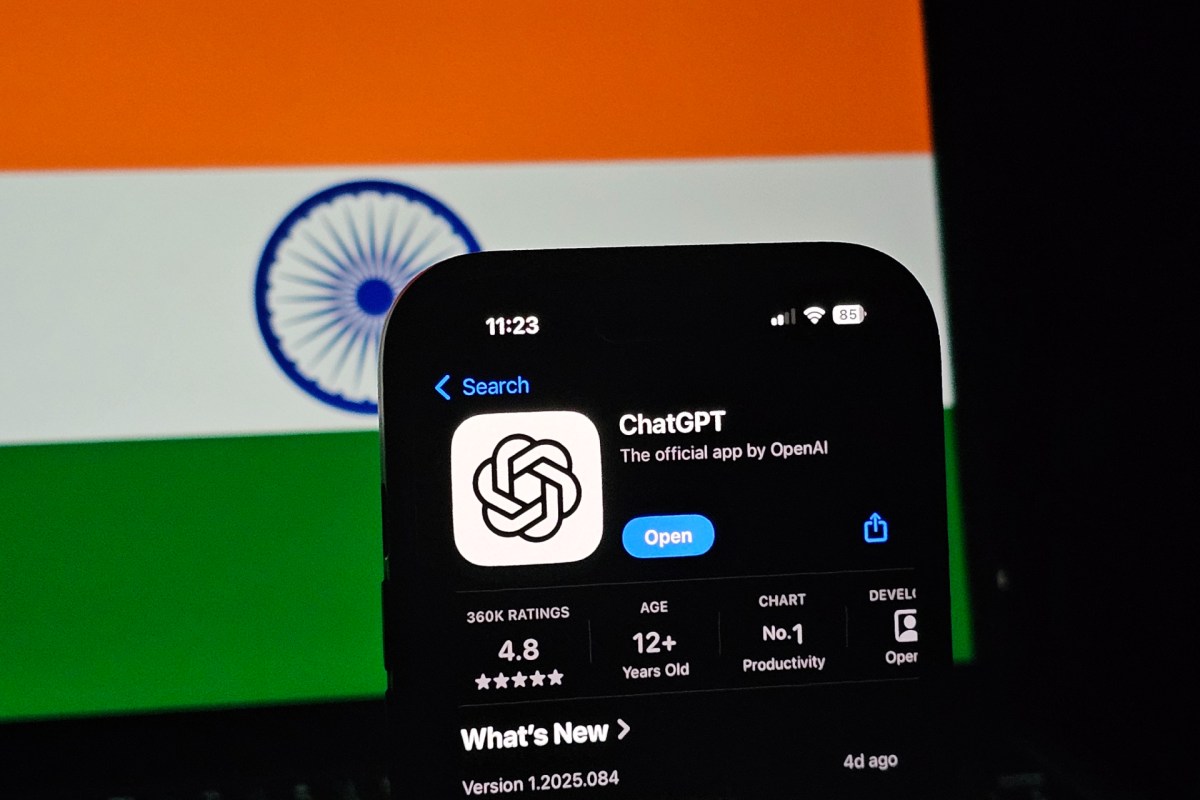
OpenAI has identified India as the largest user base for its newly launched ChatGPT Images 2.0, which debuted last week. This development is noteworthy as it comes amid a varied global response to the upgrade. According to third-party data reviewed by TechCrunch, while the rollout has sparked notable interest in specific emerging markets, overall growth has been more tempered.
The ChatGPT Images 2.0, designed to accommodate complex prompts and generate detailed visuals—including accurate text in multiple languages—has seen significant uptake in India. Users are leveraging the tool primarily for personal expression, creating customized visuals such as avatars, stylized portraits, and fantasy-themed images, as indicated by early usage patterns from OpenAI.
Data from Sensor Tower and Similarweb reveals a mixed global reaction following the launch. While downloads of the ChatGPT app surged by 11% week-over-week, daily active users and session engagement increased modestly, hovering around 1%. In contrast, global web traffic experienced a slight increase of approximately 1.6% during the same timeframe. Emerging markets, particularly Pakistan, Vietnam, and Indonesia, reported more substantial spikes in app downloads, reaching up to 79% week-over-week.
In India, the app recorded around 5 million downloads in its launch week, significantly eclipsing the roughly 2 million downloads in the U.S.. However, the growth in India was also modest on a week-over-week basis, with daily active users showing an uptick of about 3.4%. This indicates a burgeoning but careful embrace of the upgrade.
The initial trends in India suggest that users are utilizing ChatGPT Images 2.0 not just for functional outputs but as a medium for self-expression. Many are creating studio-style portraits from everyday photos, visually appealing images for social media, and imaginative content that places themselves at the forefront. This pattern underscores the varied adoption of AI image tools in different markets.
As OpenAI continues to enhance its offerings, the launch of Images 2.0 comes at a time of heightened competition in the AI image generation space. Google’s prior image-focused model, the original Nano Banana, also gained significant traction in India, underscoring the country’s importance as a market for such technologies.
The recent updates in ChatGPT Images 2.0 include improved rendering capabilities for non-Latin scripts like Hindi and Bengali, and enhanced “thinking” capabilities that enable the model to refine outputs and generate multiple variations based on a single prompt. This broadens the scope of creative content users can generate.
Beyond stylized portraits and avatars, users in India have started to experiment with a wider array of formats. From fantasy newspaper covers to tarot-style visuals and fashion mood boards, the versatility of the tool suggests an evolving landscape of personal usage. Additionally, some users are employing the AI to restore older photographs and craft cinematic portrait collages, indicating a trend toward more personalized applications.
The contrasting patterns of adoption in various regions highlight an emerging narrative in AI image generation. While India drives significant scale, the sharper growth observed in countries like Pakistan and Indonesia reflects a robust demand for new users in these emerging markets. As competition intensifies, the response to OpenAI’s latest offerings could reshape the dynamics of AI technology in the global marketplace.
See also Phosphene Launches Local AI Video Generation for Apple Silicon, Transforming Creative Workflows
 Rezolve AI Sees 14.7% Share Price Decline: Is It Undervalued at $2.67 or Overvalued?
 Anna University Launches 6-Day AI Training for Faculty on Generative Models and Edge Applications
 Academy Excludes AI Actors and Scripts from Oscars, Impacting Synthetic Media Valuations
 OpenAI Launches GPT Image 2, Surpassing Google Nano Banana 2 in Key Categories