In a summer course at the Keough School of Global Affairs, first-year student Daniel McCoppin engaged deeply with the complex interplay of artificial intelligence (AI) ethics and governance, guided by Professor Yong Suk Lee. The course, titled “Application, Ethics, and Governance of AI,” provided a platform for McCoppin and his peers to navigate a rapidly evolving landscape that poses both opportunities and ethical dilemmas.
Initially overwhelmed by course selections, McCoppin found clarity in this timely offering. The class quickly transcended his expectations, evolving into an intellectual forum where discussions ranged from the implications of AI development to the necessity of ethical frameworks in regulation. “Having peers who not only were concerned about the ramifications of AI development but also wanted to approach it in a thorough, ethics-centered way was incredibly promising,” he noted.
A significant takeaway for McCoppin was the realization that ethics is increasingly central to the discourse around AI, particularly as public pressure mounts for robust regulations. He observed major tech companies investing heavily in AI ethicists, underscoring a shift towards ethical governance amid rising concerns over untested AI models causing emotional harm or generating inappropriate content. He pointed to the University of Notre Dame’s DELTA framework, which reflects Catholic moral principles in the context of AI ethics but also highlights the lack of consensus on regulations shaped by varying cultural values.
The course fostered diverse global perspectives, with classmates hailing from countries like Brazil, South Africa, and Pakistan. This multinational environment enriched discussions, particularly regarding AI’s potential to influence public perception and cultural norms. McCoppin noted a surprising apathy towards data privacy in some regions, where citizens perceive their governments as too inefficient or corrupt to monitor them effectively. Yet, he discovered that many authoritarian regimes are looking to enhance AI-driven surveillance capabilities, often influenced by Chinese technological advancements.
China’s Role in Global AI Development
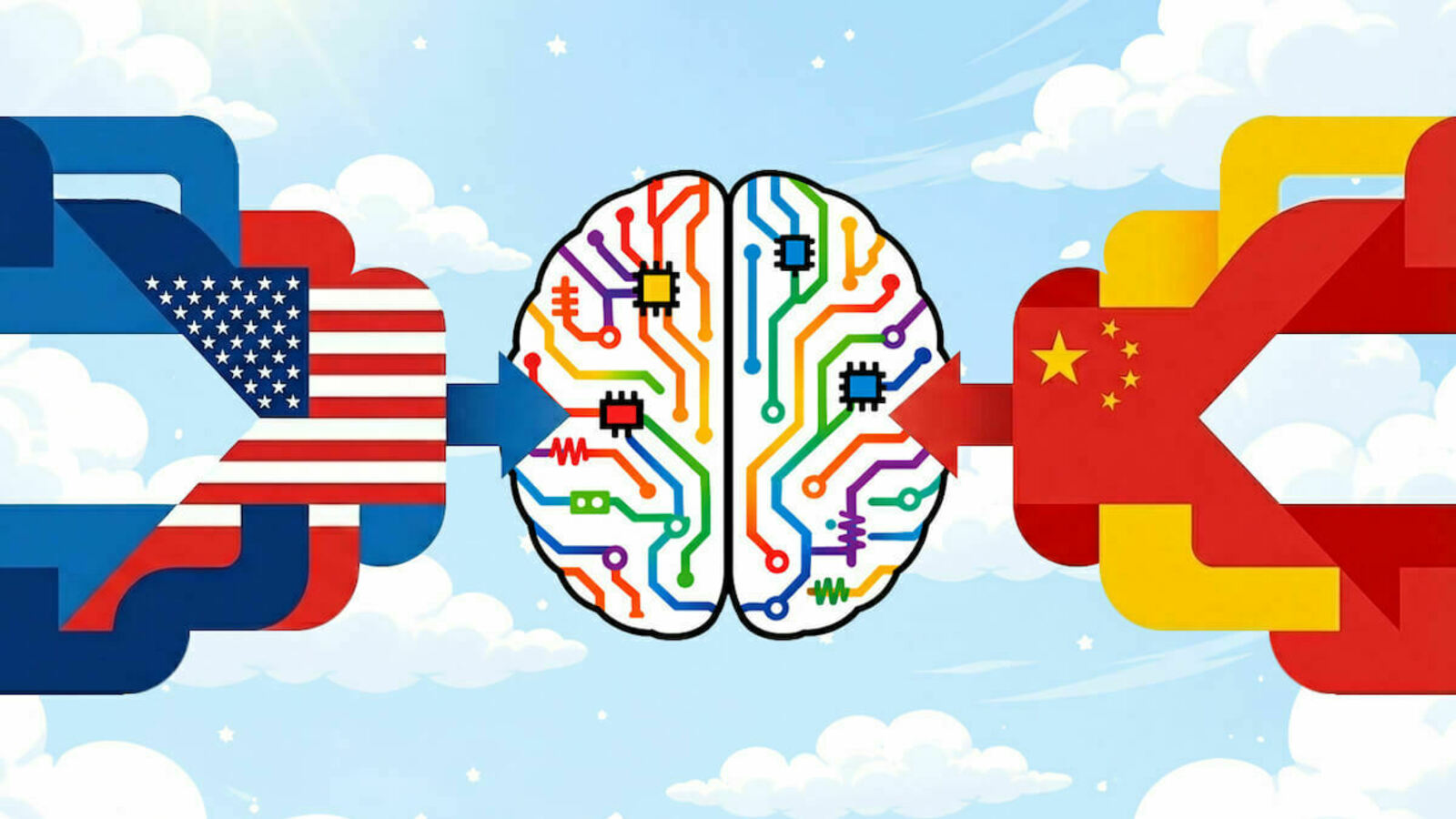
China’s influence emerged as a focal point throughout the course discussions. As a global affairs and Chinese double major, McCoppin emphasized the dichotomy between the U.S. and China in the realm of AI. He articulated a stark contrast: “The U.S. is lucky, but China is smart.” While the two countries compete technologically, he noted that the U.S. holds a financial advantage, with a wealth of capital in private hands fueling a multitude of AI startups. This differs from China’s more rigorous, succeed-or-die market environment.
Despite these differences, McCoppin warned that China could potentially outpace the U.S. in the AI domain, referencing the country’s leap into global leadership in renewable energy as a parallel. He pointed out that China’s government initiatives have propelled its dominance in solar and electric vehicle manufacturing. Moreover, Chinese tech giants play a critical role in fostering innovation and expanding soft power globally.
In group discussions, McCoppin’s team assessed how Chinese firms are utilizing AI technologies strategically as instruments of soft power. Over the last two decades, billions have been invested in regions where American engagement has historically been limited, especially Asia and Africa, largely through initiatives like the Belt and Road Initiative.
While the U.S. focuses on careful policy-making, McCoppin argues that the country is falling short in preparing its workforce for the AI era. China, he noted, has already begun implementing comprehensive national AI education policies and retraining programs for millions of workers, leaving the U.S. lagging in its educational approach to AI.
Ultimately, McCoppin’s experiences in the course have illuminated the complexities involved in establishing a unified ethical approach to AI governance. Despite the challenges, he expressed optimism about finding common ground among diverse viewpoints. “Now, we just need to act,” he concluded, emphasizing the urgent need for collaborative efforts as AI continues to shape global society.
See also AI Agents Transform Enterprises: 2026 Sees Shift to Agentic Operational Models
 Georgia and Hawaii Propose New AI Regulations Focused on Child Safety and Liability
 Australia Unveils National AI Plan Amid Concerns Over Safety and Regulation Gaps
 AI-Driven Compliance Fuels 28% Operational Efficiency for Brands in Complex European Ecommerce
 Louisiana Lawmakers Launch 2026 Session with AI Regulation and $88M School Funding Proposal