























































Zebra Technologies is advancing its line of barcode scanners by integrating artificial intelligence to enhance performance in complex retail and business-to-business (B2B) environments. This evolution comes at a critical time, as the acceleration of retail digitization could significantly improve Zebra’s profit margins. With investors closely monitoring the impact of these innovations, the relevance of Zebra’s solutions is poised to grow amidst shifting market dynamics.
Efficiency and accuracy are paramount in retail and business operations, where each scan contributes to overall productivity. The Zebra Barcode Scanner (Retail/B2B) series, including models like the DS9900R and LI3678, has been designed for rigorous daily use, capable of capturing both 1D and 2D barcodes swiftly, even when damaged. By employing Zebra’s proprietary PRZM Intelligent Imaging technology, these devices not only enhance transaction speeds at checkout counters but also streamline inventory management in warehouses and distribution centers. As retail technology continues to evolve, these scanners are becoming essential tools for real-time inventory oversight, helping businesses avert costly errors.
Recent data indicates that U.S. retail sales are showing resilience, with projections of a 1% month-on-month growth fueled by strong consumer spending. As retailers and warehouses digitize operations to address labor shortages, Zebra’s barcode scanners have the potential to reduce checkout times by as much as 50% compared to outdated systems. This positions Zebra Technologies as a pivotal player in the $10 billion-plus barcode scanner market, where improvements in efficiency yield tangible cost savings for end-users.
The company’s strategy focuses on deepening integration with software solutions, such as DataWedge, for Android-based scanners, facilitating instant data capture and transfer to enterprise systems. This aspect is crucial for U.S. businesses grappling with rising logistics costs, as wireless connectivity in scanners promotes mobile workflows that eliminate cumbersome cables. Major retailers like Walmart and Amazon have standardized their operations on Zebra technology, underscoring the brand’s reliability in high-stakes environments.
The barcode scanner market is experiencing annual growth rates of 5-7%, driven by the expansion of e-commerce and automation across U.S. warehouses. With a commanding market share exceeding 30% in enterprise scanners, Zebra outpaces rivals like Honeywell and Datalogic through superior device durability. For consumers, this translates to faster supply chains, while for investors, Zebra’s established dominance ensures stable revenue streams, even amid economic fluctuations.
Despite the competitive landscape heating up with the emergence of low-cost Asian manufacturers, Zebra distinguishes itself through AI-enhanced features such as omnidirectional scanning and intelligent document capture. In B2B contexts, where downtime can lead to losses of $50 per minute, Zebra’s scanners maintain a remarkable 99.5% decode rate, reinforcing their value proposition. Market drivers include promising U.S. retail sales data, which hint at a consumer base that remains resilient in the face of inflation, compelling retailers to invest in technological solutions that reduce operational expenses.
Zebra’s focus on software-driven revenue streams, exemplified by its VisibilityIQ platform, aims to enhance customer engagement by utilizing cloud-based analytics to predict scanner failures proactively. This subscription model is expected to elevate profit margins, particularly as retail technology budgets expand in the post-pandemic landscape. Investors are keenly observing this shift from hardware-centric revenue toward high-margin services, reflecting broader trends within enterprise software.
As Zebra Technologies, listed under ISIN US98980G1022, continues to adopt a “total ecosystem” approach by bundling scanners with complementary hardware and software, the company is well-positioned to capture growth in logistics, especially given the ongoing increase in e-commerce volumes. However, potential risks loom. Supply chain disruptions affecting essential components like image sensors could pose challenges, though Zebra’s multi-sourcing strategy aims to mitigate these issues. Economic slowdowns might also delay capital expenditures in retail, but strong consumer spending is expected to support demand.
Recent advancements in AI have led to the introduction of adaptive scanning technologies in newer Zebra models, allowing the devices to automatically adjust for varying barcode densities in complex environments. This capability is particularly beneficial in retail applications for self-checkout and in B2B scenarios for parcel sorting, where traditional laser scanners struggle. The integration of such technology offers a competitive edge, enhancing battery life and reducing misreads significantly.
As retail automation accelerates amid rising labor costs, the premium pricing of AI scanners appears justified. Competitors lag behind in adopting machine learning capabilities, giving Zebra a distinct advantage. However, challenges remain, particularly regarding the pace of adoption among smaller retailers, who may hesitate to invest in new technology. Nevertheless, partnerships with major chains have demonstrated notable productivity gains, suggesting that the momentum for innovative solutions is building.
In a broader market context, niche players like Zebra offer investors a chance for diversification in an otherwise volatile landscape. With global economic factors influencing supply chains, Zebra’s international revenue—accounting for over 50%—is intricately tied to global recovery trends. As the company continues to evolve its product offerings and strengthen its market position, investors are encouraged to remain vigilant regarding ongoing developments and market indicators that will shape the future of retail technology.
See also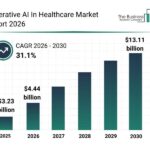 Generative AI in Healthcare Market Set to Reach $13.11 Billion by 2030 with 31.1% CAGR
 Australians Favor Brokers Over AI for Financial Decisions, Study Reveals Key Trends
 Anthropic’s Mythos Raises Cybersecurity Concerns as Major Banks Seek Access
 Ellucian Launches AI-Powered Student Platform to Transform Higher Education Outcomes
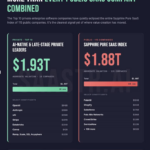 Top 10 Private AI Companies Surpass $2.5T, Outpacing 115 Public SaaS Firms















